- Format
- Inbunden (Hardback)
- Språk
- Engelska
- Antal sidor
- 288
- Utgivningsdatum
- 1993-06-01
- Förlag
- University of Massachusetts Press
- Dimensioner
- 247 x 165 x 25 mm
- Vikt
- Antal komponenter
- 1
- ISBN
- 9780870238536
- 657 g
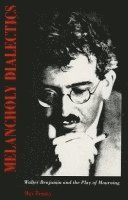
Melancholy Dialectics
Walter Benjamin and the Play of Mourning
Slutsåld
Kundrecensioner
Fler böcker av Max Pensky
-

Authoritarianism
Wendy Brown, Peter E Gordon, Max Pensky
-
Postnational Constellation
Jürgen Habermas, Max Pensky
-
Ends of Solidarity
Max Pensky
-
Globalizing Critical Theory
Max Pensky
Recensioner i media
Pensky's study provides a compelling argument for locating melancholia at the center of Benjamin's thought. Because of its provocative nature, it promises to spark the interest of Benjamin critics, scholars, and students in this otherwise neglected aspect of his work. --German Quarterly Pensky shows Benjamin's ideas of a new criticism of nature and culture to be based on his schema of mourning and melancholy; as well Pensky explains the concepts of subjectivity, allegory, and the dialectical image in Benjamin's work.... A difficult subject, well handled. --Library Journal A work of original insight, conceptual subtlety, and intellectual excitement. This will become an important work within the burgeoning field of Benjamin studies. --David Bathrick, Cornell University A comprehensive view of Benjamin's achievement, focusing on the central ideas of mourning and melancholia, developed in Benjamin's early work, Origin of German Tragic Drama (1928). Pensky sees the contradictions in Benjamin's thought as part of the 'melancholy way of seeing. Between melancholy subject and melancholy objects, this way of seeing subsists in the dialectical interval between these two constituted moments.' All of Benjamin's modes, especially allegory, and all of his literary/philosophical works are here viewed as part of the melancholic dialectic. Pensky has clearly mastered all the available material on Benjamin, as well as the relevant cultural criticism. --Choice
Övrig information
Max Pensky is associate professor of philosophy at Binghamton University.
Du kanske gillar
-
Game Changer
Rachel Reid
Häftad
Red Rising
Pierce Brown
HäftadFrågor & svar
Long Game
Rachel Reid
Häftad