• Fri frakt över 249 kr
  • •
  • Snabba leveranser
  • •
  • Billiga böcker
Kundservice

Du är på sajten för privatpersoner.

Företag, bibliotek eller offentlig verksamhet?

Du handlar på classic.bokus.com, där alla dina funktioner finns intakta.
Till classic.bokus.com
Bokus logotyp. Gå till startsidan.
  • Erbjudanden
  • Nyheter
  • Student
  • Topplistor
  • Barn & ungdom
  • Bokus Play
  • E-böcker
  • Pocketböcker
  • Spel & pussel

10% rabatt på allt med kod: NYSTART10 →

Sidfot

Mina sidor

    Hjälp

    • Kundservice
    • Vanliga frågor och svar
    • Frakt och leverans
    • Retur vid ångerrätt
    • Reklamera vara
    • Betalning
    • Köpvillkor
    • Allmänna villkor
    • Information om webbplatsens tillgänglighet

    Om Bokus

    • Om oss
    • Pressrum
    • För studenter
    • För företag
    • För bibliotek och offentlig verksamhet
    • För leverantörer
    • Hållbarhet

    Populärt

    • Aktuella erbjudanden
    • Presentkort
    • Studentlitteratur
    • Nya böcker
    • Topplistor
    • Signerade böcker
    • Engelska böcker

    Inspiration

    • Boktips
    • BookTok
    • Populära bokserier
    • Barnbokskaraktärer
    • Populära författare
    Logotyp för Bokus
    Följ oss på Facebook (extern länk)Följ oss på Instagram (extern länk)Följ oss på YouTube (extern länk)Följ oss på TikTok (extern länk)
    bokus @ CookiesAnpassa cookiesIntegritetspolicyKöpvillkor
    Till Citymail hemsida (extern länk)Till Budbee hemsida (extern länk)Till Postnord hemsida (extern länk)Till Schenker hemsida (extern länk)Till Early Bird hemsida (extern länk)Till Walleys hemsida (extern länk)
    1. Naturvetenskap och teknik
    2. Matematik och naturvetenskap
    3. Kemi

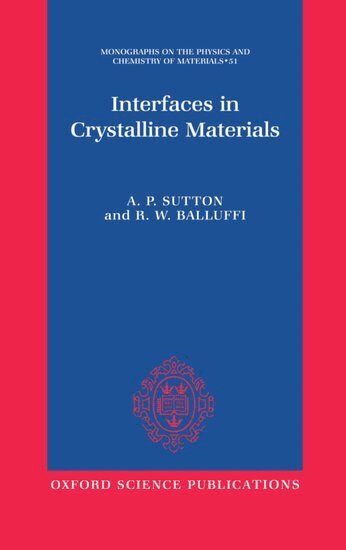
    Introduction to Elasticity Theory for Crystal Defects

    AvR. W. Balluffi

    Inbunden, Engelska, 2012

    1 737 kr

    Beställningsvara. Skickas inom 10-15 vardagar. Fri frakt över 249 kr.

    Beskrivning

    Self-sufficient and user-friendly, this book provides a complete introduction to the anisotropic elasticity theory necessary to model a wide range of crystal defects. Assuming little prior knowledge of the subject, the reader is first walked through the required basic mathematical techniques and methods. This is followed by treatments of point, line, planar and volume type defects such as vacancies, dislocations, grain boundaries, inhomogeneities and inclusions. Included are analyses of their elastic fields, interactions with imposed stresses and image stresses, and interactions with other defects, all employing the basic methods introduced earlier. This step by step approach, aided by numerous exercises with solutions provided, strengthens the reader's understanding of the principles involved, extending it well beyond the immediate scope of the book. As the first comprehensive review of anisotropic elasticity theory for crystal defects, this text is ideal for both graduate students and professional researchers.

    Produktinformation

    • Utgivningsdatum:2012-04-12
    • Mått:178 x 253 x 25 mm
    • Vikt:1 060 g
    • Format:Inbunden
    • Språk:Engelska
    • Antal sidor:458
    • Förlag:Cambridge University Press
    • ISBN:9781107012554

    Utforska kategorier

    • Kemi inom Naturvetenskap och teknik
    • Maskinteknik och material inom Naturvetenskap och teknik

    Mer om författaren

    Robert Balluffi is Emeritus Professor of Physical Metallurgy at Massachusetts Institute of Technology. He has previously published two books and more than 200 articles in the field. He is a member of the National Academy of Science and has received numerous awards, including the Von Hippel Award, the highest honour of the Materials Research Society.

    Recensioner i media

    'This is a very nice, self-contained and inclusive book. It should provide a foundation for the anisotropic elastic theory of defects and their interactions for years to come.' John Hirth, Ohio State University

    Innehållsförteckning

    • 1. Introduction; 2. Basic linear elasticity; 3. Methods; 4. Green's functions for unit point force; 5. Interactions between defects and stress; 6. Inclusions in infinite homogeneous regions; 7. Interactions between inclusions and imposed stresses; 8. Inclusions in finite homogeneous regions – image stresses; 9. Inhomogeneities; 10. Point defects in infinite homogeneous regions; 11. Interactions between point defects and stresses; 12. Dislocations in infinite homogeneous regions; 13. Interactions between dislocations and stresses; 14. Interfaces; 15. Interactions between interfaces and stresses; 16. Interactions between defects; Appendices; Index.