- Format
- Häftad (Paperback / softback)
- Språk
- Engelska
- Antal sidor
- 576
- Utgivningsdatum
- 2020-09-21
- Förlag
- Elsevier Science
- Medarbetare
- Kimmel, Paul L. / Cohen, Scott D (red.) / Kimmel, Paul L (red.)
- ISBN
- 9780128170809
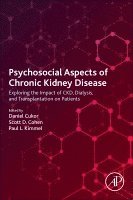
Psychosocial Aspects of Chronic Kidney Disease
Exploring the Impact of CKD, Dialysis, and Transplantation on Patients
- Skickas från oss inom 7-10 vardagar.
- Fri frakt över 249 kr för privatkunder i Sverige.
Passar bra ihop
-
- +
-


De som köpt den här boken har ofta också köpt Visceral and Ectopic Fat av Hildo J Lamb (häftad).
Köp båda 2 för 3078 krKundrecensioner
Fler böcker av författarna
-

Chronic Renal Disease
Paul L Kimmel, Mark E Rosenberg
Chronic Renal Disease comprehensively investigates the physiology, pathophysiology, treatment, and management of chronic kidney disease (CKD). This translational reference takes an in-depth look at CKD while excluding coverage of dialysis or trans...
-
Body's Keepers
Paul L Kimmel
A remarkable account of the kidney and the scientific, medical, and health evolution tied to our understanding of it. The kidney is an extraordinary organ in many ways the regulator, the metronome, the keeper of the human body's delicate equilibri...
Övrig information
Dr. Cukor is currently the Director of Behavioral Health at The Rogosin Institute in New York City, one of the premier centers for the study and management of kidney disease in the country. He received his Ph.D. in Clinical Health Psychology from Ferkauf Graduate School (2002) and has post graduate training in cognitive behavioral interventions. The bulk of his research has focused on psychosocial issues in patients with end stage renal disease. He has received grant support for his research from a variety of local and federal funding sources. His current interests are focused on depression, anxiety, sleep difficulty, pain, caregiver burden, and patient activation in patients with chronic kidney disease. Scott D. Cohen, MD, MPH, FASN, is Division Chief of Nephrology and Fellowship Program Director at Cleveland Clinic Florida. He earned a B.S. with honors from the University of Miami (1997), an MD from the University of Miami Miller School of Medicine (2001), and an MPH from George Washington University (2008). His training includes Internal Medicine residency at Duke University Medical Center (2001-2004), Nephrology fellowship at GWU (2005-2008), and Glomerular Diseases fellowship at Columbia University Medical Center (2008-2009). He has held faculty positions at GWU and Columbia, and joined Cleveland Clinic Florida in 2023. Board-certified in internal medicine and nephrology; ACLS/BLS certified; Fellow, American Society of Nephrology. His research centers on glomerular diseases, CKD, and dialysis outcomes, supported by NIH/NIDDK and NKF grants. He is a prolific educator, reviewer, and author. Dr. Paul L. Kimmel, MD, MPH, FASN, is a physician-scientist renowned for leadership in nephrology and renal genetics. He served as Director of Translational Genetics and the Acute Kidney Injury Program at the National Institute of Diabetes and Digestive and Kidney Diseases (Division of Kidney, Urologic and Hematologic Diseases, NIH). He is currently Emeritus Clinical Professor of Medicine at George Washington University, where he directs The Renal Diseases and Hypertension Division. His training includes Yale College (AB), New York University School of Medicine (MD), internal medicine residency at Bellevue Hospital Center, and nephrology fellowships at GWU and Columbia. Research interests encompass glomerular diseases, APOL1 genetics, acute kidney injury, chronic kidney disease, and dialysis outcomes, with major NIH/NIDDK and NKF funding, including the APOLLO and FIND studies. A prolific educator and mentor, he has served on numerous advisory committees and published extensively on kidney biology, disease, and patient-centered nephrology care.