• Fri frakt över 249 kr
  • •
  • Snabba leveranser
  • •
  • Billiga böcker
Kundservice

Du är på sajten för privatpersoner.

Företag, bibliotek eller offentlig verksamhet?

Du handlar på classic.bokus.com, där alla dina funktioner finns intakta.
Till classic.bokus.com
Bokus logotyp. Gå till startsidan.
  • Erbjudanden
  • Nyheter
  • Student
  • Topplistor
  • Barn & ungdom
  • Bokus Play
  • E-böcker
  • Pocketböcker
  • Spel & pussel

10% rabatt på allt med kod: NYSTART10 →

Sidfot

Mina sidor

    Hjälp

    • Kundservice
    • Vanliga frågor och svar
    • Frakt och leverans
    • Retur vid ångerrätt
    • Reklamera vara
    • Betalning
    • Köpvillkor
    • Allmänna villkor
    • Information om webbplatsens tillgänglighet

    Om Bokus

    • Om oss
    • Pressrum
    • För studenter
    • För företag
    • För bibliotek och offentlig verksamhet
    • För leverantörer
    • Hållbarhet

    Populärt

    • Aktuella erbjudanden
    • Presentkort
    • Studentlitteratur
    • Nya böcker
    • Topplistor
    • Signerade böcker
    • Engelska böcker

    Inspiration

    • Boktips
    • BookTok
    • Populära bokserier
    • Barnbokskaraktärer
    • Populära författare
    Logotyp för Bokus
    Följ oss på Facebook (extern länk)Följ oss på Instagram (extern länk)Följ oss på YouTube (extern länk)Följ oss på TikTok (extern länk)
    bokus @ CookiesAnpassa cookiesIntegritetspolicyKöpvillkor
    Till Citymail hemsida (extern länk)Till Budbee hemsida (extern länk)Till Postnord hemsida (extern länk)Till Schenker hemsida (extern länk)Till Early Bird hemsida (extern länk)Till Walleys hemsida (extern länk)
    1. Filosofi och religion
    2. Filosofi

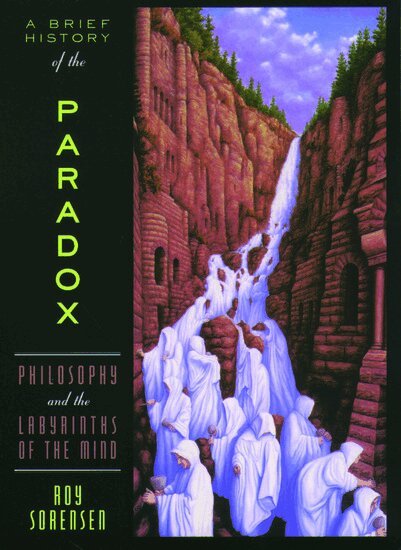
    A Brief History of the Paradox

    Philosophy and the Labyrinths of the Mind

    AvSorensen

    Häftad, Engelska, 2005

    293 kr

    Beställningsvara. Skickas inom 3-6 vardagar. Fri frakt över 249 kr.

    Beskrivning

    Can God create a stone too heavy for him to lift? Can time have a beginning? Which came first, the chicken or the egg? Riddles, paradoxes, conundrums--for millennia the human mind has found such knotty logical problems both perplexing and irresistible. Now Roy Sorensen offers the first narrative history of paradoxes, a fascinating and eye-opening account that extends from the ancient Greeks, through the Middle Ages, the Enlightenment, and into the twentieth century. When Augustine asked what God was doing before He made the world, he was told: "Preparing hell for people who ask questions like that." A Brief History of the Paradox takes a close look at "questions like that" and the philosophers who have asked them, beginning with the folk riddles that inspired Anaximander to erect the first metaphysical system and ending with such thinkers as Lewis Carroll, Ludwig Wittgenstein, and W.V. Quine. Organized chronologically, the book is divided into twenty-four chapters, each of which pairs a philosopher with a major paradox, allowing for extended consideration and putting a human face on the strategies that have been taken toward these puzzles. Readers get to follow the minds of Zeno, Socrates, Aquinas, Ockham, Pascal, Kant, Hegel, and many other major philosophers deep inside the tangles of paradox, looking for, and sometimes finding, a way out. Filled with illuminating anecdotes and vividly written, A Brief History of the Paradox will appeal to anyone who finds trying to answer unanswerable questions a paradoxically pleasant endeavor.

    Produktinformation

    • Utgivningsdatum:2005-02-10
    • Mått:128 x 178 x 27 mm
    • Vikt:358 g
    • Format:Häftad
    • Språk:Engelska
    • Antal sidor:416
    • Förlag:OUP USA
    • ISBN:9780195179866

    Utforska kategorier

    • Filosofi inom Filosofi och religion

    Mer om författaren

    Roy Sorensen is Professor of Philosophy at Dartmouth College.

    Recensioner i media

    "Because paradoxes show great minds at once at their most inspired and befuddled, a book like this makes an excellent introduction to philosophy in general. By treating how different thinkers deal with a problem, Mr. Sorensen provides a sort of whistle-stop tour of Western thought."--New York Sun