• Fri frakt över 249 kr
  • •
  • Snabba leveranser
  • •
  • Billiga böcker
Kundservice

Du är på sajten för privatpersoner.

Företag, bibliotek eller offentlig verksamhet?

Du handlar på classic.bokus.com, där alla dina funktioner finns intakta.
Till classic.bokus.com
Bokus logotyp. Gå till startsidan.
  • Erbjudanden
  • Nyheter
  • Student
  • Topplistor
  • Barn & ungdom
  • Bokus Play
  • E-böcker
  • Pocketböcker
  • Spel & pussel

10% rabatt på allt med kod: NYSTART10 →

Sidfot

Mina sidor

    Hjälp

    • Kundservice
    • Vanliga frågor och svar
    • Frakt och leverans
    • Retur vid ångerrätt
    • Reklamera vara
    • Betalning
    • Köpvillkor
    • Allmänna villkor
    • Information om webbplatsens tillgänglighet

    Om Bokus

    • Om oss
    • Pressrum
    • För studenter
    • För företag
    • För bibliotek och offentlig verksamhet
    • För leverantörer
    • Hållbarhet

    Populärt

    • Aktuella erbjudanden
    • Presentkort
    • Studentlitteratur
    • Nya böcker
    • Topplistor
    • Signerade böcker
    • Engelska böcker

    Inspiration

    • Boktips
    • BookTok
    • Populära bokserier
    • Barnbokskaraktärer
    • Populära författare
    Logotyp för Bokus
    Följ oss på Facebook (extern länk)Följ oss på Instagram (extern länk)Följ oss på YouTube (extern länk)Följ oss på TikTok (extern länk)
    bokus @ CookiesAnpassa cookiesIntegritetspolicyKöpvillkor
    Till Citymail hemsida (extern länk)Till Budbee hemsida (extern länk)Till Postnord hemsida (extern länk)Till Schenker hemsida (extern länk)Till Early Bird hemsida (extern länk)Till Walleys hemsida (extern länk)
    1. Medicin
    2. Andra medicinska specialiteter
    3. Psykiatri

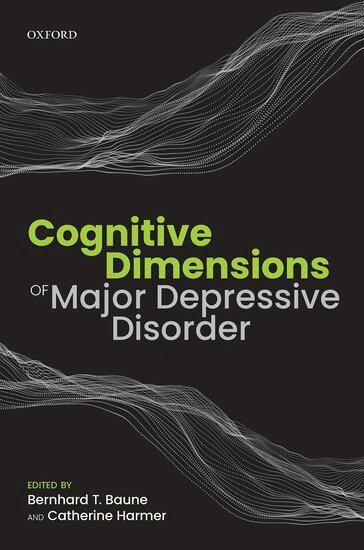
    Cognitive Dimensions of Major Depressive Disorder

    AvBernhard T. Baune,Catherine Harmer

    Häftad, Engelska, 2019

    1 104 kr

    Beställningsvara. Skickas inom 7-10 vardagar. Fri frakt över 249 kr.

    Beskrivning

    Major depressive disorder (MDD) is one of the most prevalent mental disorders worldwide, and is estimated to affect 300 million people. Most research defines MDD as a categorical disorder and investigations on clinical, functional, and biological correlates are assessed by established diagnostic instruments. However, given the phenotypic and biological heterogeneity of depression, a re-focus on the clinical phenotype of MDD is required.Bridging psychiatric and psychological traditions Cognitive Dimensions of Major Depressive Disorder, discusses the characteristics of the dimensional approach of MDD. Focusing on the cognitive and emotional processes of depression, this guide offers extended and novel diagnostic and treatment approaches ranging from pharmacological to psychological interventions targeting dimensions of depression. Edited by pioneers in this field, this resource discusses hot topics such as how to define the dimensional approach to depression, the neurobiological underpinnings of cognitive dysfunction in depression, and the impairment of emotional processing deficits in depression.Cognitive Dimensions of Major Depressive Disorder is suitable for students, trainees, clinicians and scientists in the fields of psychology, neuropsychology, psychiatry, cognitive neuroscience, neurology, general practice and also for various other health care professionals.

    Produktinformation

    • Utgivningsdatum:2019-08-01
    • Mått:155 x 233 x 15 mm
    • Vikt:531 g
    • Format:Häftad
    • Språk:Engelska
    • Antal sidor:320
    • Förlag:OUP OXFORD
    • ISBN:9780198810940

    Utforska kategorier

    • Psykiatri inom Medicin

    Mer om författaren

    Prof. Bernhard T. Baune is Cato Chair and Head of the Department of Psychiatry at The University of Melbourne, Australia. Prof. Baune is a Fellow of the Royal Australian and New Zealand College of Psychiatrists (FRANZCP), Australia. He leads an extensive research program into personalised psychiatry, prediction and biomarker research in psychiatry and treatment response prediction and in neuroimmunology. Key research achievements include an in-depth understanding of the interaction between the immune and nervous system, the development of a systems biology approach for response prediction and the establishment of innovative personalised clinical trials in major psychiatric disorders. He has a particular interest in cognitive function and psychosocial function in psychiatric disorders and in the severe course of mental illness, treatment response and recovery.Prof. Catherine Harmer is the director of the Psychopharmacology and Emotional Research Lab (PERL) based at the University Department of Psychiatry in Oxford, which comprises a multi-disciplinary team including graduate research assistants, DPhil students, post-doctoral researchers, Psychiatrists and Pharmacologists.The research of the group focuses on the psychological mechanisms of antidepressant drug action by exploring drug effects on human models of emotional processing. A range of methodologies are used, including neuropsychological testing, transcranial magnetic stimulation and functional neuroimaging with fMRI and PET in healthy volunteers and patient samples. This research has the potential to integrate psychological and pharmacological views of depression and treatment and has challenged the way in which we typically consider drug treatment for depression to work.

    Innehållsförteckning

    • Section I Major depressive disorder as a multi-dimensional disorder 1: Tracy L. Greer and Jeethu K. Joseph: Functional and psychosocial consequences of major depressive disorder 2: Koen Demyttenaere: Opportunities and challenges of the phenotypic heterogeneity of major depressive disorder 3: Muzaffer Kaser and Barbara J. Sahakian: Major depressive disorder as a disorder of cognition Section II Cognitive Dysfunction in Depression 4: Zihang Pan and Roger S. McIntyre: Cognitive Dysfunction as a symptom dimension across major psychiatric disorders 5: Maria Serra-Blasco and Raymond W. Lam: Clinical and functional characteristics of cognitive dysfunction in major depressive disorder 6: John E. Harrison: The assessment of cognitive dysfunction in major depressive disorder 7: Natalie T. Mills and Bernhard T. Baune: Molecular neurobiology of cognitive dysfunction in MDD Section III Impaired emotional processing in MDD 8: Thomas Beblo and Lorenz Dehn: Clinical characteristics of emotional-cognitive dysfunction in MDD 9: Anjali Sankar and Cynthia H.Y. Fu: Neurocircuitries of emotion processing affected in Major Depressive Disorder 10: Oliver J. Robinson: The neural circuitry of negative bias, oversensitivity to negative feedback and hyposensitivity to reward in MDD 11: Georgia O'Callaghan and Argyris Stringaris: Reward processing in adolescents with depression 12: Genevieve Rayner: Cognition-related brain networks underpin cognitive, emotional and somatic symptom dimensions of depression 13: John D. Medaglia: Networks of cognitive processes: Functional and anatomical correlates of cognition, emotions and social cognition 14: Thalia Richter, Alexander J. Shackman, Tatjana Aue, and Hadas Okon-Singer: The neurobiology of emotion-cognition interactions Section IV Social cognitive processes in Depression 15: Katharina Foerster, Silke Joergens, and Bernhard T. Baune: Clinical characteristics of social cognitive processes in Major Depressive Disorder 16: Franziska K. Goer and Rebecca Elliott: Understanding of self and others: neurobiological underpinnings of social cognition 17: Philippe Fossati, Sophie Hinfray, Anna Fall, Cédric Lemogne, and Jean-Yves Rotge: Emotional and cognitive consequences of social rejection: An entry door to major depression Section V Interventions and Management 18: Marco Solmi, Beatrice Bortolato, Brendon Stubbs, Nathan Herrmann, and Andre F. Carvalho: Pharmacological interventions for cognitive dysfunction in MDD 19: Claudia Woolf, Loren Mowszowski, and Sharon Naismith: Psychological interventions for cognitive dysfunction in MDD 20: Can non-pharmacological antidepressant treatments influence the processing of affective informationa 21: Michael James Weightman and Bernhard T. Baune: Novel treatment opportunities in major depressive disorder