• Fri frakt över 249 kr
  • •
  • Snabba leveranser
  • •
  • Billiga böcker
Kundservice

Du är på sajten för privatpersoner.

Företag, bibliotek eller offentlig verksamhet?

Du handlar på classic.bokus.com, där alla dina funktioner finns intakta.
Till classic.bokus.com
Bokus logotyp. Gå till startsidan.
  • Erbjudanden
  • Nyheter
  • Student
  • Topplistor
  • Barn & ungdom
  • Bokus Play
  • E-böcker
  • Pocketböcker
  • Spel & pussel

10% rabatt på allt med kod NYSTART10 →

Sidfot

Mina sidor

    Hjälp

    • Kundservice
    • Vanliga frågor och svar
    • Frakt och leverans
    • Retur vid ångerrätt
    • Reklamera vara
    • Betalning
    • Köpvillkor
    • Allmänna villkor
    • Information om webbplatsens tillgänglighet

    Om Bokus

    • Om oss
    • Pressrum
    • För studenter
    • För företag
    • För bibliotek och offentlig verksamhet
    • För leverantörer
    • Hållbarhet

    Populärt

    • Aktuella erbjudanden
    • Presentkort
    • Studentlitteratur
    • Nya böcker
    • Topplistor
    • Signerade böcker
    • Engelska böcker

    Inspiration

    • Boktips
    • BookTok
    • Populära bokserier
    • Barnbokskaraktärer
    • Populära författare
    Logotyp för Bokus
    Följ oss på Facebook (extern länk)Följ oss på Instagram (extern länk)Följ oss på YouTube (extern länk)Följ oss på TikTok (extern länk)
    bokus @ CookiesAnpassa cookiesIntegritetspolicyKöpvillkor
    Till Citymail hemsida (extern länk)Till Budbee hemsida (extern länk)Till Postnord hemsida (extern länk)Till Schenker hemsida (extern länk)Till Early Bird hemsida (extern länk)Till Walleys hemsida (extern länk)
    1. Skönlitteratur
    2. Dramatik

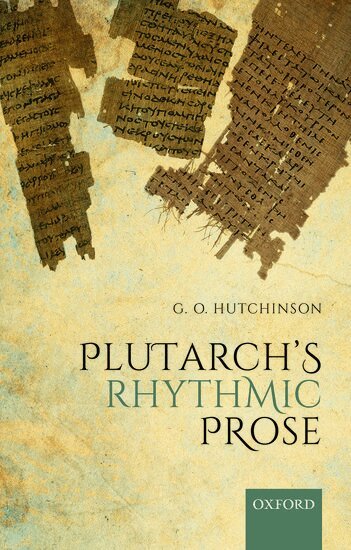
    Plutarch's Rhythmic Prose

    AvG. O. Hutchinson

    Inbunden, Engelska, 2018

    2 340 kr

    Beställningsvara. Skickas inom 3-6 vardagar. Fri frakt över 249 kr.

    Fler format och utgåvor

    E-bok

    1 388 kr

    Beskrivning

    Greek literature is divided, like many literatures, into poetry and prose, but in Greek the difference between them is not that all prose is devoid of firm rhythmic patterning. In the earlier Roman Empire, from 31 BC to about AD 300, much Greek (and Latin) prose was actually written to follow one organized rhythmic system. How much Greek prose adopted this patterning has hitherto been quite unclear; the present volume for the first time establishes an answer on an adequate basis: substantial data drawn from numerous authors. It constitutes the first extensive study of prose-rhythm in later Greek literature.The book focuses particularly on one of the greatest Imperial works: Plutarch's Lives. It rests on a scansion of the whole work, almost 100,000 phrases. Rhythm is seen to make a vital contribution to the literary analysis of Plutarch's writing, and prose-rhythm is revealed as a means of expression, which draws attention to words and word-groups. Some passages in the Lives pack rhythms together more closely than others; much of the discussion concentrates on such rhythmically dense passages, examining them in detail in commentary form. These passages do not occur randomly, but attract attention to themselves. They are marked out as climactic in the narrative, or as in other ways of highlighted significance: joyful summations, responses to catastrophe, husbands and wives, fathers and sons compared. These remarkable passages make apparent the greatness of Plutarch as a prose-writer - a side of him fairly little considered amid the huge resurgence of work on Plutarch as an author and as a major historical source. Some passages from three Greek novelists, both rhythmic and unrhythmic, are closely analysed too. The book demonstrates how rhythm can be integrated with other aspects of criticism, and how it has the ability to open up new vistas on three prolific centuries of literary history.

    Produktinformation

    • Utgivningsdatum:2018-07-26
    • Mått:145 x 223 x 27 mm
    • Vikt:556 g
    • Format:Inbunden
    • Språk:Engelska
    • Antal sidor:352
    • Förlag:OUP OXFORD
    • ISBN:9780198821717

    Utforska kategorier

    • Dramatik inom Skönlitteratur
    • Litteraturvetenskap inom Skönlitteratur
    • Forntidens historia inom Historia och arkeologi

    Mer om författaren

    Professor G. O. Hutchinson studied at Balliol College, Oxford, as an undergraduate, then took up a position at Christ Church as a Research Lecturer. In 1984 he became Fellow and Tutor in Classics at Exeter College, Oxford, and in 1998 Professor of Greek and Latin Languages and Literature, before being appointed to the Regius Chair of Greek in 2015 and returning to Christ Church.

    Recensioner i media

    Hutchinson's is not the first book on rhythmic prose, but the data it relies on makes it the most impressive ... [It] is well produced, and shows hardly any typos or infelicities, which is remarkable for a work that contains a fair number of metrical symbols and diacritical signs. All the more reason therefore to recommend it to a broad audience, which may enjoy the subtleties of prose rhythm even more by listening to all the passages analyzed read aloud in accompanying online videos.

    Innehållsförteckning

    • Frontmatter List of Abbreviations List of Rhythms 1: Rhythmic Prose in Imperial Greek Literature Appendix: details on samples in rhythmical list 2: Rhythmic Prose in Plutarch's Lives 3: Density in Plutarch 4: Life as Art (Plutarch, Timoleon 35) Appendix: Plut. Tim. 36.2-4, Cras. 22.1, Arat. 24.5, Nepos, Timol. 3.2, 5 5: Taking Fratricide too Hard (Timoleon 5-6) Appendix: Plut. Comp. Aem. Tim. 41 (2).11-12, Nepos, Timol. 1.5-6 6: Peace Pervades (Numa 20.4-5) Appendix: Plut. Numa 20.6-10, Dion. Hal. Ant. Rom. 2.76.3, Plut. Fort. Rom. 321c-d, Aesch. Eum. 902-7, Hor. CS 29-32 7: What to Write under a Statue (Cato Maior 19.4-6) Appendix: Praec. Ger. Reip. 820b, Otho 18.1-2 8: A Dangerous Leap (Alexander 63.2-6) Appendix: Plut. Alex. Fort. 2 343d-e, Diod. Sic. 17.98.5-99.2, Curt. 9.5.1-3, Arr. Anab. 6.9.5, App. BC 2.637, Just. 12.9.5-7 9: Brutus and his Mirrors (Brutus 10.4-6, 13.7-9, 29.2-3, 40.7-8) Appendix: App. BC 2.470-2, Plut. Sull. 30.6 10: Daggers and Dangers (Brutus 1.5, 16.4, 52.1-4, 7-8; 19-20) Appendix: App. BC 2.487, 4.552, Plut. Caes. 68.3-6 11: A Surprise from Cato (Pompey 54.5-9) Appendix: Plut. Cat. Min. 47-48.4, Caes. 28.7, Dio Cass. 40.50.4, App. BC 2.84-5 12: Mist or Smoke? (Flamininus 4.8-12) Appendix: Plut. Flam. 4.3-7, Livy 32.11.8-9, 12.1-4 13: The Terrible Retreat (Nicias 26.3-6) Appendix: Thuc. 7.74.1, 75.4, 7, 77.2, 86.5 14: The Fall of the Crassi (Crassus 23.7-24.3, 25.12-14, 26.6-9, 30.2-5) Appendix: Dio Cass. 40.21.2-22.1, Thuc. 7.76, Dio Cass. 40.26.2 15: Antigonus and the Athenians Change their Tunes (Demetrius 28, 29.4, 30.2-31.1) Appendix: Diod. Sic. 20.106.4, Plut. Garr. 506d, [Plut.] Reg. Imp. Apophth. 182b 16: Cornelia Blames Herself (Pompey 74.3-75.2) Appendix: Livy fr. 45 Jal, Luc. 8.88-105 17: The Deaths of King and Kindred (Agis 16.6-17.5, 17.9-18.3; 19.5-21.1) Appendix: [Plut.] Apophth. Lac. 216c-d 18: A Distraught Hero (Chariton 3.5.5-6) 19: A Blasée Mother (Plutarch, Cleomenes 43 (22).4-5) 20: Bewilderments of Joy (Heliodorus 10.38.3-4) 21: Chaereas Lives (Chariton 5.8.1-3) 22: The King of Persia is Put in his Place (Chariton 8.5.5-7) 23: A Father Struggles (Heliodorus 10.16.1-2) 24: Some Tears in Achilles Tatius (Achilles 6.7.3-7) 25: More Tears in Achilles Tatius (7.4.3-6) Conclusion Endmatter Bibliography Index of Passages Discussed General Index