E-bok, Engelska, 2011
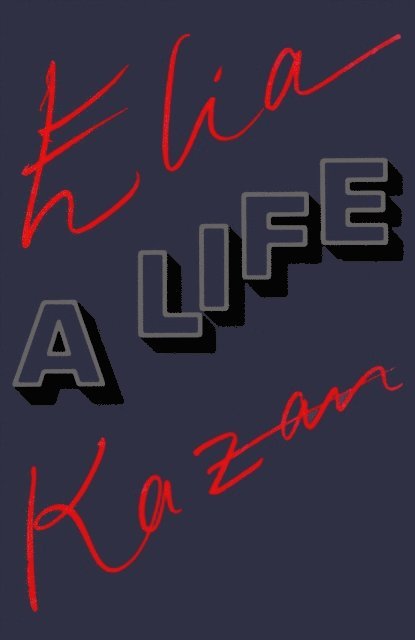
Elia Kazan: A Life
Av Elia Kazan
196 kr
Läs direkt i Bokus Reader – eller ladda ned till din enhet
Beskrivning
“This is the best autobiography I’ve read by a prominent American in I don’t know how many years. It is endlessly absorbing and I believe this is because it concerns a man who is looking to find a coherent philosophy that will be tough enough to contain all that is ugly in his person and his experience, yet shall prove sufficiently compassionate to give honest judgment on himself and others. Somehow, the author brings this off. Elia Kazan: A Life has that candor of confession which is possible only when the deepest wounds have healed and honesty can achieve what honesty so rarely arrives at—a rich and hearty flavor. By such means, a famous director has written a book that offers the kind of human wealth we find in a major novel.” —Norman Mailer
In this amazing autobiography, Kazan at seventy-eight brings to the undiluted telling of his story—and revelation of himself—all the passion, vitality, and truth, the almost outrageous honesty, that have made him so formidable a stage director (A Streetcar Named Desire, Death of a Salesman, All My Sons, Cat on a Hot Tin Roof, Tea and Sympathy), film director (On the Waterfront, East of Eden, Gentleman’s Agreement, Splendor in the Grass, Baby Doll, The Last Tycoon, A Face in the Crowd), and novelist (the number-one best-seller The Arrangement.)
Kazan gives us his sense of himself as an outsider (a Greek rug merchant’s son born in Turkey, an immigrant’s son raised in New York and educated at Williams College). He takes us into the almost accidental sojourn at the Yale Drama School that triggered his commitment to theatre, and his edgy, exciting apprenticeship with the new and astonishing Group Theatre, as stagehand and stage manager—and as actor (Waiting for Lefty, Golden Boy) . . . his first nervous and then successful attempts at directing for theatre and movies (The Skin of Our Teeth, A Tree Grows in Brooklyn) . . . his return to New York to co-found the Actors Studio (and his long and ambivalent relationship with Lee Strasberg) . . . his emergence as premier director on both coasts.
With his director’s eye for the telling scene, Kazan shares the joys and complications of production, his unique insights on acting, directing, and producing. He makes us feel the close presence of the actors, producers, and writers he’s worked with—James Dean, Marlon Brando, Tennessee Williams, Vivien Leigh, Tallulah Bankhead, Sam Spiegel, Darryl Zanuck, Harold Clurman, Arthur Miller, Budd Schulberg, James Baldwin, Clifford Odets, and John Steinbeck among them. He gives us a frank and affectionate portrait of Marilyn Monroe. He talks with startling candor about himself as husband and—in the years where he obsessively sought adventure outside marriage—as lover. For the first time, he discusses his Communist Party years and his wrenching decision in 1952 to be a cooperative witness before HUAC. He writes about his birth as a writer.
The pace and organic drama of his narrative, his grasp of the life and politics of Broadway and Hollywood, the keenness with which he observes the men and women and worlds around him, and, above all, the honest with which he pursues and captures his own essence, make this one of the most fascinating autobiographies of our time.
In this amazing autobiography, Kazan at seventy-eight brings to the undiluted telling of his story—and revelation of himself—all the passion, vitality, and truth, the almost outrageous honesty, that have made him so formidable a stage director (A Streetcar Named Desire, Death of a Salesman, All My Sons, Cat on a Hot Tin Roof, Tea and Sympathy), film director (On the Waterfront, East of Eden, Gentleman’s Agreement, Splendor in the Grass, Baby Doll, The Last Tycoon, A Face in the Crowd), and novelist (the number-one best-seller The Arrangement.)
Kazan gives us his sense of himself as an outsider (a Greek rug merchant’s son born in Turkey, an immigrant’s son raised in New York and educated at Williams College). He takes us into the almost accidental sojourn at the Yale Drama School that triggered his commitment to theatre, and his edgy, exciting apprenticeship with the new and astonishing Group Theatre, as stagehand and stage manager—and as actor (Waiting for Lefty, Golden Boy) . . . his first nervous and then successful attempts at directing for theatre and movies (The Skin of Our Teeth, A Tree Grows in Brooklyn) . . . his return to New York to co-found the Actors Studio (and his long and ambivalent relationship with Lee Strasberg) . . . his emergence as premier director on both coasts.
With his director’s eye for the telling scene, Kazan shares the joys and complications of production, his unique insights on acting, directing, and producing. He makes us feel the close presence of the actors, producers, and writers he’s worked with—James Dean, Marlon Brando, Tennessee Williams, Vivien Leigh, Tallulah Bankhead, Sam Spiegel, Darryl Zanuck, Harold Clurman, Arthur Miller, Budd Schulberg, James Baldwin, Clifford Odets, and John Steinbeck among them. He gives us a frank and affectionate portrait of Marilyn Monroe. He talks with startling candor about himself as husband and—in the years where he obsessively sought adventure outside marriage—as lover. For the first time, he discusses his Communist Party years and his wrenching decision in 1952 to be a cooperative witness before HUAC. He writes about his birth as a writer.
The pace and organic drama of his narrative, his grasp of the life and politics of Broadway and Hollywood, the keenness with which he observes the men and women and worlds around him, and, above all, the honest with which he pursues and captures his own essence, make this one of the most fascinating autobiographies of our time.
Produktinformation
- Utgivningsdatum: 2011-10-16
- Språk: Engelska
- Filformat: EPUB
- Kopieringsskydd: LCP
- ISBN: 9780307959348
- Förlag: Knopf Doubleday Publishing Group
Utforska kategorier
- Inga kategorier tillgängliga.
Betyg & recensioner
0 recensioner
Inga recensioner tillgängliga.