E-bok, Engelska, 2007
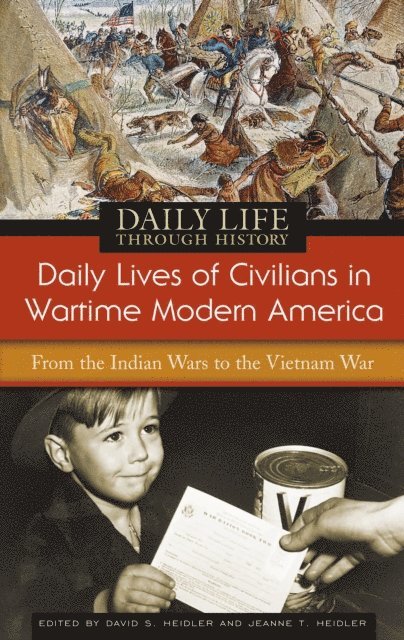
Daily Lives of Civilians in Wartime Modern America
Av David S. Heidler, Jeanne T. Heidler
883 kr
Läs direkt i Bokus Reader – eller ladda ned till din enhet (PDF kräver ofta zoom och scroll på små skärmar).
Beskrivning
In post-Civil War America, civilians were ordinarily far-removed from the actual fighting. War brought about tremendous and far-reaching changes to America's society, politics, and economy nonetheless. Readers are offered detailed glimpses into the lives of ordinary folk struggling with the privations, shortages, and anxieties brought on by U.S. entry into war. They are also shown how they strove to turn changing times to their advantage, especially civically and economically, as minorities pressed for political inclusion and traders profited from government contracts and women took on well-paying skilled jobs in large numbers for the first time.
Susan Badger Doyle's chapter on the Indian Wars in the American West shows how for whites the migration westward was the path to a land of opportunity, for Native Americans migration it was a disastrous epoch that led to their near-extermination. Michael Neiberg's piece on World War I highlights how America's entry into the war on the Allied side was far from universally popular or supported because of large German and Irish immigrant communities, and how this tepid support led to the creation of some of the harshest censorship and curtailment of civil rights in U.S. history. Judy Litoff's chapter on the home front during World War II focuses on the exceptional changes brought on by total mobilization for the war effort, African-Americans' push for expanded civil rights, to women entering the workforce in large numbers, to the public's acceptance, even expectation, of centralized planning and government intervention in economic and social matters. Jon Timothy Kelly's essay on the Cold War provides a look at how the country quickly returned to a state of readiness when the end of World War II ushered in the Cold War and the immanent threat of nuclear annihilation, even as a booming economy brought undreamt of material prosperity to huge numbers of Americans. Finally, James Landers describes how American involvement in Vietnam, the first televised war, profoundly changed American attitudes about war even as this particular conflict touched few Americans, but divided them like few previous events have.
Susan Badger Doyle's chapter on the Indian Wars in the American West shows how for whites the migration westward was the path to a land of opportunity, for Native Americans migration it was a disastrous epoch that led to their near-extermination. Michael Neiberg's piece on World War I highlights how America's entry into the war on the Allied side was far from universally popular or supported because of large German and Irish immigrant communities, and how this tepid support led to the creation of some of the harshest censorship and curtailment of civil rights in U.S. history. Judy Litoff's chapter on the home front during World War II focuses on the exceptional changes brought on by total mobilization for the war effort, African-Americans' push for expanded civil rights, to women entering the workforce in large numbers, to the public's acceptance, even expectation, of centralized planning and government intervention in economic and social matters. Jon Timothy Kelly's essay on the Cold War provides a look at how the country quickly returned to a state of readiness when the end of World War II ushered in the Cold War and the immanent threat of nuclear annihilation, even as a booming economy brought undreamt of material prosperity to huge numbers of Americans. Finally, James Landers describes how American involvement in Vietnam, the first televised war, profoundly changed American attitudes about war even as this particular conflict touched few Americans, but divided them like few previous events have.
Produktinformation
- Utgivningsdatum: 2007-01-30
- Språk: Engelska
- Antal sidor: 216
- Filformat: PDF
- Kopieringsskydd: LCP
- ISBN: 9780313088728
- Förlag: Bloomsbury Publishing Plc
- Serie: Greenwood Press Daily Life Through History Series: Daily Lives of Civilians during Wartime
Utforska kategorier
Betyg & recensioner
0 recensioner
Inga recensioner tillgängliga.