• Fri frakt över 249 kr
  • •
  • Snabba leveranser
  • •
  • Billiga böcker
Kundservice

Du är på sajten för privatpersoner.

Företag, bibliotek eller offentlig verksamhet?

Du handlar på classic.bokus.com, där alla dina funktioner finns intakta.
Till classic.bokus.com
Bokus logotyp. Gå till startsidan.
  • Erbjudanden
  • Nyheter
  • Student
  • Topplistor
  • Barn & ungdom
  • Bokus Play
  • E-böcker
  • Pocketböcker
  • Spel & pussel

Må bättre, för mindre! Upp till 50% rabatt på hälsoböcker

Sidfot

Mina sidor

    Hjälp

    • Kundservice
    • Vanliga frågor och svar
    • Frakt och leverans
    • Retur vid ångerrätt
    • Reklamera vara
    • Betalning
    • Köpvillkor
    • Allmänna villkor
    • Information om webbplatsens tillgänglighet

    Om Bokus

    • Om oss
    • Pressrum
    • För studenter
    • För företag
    • För bibliotek och offentlig verksamhet
    • För leverantörer
    • Hållbarhet

    Populärt

    • Aktuella erbjudanden
    • Presentkort
    • Studentlitteratur
    • Nya böcker
    • Topplistor
    • Signerade böcker
    • Engelska böcker

    Inspiration

    • Boktips
    • BookTok
    • Populära bokserier
    • Barnbokskaraktärer
    • Populära författare
    Logotyp för Bokus
    Följ oss på Facebook (extern länk)Följ oss på Instagram (extern länk)Följ oss på YouTube (extern länk)Följ oss på TikTok (extern länk)
    bokus @ CookiesAnpassa cookiesIntegritetspolicyKöpvillkor
    Till Citymail hemsida (extern länk)Till Budbee hemsida (extern länk)Till Postnord hemsida (extern länk)Till Schenker hemsida (extern länk)Till Early Bird hemsida (extern länk)Till Walleys hemsida (extern länk)
    1. Historia och arkeologi
    2. Historia

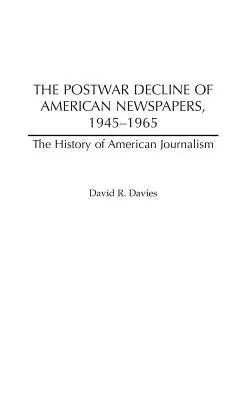
    Postwar Decline of American Newspapers, 1945-1965

    AvDavid R. Davies

    Inbunden, Engelska, 2006

    865 kr

    Beställningsvara. Skickas inom 10-15 vardagar. Fri frakt över 249 kr.

    Fler format och utgåvor

    E-bok

    933 kr

    Beskrivning

    On the surface, the American newspaper industry appears to have changed little from 1945 to 1965, remaining both healthy and prosperous. The number of newspapers in 1965 was about the same as in 1945, while during the twenty-year period advertising revenues increased substantially despite new competition from television. Just as in 1945, the vast majority of newspapers went to press with improved but old-fashioned letterpress methods in 1965. And newspaper reporters still professed a strong, if now somewhat shaken, faith in the federal government at the end of the twenty years.But the surface appearance of both stability and profitability obscured profound change. In the two decades after World War II, the business of newspaper publishing changed significantly in myriad ways. By 1965, editors and publishers had recognized the extent of these changes and were beginning to adjust. Each of the changes was significant of its own accord, and the range of challenges throughout the period combined to transform newspapers and the nation they served by 1965. This transformation was evident, to varying degrees, in newspapers' content, their production methods, their economic position within the overall media marketplace, and their relationship with government. Newspapers - some more than others - made strides to keep up with and overcome some of these challenges. But in each of these areas, newspapers as a group were slow to respond to the problems facing journalism.

    Produktinformation

    • Utgivningsdatum:2006-07-01
    • Mått:161 x 240 x 16 mm
    • Vikt:473 g
    • Format:Inbunden
    • Språk:Engelska
    • Antal sidor:200
    • Förlag:Bloomsbury Publishing Plc
    • ISBN:9780313307010

    Utforska kategorier

    • Historia inom Historia och arkeologi

    Mer om författaren

    David R. Davies is Associate Professor of Journalism and Associate Director at the School of Mass Communication and Journalism at the University of Southern Mississippi. A former reporter for the Arkansas Gazette in Little Rock, he has written extensively about the newspaper industry and its coverage of the civil rights movement.

    Recensioner i media

    "Davies identifies a steady decline in the US newspaper business during the 20 years following WW II, and he attributes that decline in part to sluggish business practices, including the country's lethargic conversion to new printing technologies. He notes that newspapers during this period were passive about covering the Civil Rights Movement and failed to introduce journalistic innovations to compete with the growing audience for television news. Davies explains how sociological, legal, political, and cultural changes, as well as differences within the journalism community, influenced the newspaper industry's decline. He provides excellent detail about the early history of US television news. Joining a series intent on revitalizing scholarship on the history of American journalism, this book is easy to read and carefully annotated. A thematic bibliographic essay highlights other readings. Highly recommended. All readers; all levels." - Choice

    Innehållsförteckning

    • Foreword Trends in the Postwar Press, 1945-1949 Improvement and Criticism, 1945-1949 Government, the Cold War, and Newspapers, 1950-'954 The Press and Television, 1948-1960 Newspapers and the Civil Rights Movement, 1954-1957 The Seeds of Long-Term Change, 1950-1963 Kennedy and the Press, 1960-1963 An Industry in Crisis, 1960-1965960 Reflections on the Postwar Press Resources Index Bibliographic Essay