• Fri frakt över 249 kr
  • •
  • Snabba leveranser
  • •
  • Billiga böcker
Kundservice

Du är på sajten för privatpersoner.

Företag, bibliotek eller offentlig verksamhet?

Du handlar på classic.bokus.com, där alla dina funktioner finns intakta.
Till classic.bokus.com
Bokus logotyp. Gå till startsidan.
  • Erbjudanden
  • Nyheter
  • Student
  • Topplistor
  • Barn & ungdom
  • Bokus Play
  • E-böcker
  • Pocketböcker
  • Spel & pussel

10% studentrabatt med kod TERM26

Sidfot

Mina sidor

    Hjälp

    • Kundservice
    • Vanliga frågor och svar
    • Frakt och leverans
    • Retur vid ångerrätt
    • Reklamera vara
    • Betalning
    • Köpvillkor
    • Allmänna villkor
    • Information om webbplatsens tillgänglighet

    Om Bokus

    • Om oss
    • Pressrum
    • För studenter
    • För företag
    • För bibliotek och offentlig verksamhet
    • För leverantörer
    • Hållbarhet

    Populärt

    • Aktuella erbjudanden
    • Presentkort
    • Studentlitteratur
    • Nya böcker
    • Topplistor
    • Signerade böcker
    • Engelska böcker

    Inspiration

    • Boktips
    • BookTok
    • Populära bokserier
    • Barnbokskaraktärer
    • Populära författare
    Logotyp för Bokus
    Följ oss på Facebook (extern länk)Följ oss på Instagram (extern länk)Följ oss på YouTube (extern länk)Följ oss på TikTok (extern länk)
    bokus @ CookiesAnpassa cookiesIntegritetspolicyKöpvillkor
    Till Citymail hemsida (extern länk)Till Budbee hemsida (extern länk)Till Postnord hemsida (extern länk)Till Schenker hemsida (extern länk)Till Early Bird hemsida (extern länk)Till Walleys hemsida (extern länk)
    1. Ekonomi och Ledarskap
    2. Nationalekonomi
    3. Miljöekonomi

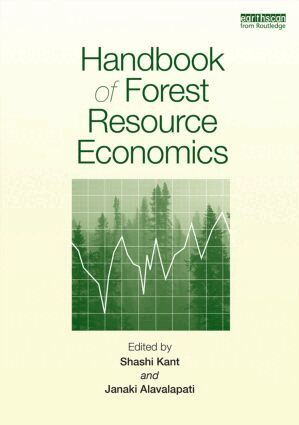
    Handbook of Forest Resource Economics

    AvShashi Kant,Janaki Alavalapati

    Inbunden, Engelska, 2014

    Del i serien Routledge Environment and Sustainability Handbooks

    3 676 kr

    Beställningsvara. Skickas inom 10-15 vardagar. Fri frakt över 249 kr.

    Beskrivning

    It is increasingly recognized that the economic value of forests is not merely the production of timber. Forests provide other key ecosystem services, such as being sinks for greenhouse gases, hotspots of biodiversity, tourism and recreation. They are also vitally important in preventing soil erosion and controlling water supplies, as well as providing non-timber forest products and supporting the livelihoods of many local people. This handbook provides a detailed, comprehensive and broad coverage of forest economics, including traditional forest economics of timber production, economics of environmental role of forests, and recent developments in forest economics. The chapters are grouped into six parts: fundamental topics in forest resource economics; economics of forest ecosystems; economics of forests, climate change, and bioenergy; economics of risk, uncertainty, and natural disturbances; economics of forest property rights and certification; and emerging issues and developments. Written by leading environmental, forest, and natural resource economists, the book represents a definitive reference volume for students of economics, environment, forestry and natural resource economics and management.

    Produktinformation

    • Utgivningsdatum:2014-04-15
    • Mått:174 x 246 x 37 mm
    • Vikt:1 230 g
    • Format:Inbunden
    • Språk:Engelska
    • Serie:Routledge Environment and Sustainability Handbooks
    • Antal sidor:576
    • Förlag:Taylor & Francis Ltd
    • ISBN:9780415623247

    Utforska kategorier

    • Miljöekonomi inom Ekonomi och Ledarskap

    Mer om författaren

    Shashi Kant is Professor of Forest Resource Economics and Management, Faculty of Forestry, University of Toronto, Canada. He is also leader of the Forest Resource Economics group of the International Union of Forest Research Organizations. Janaki R. R. Alavalapati is Professor and Head, Department of Forest Resources and Environmental Conservation, Virginia Polytechnic and State University, Blacksburg, Virginia, USA.

    Innehållsförteckning

    • 1. Evolving Forest Resource Economic Thought Part 1: Fundamental Topics in Forest Resource Economics 2. The Faustmann Approach and the Catallaxy in Forestry 3. The Generalized Faustmann Formula 4. Temporal Aspects in Forest Economics 5. Forest Ownership, Policy and Economics 6. Timber Pricing 7. Forest Taxation 8. International Trade in Forest Resources Part 2: Economics of Forest Ecosystems 9. Choice Experiments and Valuing Forest Attributes 10. Economics of Old-Growth Forests 11. Valuation of Open Spaces in Urban Environment 12. Hunting Leases: Markets and Economic Implications 13. Economics of Agro-forestry 14. Payment for Ecosystem Services: Lessons from Developing Countries Part 3: Economics of Forests, Climate Change, and Bioenergy 15. Forests and Climate Change: Economic Perspectives 16. Economics of Forest Carbon Sequestration 17. Economic Supply of Carbon Storage through Management of Uneven-Aged Forests 18. Economics of Forest Biomass-based Energy 19. Economics of REDD+ Part 4: Economics of Risk, Uncertainty, and Natural Disturbances 20. Risk and Uncertainty in Forest Resource Decision Making 21. Modeling Natural Risks in Forest Decision Models by Means of Survival Functions 22. Real Option Analysis in Forest Management Decision Making 23. Economics and Planning of Biodiversity Conservation under Uncertainty of Climate Change 24. Economic Analysis of Biological Invasions in Forests Part 5: Economics of Forest Property Rights and Certification 25. Economic Implications of Forest Tenures 26. Economics of Evolution of Amazon Frontier 27. China’s Forestland Tenure Reforms: Redefining and Recontracting the Bundle of Rights 28. Economics of Conservation Easements 29. The Economics of Forest Certification and Corporate Social Responsibility Part 6: Emerging Issues and Developments 30. Forestry and the New Institutional Economics 31. Political Economy of Forestry 32. Game Theoretic Modeling in Forest Economics 33. Forest Resource Accounting 34. Forest Policy Modeling in an Economy-wide Framework 35. Twelve Unresolved Questions for Forest Economics – and Two Crucial Recommendations for Forest Policy Analysis