• Fri frakt över 249 kr
  • •
  • Snabba leveranser
  • •
  • Billiga böcker
Kundservice

Du är på sajten för privatpersoner.

Företag, bibliotek eller offentlig verksamhet?

Du handlar på classic.bokus.com, där alla dina funktioner finns intakta.
Till classic.bokus.com
Bokus logotyp. Gå till startsidan.
  • Erbjudanden
  • Nyheter
  • Student
  • Topplistor
  • Barn & ungdom
  • Bokus Play
  • E-böcker
  • Pocketböcker
  • Spel & pussel

10% studentrabatt med kod TERM26

Sidfot

Mina sidor

    Hjälp

    • Kundservice
    • Vanliga frågor och svar
    • Frakt och leverans
    • Retur vid ångerrätt
    • Reklamera vara
    • Betalning
    • Köpvillkor
    • Allmänna villkor
    • Information om webbplatsens tillgänglighet

    Om Bokus

    • Om oss
    • Pressrum
    • För studenter
    • För företag
    • För bibliotek och offentlig verksamhet
    • För leverantörer
    • Hållbarhet

    Populärt

    • Aktuella erbjudanden
    • Presentkort
    • Studentlitteratur
    • Nya böcker
    • Topplistor
    • Signerade böcker
    • Engelska böcker

    Inspiration

    • Boktips
    • BookTok
    • Populära bokserier
    • Barnbokskaraktärer
    • Populära författare
    Logotyp för Bokus
    Följ oss på Facebook (extern länk)Följ oss på Instagram (extern länk)Följ oss på YouTube (extern länk)Följ oss på TikTok (extern länk)
    bokus @ CookiesAnpassa cookiesIntegritetspolicyKöpvillkor
    Till Citymail hemsida (extern länk)Till Budbee hemsida (extern länk)Till Postnord hemsida (extern länk)Till Schenker hemsida (extern länk)Till Early Bird hemsida (extern länk)Till Walleys hemsida (extern länk)
    1. Medicin
    2. Klinisk medicin och internmedicin
    3. Hjärt- och kärlsjukdomar

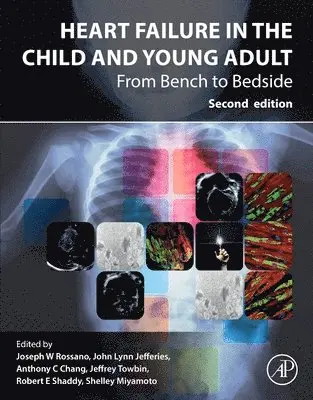
    Heart Failure in the Child and Young Adult

    From Bench to Bedside

    AvJoseph Rossano,Joseph Rossano

    Häftad, Engelska, 2025

    2 311 kr

    Beställningsvara. Skickas inom 10-15 vardagar. Fri frakt över 249 kr.

    Beskrivning

    Heart Failure in the Child and Young Adult: From Bench to Bedside, Second Edition highlights unique aspects of heart failure in the young. This comprehensive resource combines research from multiple contributors with current guidelines to bridge the knowledge gap for the recognition and management of heart failure in children. Coverage begins with the basic science of heart failure and then progresses through diagnosis, management, treatment, and surgery, finally concluding with advanced special topics, including genetics, self-management, and nanomedicine.

    This new edition covers advancements in the field, including additional chapters and discussion on biomarkers, neuromuscular disease, quality of life, palliative care, and the impact of COVID-19 in myocarditis and multisystem inflammatory syndrome in children. It will serve as an indispensable reference to basic science researchers in cardiology, pediatrics, cardiologists, and pediatric cardiologists.


    • Combines cutting-edge research with current guidelines from the field
    • Provides coverage of the basic science of heart failure, its epidemiology and economic aspects, outpatient and inpatient management, and advanced therapies, including mechanical circulatory support and heart transplantation
    • Includes expanded chapters on the immune system and inflammation in the development and progression of heart failure
    • Reviews new randomized controlled trials in pediatric heart failure

    Produktinformation

    • Utgivningsdatum:2025-10-27
    • Mått:216 x 276 x 50 mm
    • Vikt:2 720 g
    • Format:Häftad
    • Språk:Engelska
    • Antal sidor:1 030
    • Upplaga:2
    • Förlag:Elsevier Science
    • ISBN:9780443132797

    Utforska kategorier

    • Hjärt- och kärlsjukdomar inom Medicin
    • Pediatrik inom Medicin

    Mer om författaren

    Dr. Rossano is the medical director of Pediatric Heart Transplant and Heart Failure. He is also an attending physician in the Cardiac Center and the Cardiac Intensive Care Unit (CICU) and an assistant professor of Pediatrics at the Perelman School of Medicine at the University of Pennsylvania. Dr. Rossano is principal investigator or co-investigator on several ongoing research studies of the use of ventricular assist devices and artificial hearts in children, studying the effectiveness of post-transplant treatments for children who have received heart transplants, an observational study of children with heart failure, and building a registry of pediatric heart transplant patients that aims to further the knowledge of pediatric heart disease and transplantation. Dr. Jefferies is a recognized international expert in the field of heart muscle disease contributing much of the current literature regarding related genetic mechanisms, clinical investigation, and guideline development. Dr. Chang is the founder and medical director of the Medical Intelligence, Information, Investigation, and Innovation Institute (Mi4) that is supported by the Sharon Disney Lund Foundation. The institute is dedicated to the introduction and implementation of artificial intelligence in medicine and was the first institute of its kind in a hospital. Dr. Chang intends to build a clinician-computer scientist interface with a nascent society (the Medical Intelligence Society) and is the editor-in-chief of Intelligence-based Medicine, the accompanying journal for his book, Intelligence-Based Medicine: Artificial Intelligence and Human Cognition in Clinical Medicine and Healthcare. He is the organizing chair for Artificial Intelligence in Medicine (AIMed) meetings around the world, the largest and most comprehensive clinician-led meetings that focus on applications of artificial intelligence in medicine and the dean of the nascent American Board of Artificial Intelligence in Medicine (ABAIM). He is also the founding president of the Medical Intelligence Society (MIS). Dr. Towbin is a recognized international expert in the field of heart muscle disease contributing much of the current literature regarding related genetic mechanisms, clinical investigation, and guideline development. Dr. Shaddy is Chief of the Division of Cardiology at The Children’s Hospital of Philadelphia and holds the Jennifer Terker Endowed Chair in Pediatric Cardiology. He is Professor of Pediatrics and Vice Chair of the Department of Pediatrics at the Perelman School of Medicine at the University of Pennsylvania. Dr. Shaddy brings more than 25 years of experience as a cardiologist caring for children with heart failure to his role as one of the leaders of the transplant program. Dr. Miyamoto is the Director of the Cardiomyopathy Program and Professor of Pediatrics at Children’s Hospital Colorado and the University of Colorado. She is a nationally and internationally recognized authority on pediatric cardiac transplantation and cardiomyopathy, much of her groundbreaking work focuses on the failing heart of children with cardiomyopathies and congenital heart disease.

    Innehållsförteckning

    • Section I Basic science of heart failure 1. From molecular and cellular mechanisms to models of heart failure2. Cardiovascular receptors and signaling in heart failure3. Heart failure in the child and young adult: From bench to bedside: Inflammatory mediators in heart failure4. Transcriptional regulation, epigenetic regulation, and transcriptomics of pediatric heart failure5. Mechanisms of hypertrophy in heart failure6. Hemodynamic adaptive mechanisms in heart failure7. Neurohormonal axis and natriuretic peptides in heart failure8. Novel biomarkers in heart failure9. Systolic and diastolic function10. Echocardiographic quantitation of ventricular function11. MRI assessment of heart failure12. Assessment of heart failure by invasive methods13. The lymphatic system in heart failure14. Endothelial dysfunction in heart failure in the child and young adultSection II Clinical diagnosis and management of pediatric heart failure 15. Epidemiology and economics of pediatric heart failure16. Clinical recognition of heart failure in children17. Classification of pediatric heart failure18. Right ventricular dysfunction19. Pediatric myocarditis20. Dilated cardiomyopathy21. Clinical features of restrictive cardiomyopathy and constrictive pericarditis22. Hypertrophic cardiomyopathy23. Left ventricular noncompaction cardiomyopathy24. Arrhythmogenic cardiomyopathies25. Valvular insufficiency and heart failure26. Valvular stenosis and heart failure27. Coronary artery disease in children and young adults28. Chronic heart failure in congenital heart disease including single ventricle circulation29. Heart failure in adults with congenital heart disease30. Dysrhythmias and ventricular dysfunction and heart failure31. Fetal heart failure32. Heart failure in the neonate33. Heart failure in pediatric pulmonary diseases34. Pediatric cardiorenal syndrome35. Heart failure in pediatric oncologic disease36. Neuromuscular disorders37. Sickle cell disease38. The cardiovascular system in systemic inflammatory syndromes39. Outpatient management of pediatric heart failure40. Cardiac intensive care and inpatient management of heart failure41.Quality of life, neurodevelopmental and psychosocial outcomes in pediatric heart failure42. Palliative care43. Quality metrics and quality improvement in pediatric heart failure44. Nursing aspects of heart failureSection III Medical treatment for pediatric heart failure 45. Diuretic and invasive fluid management strategies46. Inotropic agents in heart failure47. Phosphodiesterase inhibitors48. Use of vasodilators in heart failure49. Recognition and treatment of low cardiac output states in pediatric cardiac intensive care50. New therapeutic strategies for heart failure51. Electrophysiologic devices in heart failure52.Catheter device therapies for heart failureSection IV Cardiac surgery and pediatric heart failure 53. Posttransplant heart failure54. Surgical strategies for the failing single ventricle55. Valve interventions for heart failure56. Principles of mechanical cardiopulmonary support57. Future of mechanical circulatory support devices in children and young adults58. Short-term mechanical cardiopulmo-nary support devices59. Decision-making in ventricular assist device support in pediatric advanced heart failure patients60. Long-term ventricular assist devices in childrenSection V Special topics 61. Genetics and genomics62. Genetic testing63. Big data and artificial intelligence in pediatric heart failure64. Outpatient monitoring and self- care65. Cardiac regenerative medicine for congenital heart defects66. Development of digital twin models for heart failure patient treatment67. Nutritional assessment and management in pediatric heart failure68. The role of wearable technology in improving the care of pediatric heart failure