• Fri frakt över 249 kr
  • •
  • Snabba leveranser
  • •
  • Billiga böcker
Kundservice

Du är på sajten för privatpersoner.

Företag, bibliotek eller offentlig verksamhet?

Du handlar på classic.bokus.com, där alla dina funktioner finns intakta.
Till classic.bokus.com
Bokus logotyp. Gå till startsidan.
  • Erbjudanden
  • Nyheter
  • Student
  • Topplistor
  • Barn & ungdom
  • Bokus Play
  • E-böcker
  • Pocketböcker
  • Spel & pussel

10% rabatt på allt med kod NYSTART10 →

Sidfot

Mina sidor

    Hjälp

    • Kundservice
    • Vanliga frågor och svar
    • Frakt och leverans
    • Retur vid ångerrätt
    • Reklamera vara
    • Betalning
    • Köpvillkor
    • Allmänna villkor
    • Information om webbplatsens tillgänglighet

    Om Bokus

    • Om oss
    • Pressrum
    • För studenter
    • För företag
    • För bibliotek och offentlig verksamhet
    • För leverantörer
    • Hållbarhet

    Populärt

    • Aktuella erbjudanden
    • Presentkort
    • Studentlitteratur
    • Nya böcker
    • Topplistor
    • Signerade böcker
    • Engelska böcker

    Inspiration

    • Boktips
    • BookTok
    • Populära bokserier
    • Barnbokskaraktärer
    • Populära författare
    Logotyp för Bokus
    Följ oss på Facebook (extern länk)Följ oss på Instagram (extern länk)Följ oss på YouTube (extern länk)Följ oss på TikTok (extern länk)
    bokus @ CookiesAnpassa cookiesIntegritetspolicyKöpvillkor
    Till Citymail hemsida (extern länk)Till Budbee hemsida (extern länk)Till Postnord hemsida (extern länk)Till Schenker hemsida (extern länk)Till Early Bird hemsida (extern länk)Till Walleys hemsida (extern länk)
    1. Naturvetenskap och teknik
    2. Matematik och naturvetenskap
    3. Kemi

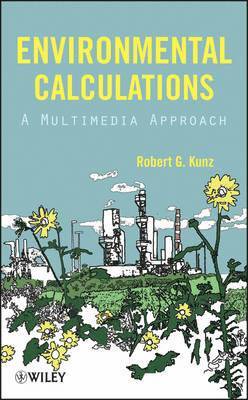
    Environmental Calculations

    A Multimedia Approach

    AvRobert G. Kunz

    Inbunden, Engelska, 2009

    1 871 kr

    Beställningsvara. Skickas inom 5-8 vardagar. Fri frakt över 249 kr.

    Fler format och utgåvor

    E-bok

    2 161 kr

    E-bok

    2 161 kr

    Beskrivning

    Consolidates information and technical calculations for a wide variety of environmental factors Operating a business facility of any size, especially a manufacturing location, requires environmental permits from a number of governmental regulatory agencies responsible for protecting human health and the environment. Environmental Calculations: A Multimedia Approach provides an essential, one-stop reference for the necessary technical calculations to obtain a broad range of such permits. Along with clear, concise, and factual explanations, the text also includes relevant equations, examples, and case studies to support and clarify the calculations.Filled with the rich experience from the author's years of work in environmental permitting, the coverage features: An introduction to the major concepts and practice in the permitting process Key concepts in environmental chemistry such as the ideal gas law, vapor pressure, reaction stoichiometry, and heat effects Air pollution control Water/wastewater Solid/hazardous waste Noise generation, propagation, and control Radiation/radioactive decay An all-around guide for environmental permitting in many contexts, Environmental Calculations: A Multimedia Approach is a must-have for anybody concerned with environmental assessment and compliance, as well as those reviewing, issuing, and monitoring environmental permits.

    Produktinformation

    • Utgivningsdatum:2009-09-18
    • Mått:163 x 241 x 38 mm
    • Vikt:1 111 g
    • Format:Inbunden
    • Språk:Engelska
    • Antal sidor:736
    • Förlag:John Wiley & Sons Inc
    • ISBN:9780470139851

    Utforska kategorier

    • Kemi inom Naturvetenskap och teknik
    • Miljöteknik inom Naturvetenskap och teknik

    Mer om författaren

    Robert G. Kunz was an environmental engineering manager at a major industrial gas and chemical company before retiring after twenty-six years. He also worked in the petroleum industry, on plant design/construction, and for a manufacturer of air pollution control catalyst. He is currently an independent environmental consultant. Dr. Kunz earned a BChE degree in chemical engineering from Manhattan College, a PhD in chemical engineering from Rensselaer Polytechnic Institute, an MS in environmental engineering from Newark College of Engineering, and an MBA from Temple University.

    Innehållsförteckning

    • Preface. Acknowledgments.1. Introduction.1.1 Who, What, Why, and How of This Book.1.2 Potential Users.1.3 Arrangement.1.4 Truths and Myths About Environmental Control.1.5 Adequate Preparation Is the Key.1.6 A List of Do’s.1.7 And At Least One Don’t.1.8 Author’s Supplemental Disclaimer.References.2. Basic Concepts.2.1 Basic Chemistry.2.2 The Ideal Gas.2.3 Concentrations and Mass Flow Rates.2.4 Vapor Pressure.2.5 Henry’s Law.2.6 Vapor–Liquid Equilibrium.2.7 Energy Balances and Heat Transfer.2.8 A Smattering of Statistics.References.3. Air Combustion.3.1 Introduction.3.2 Combustion.3.3 Fuel.3.4 Air.3.5 Water.3.6 Combustion Calculations from Basic Principles.3.7 Flue Gas. 3.8 Combustion Calculations Based on EPA Method 19 F Factors.3.9 Combustion Problems: Major Species in the Flue Gas.3.10 Adiabatic Flame Temperature.3.11 Estimation of Pollutant Emissions.3.12 The Stack Test.3.13 Continuous Emission Monitoring Systems.3.14 Miscellaneous Sources of Air Emissions.References.4. Air Control Devices.4.1 Overview.4.2 Flares.4.3 Selective Catalytic Reduction.4.4 Selective Noncatalytic Reduction.4.5 Flue Gas Recirculation.4.6 Water/Steam Injection into Combustion Gas Turbine.4.7 Low-Temperature Oxidation (Ozone Reaction/Scrubbing).4.8 Particulate Removal.4.9 Flue Gas Scrubbing.4.10 Atmospheric Dispersion.References.5. Water/Wastewater Composition.5.1 Introduction.5.2 Concentrations Expressed as mg/L as CaCO3.5.3 Dissolved Oxygen.5.4 Nonspecific Indicators of Water Pollution.5.5 BOD, COD, and TOC in Industrial Wastewater.5.6 Domestic Wastewater (Also known as Sewage).5.7 Dissolved Oxygen Concentration in a Receiving Stream.5.8 Alkalinity.5.9 The Nitrogen Cycle.5.10 Chlorination/Dechlorination.5.11 Petroleum Oil.5.12 Cooling Water Operations.5.13 Boiler Operations.References.6. Water/Wastewater Hydraulics. 6.1 Measurement of Effluent Flow.6.3 Meeting Water Quality Limits.6.6 Back to the Manning Equation.References.7. Water/Wastewater Draining of Tanks.7.1 Introduction.7.2 Time to Drain Tanks.7.3 Trajectory of the Jet from a Leaking Tank.References. 8. Solid Waste.8.1 Introduction.8.2 Selected Waste Designations/Definitions.8.3 Waste Analysis.8.4 Calculations for Solid/Hazardous Waste Permitting.8.5 Waste Incineration.References.9. Noise.9.1 General.9.2 Sound Versus Noise.9.3 Sound Properties.9.4 Frequency Spectrum.9.5 The Octave.9.6 Combining Decibels.9.7 Composite Sound Level.9.8 Speech Interference.9.9 A-Weighting Statistics.9.10 Noise Regulations.9.11 Industrial Noise.9.12 Sound Propagation from Point Source to Receptor.9.13 Excess Attenuation of Noise over Distance.9.14 Highway Noise (A Line Source).9.15 Noise Control.9.16 The Community Noise Survey.References.10. Radioactive Decay.10.1 Definitions and Units.10.2 Some Sources of Radioactivity.10.3 Types of Radioactive Decay.10.4 Pathways of Radioactive Decay.10.5 Decay Series.10.6 Longer Decay Chains.10.7 Rate of Decay in a Radioactive Series.10.8 A Transition from Science to the Realm of Regulatory Control.10.9 Some Notable Accidents Involving Nuclear Materials.10.10 Governmental Regulations and Licensing Procedures.10.11 Radioactive Waste Disposal.References.Appendix A. Suggested Undergraduate Environmental Curriculum.Appendix B. Relationship among Expressions for Atmospheric Contaminants as Concentrations (ppm), Mass Flow Rates (lb/h), and Emission Factors (lb/MMBtu).Appendix C. Burner NOx from Ethylene Cracking Furnaces.Appendix D. What Is BOD and How Is It Measured?Appendix E. Cooling Water Calculations. Appendix F. Increase in Runoff from Industrial/ Commercial/Urban Development: The Telltale Bridge.Appendix G. Water Quality Improvement for a Small River.Appendix H. Experimental Determination of Coefficient for Draining of Tank.Appendix I. Noise Case Studies.Appendix J. Air Pollution Aspects of the Fluid Catalytic Cracking Process.Appendix K. Case Studies in Air Emissions Control.Appendix L. Combustion of Refinery Fuel Gas.Index.