• Fri frakt över 249 kr
  • •
  • Snabba leveranser
  • •
  • Billiga böcker
Kundservice

Du är på sajten för privatpersoner.

Företag, bibliotek eller offentlig verksamhet?

Du handlar på classic.bokus.com, där alla dina funktioner finns intakta.
Till classic.bokus.com
Bokus logotyp. Gå till startsidan.
  • Erbjudanden
  • Nyheter
  • Student
  • Topplistor
  • Barn & ungdom
  • Bokus Play
  • E-böcker
  • Pocketböcker
  • Spel & pussel

Må bättre, för mindre! Upp till 50% rabatt på hälsoböcker

Sidfot

Mina sidor

    Hjälp

    • Kundservice
    • Vanliga frågor och svar
    • Frakt och leverans
    • Retur vid ångerrätt
    • Reklamera vara
    • Betalning
    • Köpvillkor
    • Allmänna villkor
    • Information om webbplatsens tillgänglighet

    Om Bokus

    • Om oss
    • Pressrum
    • För studenter
    • För företag
    • För bibliotek och offentlig verksamhet
    • För leverantörer
    • Hållbarhet

    Populärt

    • Aktuella erbjudanden
    • Presentkort
    • Studentlitteratur
    • Nya böcker
    • Topplistor
    • Signerade böcker
    • Engelska böcker

    Inspiration

    • Boktips
    • BookTok
    • Populära bokserier
    • Barnbokskaraktärer
    • Populära författare
    Logotyp för Bokus
    Följ oss på Facebook (extern länk)Följ oss på Instagram (extern länk)Följ oss på YouTube (extern länk)Följ oss på TikTok (extern länk)
    bokus @ CookiesAnpassa cookiesIntegritetspolicyKöpvillkor
    Till Citymail hemsida (extern länk)Till Budbee hemsida (extern länk)Till Postnord hemsida (extern länk)Till Schenker hemsida (extern länk)Till Early Bird hemsida (extern länk)Till Walleys hemsida (extern länk)
    1. Naturvetenskap och teknik
    2. Teknik och industri
    3. Byggnadsteknik

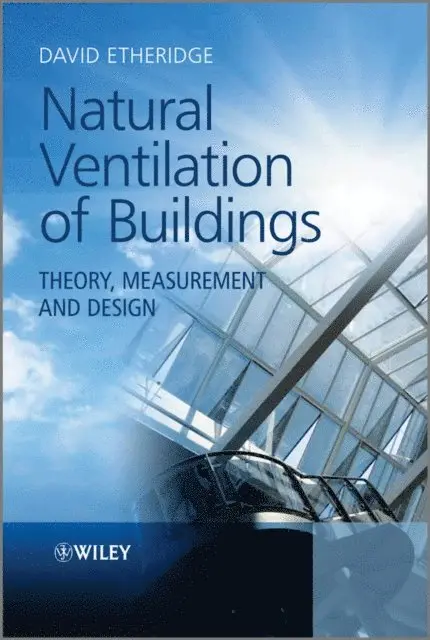
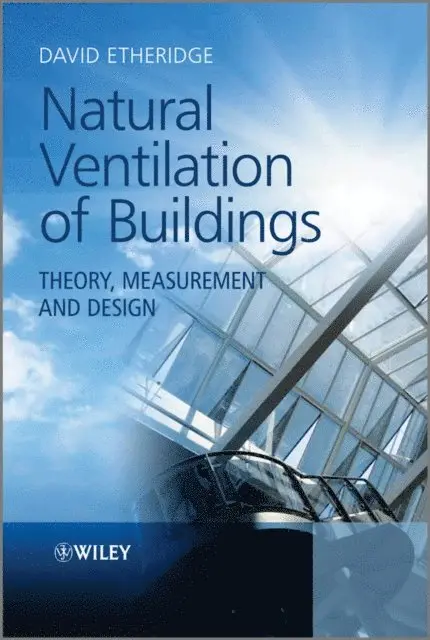
    Natural Ventilation of Buildings

    Theory, Measurement and Design

    AvDavid Etheridge

    Inbunden, Engelska, 2011

    1 497 kr

    Beställningsvara. Skickas inom 5-8 vardagar. Fri frakt över 249 kr.

    Fler format och utgåvor

    E-bok

    1 724 kr

    E-bok

    1 719 kr

    Beskrivning

    Natural ventilation is considered a prerequisite for sustainable buildings and is therefore in line with current trends in the construction industry. The design of naturally ventilated buildings is more difficult and carries greater risk than those that are mechanically ventilated. A successful result relies increasingly on a good understanding of the abilities and limitations of the theoretical and experimental procedures that are used for design. There are two ways to naturally ventilate a building: wind driven ventilation and stack ventilation. The majority of buildings employing natural ventilation rely primarily on wind driven ventilation, but the most efficient design should implement both types.Natural Ventilation of Buildings: Theory, Measurement and Design comprehensively explains the fundamentals of the theory and measurement of natural ventilation, as well as the current state of knowledge and how this can be applied to design.  The book also describes the theoretical and experimental techniques to the practical problems faced by designers.  Particular attention is given to the limitations of the various techniques and the associated uncertainties.Key features: Comprehensive coverage of the theory and measurement of natural ventilationDetailed coverage of the relevance and application of theoretical and experimental techniques to designHighlighting of the strengths and weaknesses of techniques and their errors and uncertaintiesComprehensive coverage of mathematical models, including CFDTwo chapters dedicated to design procedures and another devoted to the basic principles of fluid mechanics that are relevant to ventilationThis comprehensive account of the fundamentals for natural ventilation design will be invaluable to undergraduates and postgraduates who wish to gain an understanding of the topic for the purpose of research or design. The book should also provide a useful source of reference for more experienced industry practitioners.


    Produktinformation

    • Utgivningsdatum:2011-11-04
    • Mått:178 x 252 x 28 mm
    • Vikt:812 g
    • Format:Inbunden
    • Språk:Engelska
    • Antal sidor:456
    • Förlag:John Wiley & Sons Inc
    • ISBN:9780470660355

    Utforska kategorier

    • Byggnadsteknik inom Naturvetenskap och teknik

    Mer om författaren

    David Etheridge, School of The Built Environment, University of Nottingham, UKDavid Etheridge is an Associate Professor within the Institute of Building Technology, School of The Built Environment at Nottingham University. David has published many papers on ventilation research and design. He is the co-author of a comprehensive reference book on ventilation, Building Ventilation: Theory & Measurement, 1996. More recently he made a major contribution to the CIBSE design guide Natural Ventilation in Non-Domestic Buildings (AM10:2005). He has received several awards for his work, namely the MacRobert Award from the Royal Academy of Engineering, the Prince of Wales Award for Innovation, the Gold Medal of the Institution of Gas Engineers and the CIBSE Silver Medal.

    Recensioner i media

    "In conclusion this is a substantially numerical book which is very much aimed at the student of building services engineering. However, in addition to the extensive use of equations, a good descriptive account of the theory is presented. Hence this book should also have wider appeal to anyone requiring a good background knowledge of the theory and application of natural ventilation." (International Journal of Ventilation, 1 March 2012)

    Innehållsförteckning

    • Chapter 1. INTRODUCTION AND OVERVIEW OF NATURAL VENTILATION DESIGN. 1.1 Aims and scope of the book.1.2 Natural ventilation in context.2.2 Advantages and disadvantages of natural ventilation.1.3 Overview of design.1.4 Notes on references.Chapter 2. PHYSICAL PROCESSES IN NATURAL VENTILATION.2.1 Introduction.2.2 The effect of gravity on ventilation flows.2.3 Types of flow encountered in ventilation.2.4 Fluid mechanics – other important concepts and equations.2.5 Steady and unsteady ventilation.2.6 Flow through a sudden expansion.2.7 Dimensional analysis.2.8 Heat transfer between air and envelope.2.9 Definitions relating to ventilation rate.2.10 Errors and uncertainties.2.11 Mathematical models.2.12 Boundary conditions.Bibliography.References.Chapter 3. STEADY FLOW CHARACTERISTICS OF OPENINGS.3.1 Introduction.3.2 Classification of openings.3.3 Still-air discharge coefficient.3.4 Installation effects on Cd.3.5 Openings in combination.3.6 Determination of Cd.3.7 Uncertainties in design calculations.3.8 Other definitions of discharge coefficient.3.9 Large (and very large) openings.3.10 Relevance to design.References.CHAPTER 4. STEADY ENVELOPE FLOW MODELS.4.1 Introduction.4.2 Basic theory4.3 Single- and multi-cell models.4.4 Simple analytic solutions.4.5 Non-uniform density.4.6 Turbulent diffusion.4.7 Large openings.4.8 Adventitious openings.4.9 Explicit method of solution.4.10 Uncertainties in envelope flow models.4.11 Combined envelope and thermal models.4.12 Models for very large openings.4.13 Relevance to design.References.CHAPTER 5. UNSTEADY ENVELOPE FLOW MODELS.5.1 Introduction.5.2 Flow equation.5.3 Pressure difference across openings.5.4 Mass conservation equation.5.5 Envelope flow models.5.6 Comparisons with measurement.5.7 Mean flow rates.5.8 Instantaneous flow rates.5.9 Unsteady flow models in design.5.10 Relevance to design.References.Chapter 6. INTERNAL AIR MOTION, ZONAL MODELS AND STRATIFICATION.6.1 Introduction.6.2 Governing equations.6.3 Primary and secondary flows.6.4 Zonal models.6.5 Coarse-grid CFD.6.6 Integrated zonal and envelope models.6.7 Stratification.6.8 Relevance to designReferences.Chapter 7. CONTAMINANT TRANSPORT AND INDOOR AIR QUALITY.7.1 Introduction.7.2 Concentration at a point.7.3 Conservation equations for bounded spaces, envelope models.7.4 Conservation equations for large unbounded volumes as used in zonal models.7.5 Analytic relations for concentration at a point.7.6 Analytic relations for uniform concentration.7.7 Analytic relations for non-uniform concentration.7.8 Calculations with CFD, coarse-grid CFD and zonal models.7.9 Definitions relating to contaminant removal.7.10 Relevance to design.References.Chapter 8. AGE OF AIR AND VENTILATION EFFICIENCY.8.1 Introduction.8.2 Theoretical modelling of age properties at a point.8.3 Zonal models.8.4 Ventilation efficiency.8.5 Analytic relationships.8.6 Experimental determination of age (using a tracer).8.7 Unsteady age distributions.8.8 Relevance to design.References.CHAPTER 9. COMPUTATIONAL FLUID DYNAMICS AND ITS APPLICATIONS.9.1 Introduction.9.2 Basics of CFD.9.3 Important modelling issues.9.4 Calculation of external wind flow.9.5 Calculation of internal flows9.6 Whole-field calculations.9.7 Other applications.9.8 Relevance to design.References.Chapter 10. SCALE MODELLING.10.1 Introduction.10.2 Requirements for similarity.10.3 Wind alone.10.4 Buoyancy alone.10.5 Wind and buoyancy combined.10.6 Use of water as the modelling fluid.10.7 Relevance to design.References.Chapter 11. FULL-SCALE MEASUREMENTS.11.1 Introduction.11.2 Laboratory measurements of Cd and effective area.11.3 Measurement of adventitious leakage using steady pressurisation.11.4 Unsteady techniques for measurement of low-pressure leakage.11.5 Field measurements of ventilation rates.11.6 Other measurements.11.7 Relevance to design.References.Chapter 12. DESIGN PROCEDURES.12.1 Introduction.12.2 Feasibility of natural ventilation (Stage 1).12.3 Ventilation strategies (Stage 2).12.4 Envelope design (Stage 3).12.5 Internal environment (Stage 4).12.6 Data specification.12.7 Low-energy cooling systems.12.8 Control systems.12.9 Commissioning (Stage 5).12.10 Concluding remarks.References.