• Fri frakt över 249 kr
  • •
  • Snabba leveranser
  • •
  • Billiga böcker
Kundservice

Du är på sajten för privatpersoner.

Företag, bibliotek eller offentlig verksamhet?

Du handlar på classic.bokus.com, där alla dina funktioner finns intakta.
Till classic.bokus.com
Bokus logotyp. Gå till startsidan.
  • Erbjudanden
  • Nyheter
  • Student
  • Topplistor
  • Barn & ungdom
  • Bokus Play
  • E-böcker
  • Pocketböcker
  • Spel & pussel

10% rabatt på allt med kod NYSTART10 →

Sidfot

Mina sidor

    Hjälp

    • Kundservice
    • Vanliga frågor och svar
    • Frakt och leverans
    • Retur vid ångerrätt
    • Reklamera vara
    • Betalning
    • Köpvillkor
    • Allmänna villkor
    • Information om webbplatsens tillgänglighet

    Om Bokus

    • Om oss
    • Pressrum
    • För studenter
    • För företag
    • För bibliotek och offentlig verksamhet
    • För leverantörer
    • Hållbarhet

    Populärt

    • Aktuella erbjudanden
    • Presentkort
    • Studentlitteratur
    • Nya böcker
    • Topplistor
    • Signerade böcker
    • Engelska böcker

    Inspiration

    • Boktips
    • BookTok
    • Populära bokserier
    • Barnbokskaraktärer
    • Populära författare
    Logotyp för Bokus
    Följ oss på Facebook (extern länk)Följ oss på Instagram (extern länk)Följ oss på YouTube (extern länk)Följ oss på TikTok (extern länk)
    bokus @ CookiesAnpassa cookiesIntegritetspolicyKöpvillkor
    Till Citymail hemsida (extern länk)Till Budbee hemsida (extern länk)Till Postnord hemsida (extern länk)Till Schenker hemsida (extern länk)Till Early Bird hemsida (extern länk)Till Walleys hemsida (extern länk)
    1. Naturvetenskap och teknik
    2. Geovetenskap
    3. Geovetenskap
    4. Meteorologi och klimatologi

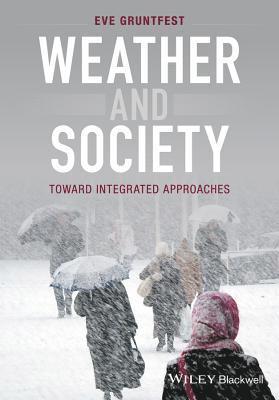
    Weather and Society

    Toward Integrated Approaches

    AvEve Gruntfest

    Häftad, Engelska, 2018

    789 kr

    Tillfälligt slut

    Fler format och utgåvor

    E-bok

    1 199 kr

    E-bok

    1 202 kr

    Beskrivning

    Weather and Society: Toward Integrated Approaches provides the first interdisciplinary approach to the subject of weather and society. This guide to the evolving set of problem-solving approaches to weather’s societal issues successfully integrates social science’s techniques, concepts and methodologies into meteorological research and practice. Drawing especially on the work of the WAS*IS workshops (Weather and Society * Integrated Studies), this important reference offers a framework for starting to understand how the consideration of societal impacts can enhance the scientific disciplines that address the scope and impacts of weather, particularly meteorology. Filled with tools, concepts, case studies and helpful exercises, this resource: Lays the groundwork for conducting interdisciplinary work by learning new strategies and addressing typical challengesIdentifies leaders of the movement to integrate social science and meteorology and highlights their contributionsIncludes discussion of such tools as Geographic Information Systems, survey design, focus groups, participatory research and interviewing techniques and conceptsReveals effective integrated research and applications though real-world examples in a global contextHelps to identify ways to pursue research, application, and educational opportunities for integrated weather-society work Weather and Society is a hands-on guide for academics, students and professionals that offers a new approach to the successful integration of social science concepts and methodologies into the fabric of meteorological research and practice.

    Produktinformation

    • Utgivningsdatum:2018-02-23
    • Mått:135 x 213 x 10 mm
    • Vikt:340 g
    • Format:Häftad
    • Språk:Engelska
    • Antal sidor:240
    • Förlag:John Wiley and Sons Ltd
    • ISBN:9780470669846

    Utforska kategorier

    • Meteorologi och klimatologi inom Naturvetenskap och teknik
    • Geografi inom Naturvetenskap och teknik

    Mer om författaren

    DR. EVE GRUNTFEST is a geographer who has devoted her career to breaking down the barriers that separate social science and atmospheric science. She is Professor Emerita from University of Colorado at Colorado Springs where she taught for 27 years. She has published widely and is an expert in the areas of warning systems and flash flood mitigation. During her career, she served on five National Academy of Science committees. She directed Social Science Woven into Meteorology (SSWIM - www.sswim.org) and is co-founder of the Weather and Society * Integrated Studies (WAS*IS) movement. She was a program officer in the Atmospheric and Geospace Sciences Division at National Science Foundation and a member of the National Oceanic and Atmospheric Administration's Science Advisory Board.

    Innehållsförteckning

    • Acknowledgments xPreface xii1 The Need for Integrated Approaches to Weather and Society 11.1 Rationale for This Book 1Research Spotlight Box: Forecasts are Improving Dramatically 31.2 The Audience for This Book 81.3 Defining Weather and Society: Integrated Approaches 101.4 What Social Sciences Have in Common with Each Other and with Atmospheric Science? 151.5 Social Science Methodologies 181.5.1 Surveys 181.5.2 Direct Observations 191.5.3 Participatory Action Research 191.5.4 Focus Groups 201.6 What Is Not Social Science? 211.7 Doing Social Science Versus Incorporating Societal Impacts 221.8 Questions for Review and Discussion 231.9 Using What You’ve Learned: Homework Assignment From the Chapter 24References 252 History of the Movement to Integrate Social Science Into Atmospheric Science 292.1 Early Weather Forecasting for Impacts 292.2 Historians and Weather 302.3 Weather and Society Efforts Build on Natural Hazards Research and Practice 322.3.1 Efforts to Add Social Dimensions to Solving Weather Problems 352.3.2 Weather and Society * Integrated Studies—WAS*IS 362.3.3 Integrated Warning Team Meetings 392.3.4 American Meteorological Society Summer Policy Colloquium 392.3.5 Social Science Woven into Meteorology (SSWIM) 392.3.6 VORTEX‐Southeast 42Research Spotlight Box: Doing Social Science Reveals Challenges to Accepted Assumptions 432.4 Physical Science Myths Related to Climate and Applicable to Weather 452.5 Meteorological Aspects of Non‐Meteorological Hazards 482.6 Research That Evaluates What People Did When They Heard a Warning: Hurricane Ike 2008 Case Study 502.7 Questions for Review and Discussion 532.8 Using What You’ve Learned: Homework Assignment From the Chapter 54References 553 Social Science Partners and the Weather/Society Work They Do 593.1 The Partners and How They Do Their Work 613.2 Anthropology 643.3 Communication 683.4 Economics 713.5 Geography 763.6 Psychology 833.7 Sociology 873.8 Questions for Review and Discussion 943.9 Using What You’ve Learned: Homework Assignment From the Chapter 96References 974 Thirteen Profiles of Leaders in Weather and Social Science 1054.1 Angle’s Recommendations for Integrating Social Science and Atmospheric Science 1084.2 Dr. Becker’s Recommendations for Integrating Social Science and Atmospheric Science 1094.3 Dr. Demuth’s Recommendations for Integrating Social Science and Atmospheric Science 1124.4 Dobson’s Recommendations for Integrating Social Science and Atmospheric Science 1144.5 Fransen’s Recommendations for Integrating Social Science and Atmospheric Science 1164.6 Holthaus’ Recommendations for Integrating Social Science and Atmospheric Science 1184.7 Dr. Lazrus’ Recommendations for Integrating Social Science and Atmospheric Science 1204.8 Dr. Morss’ Recommendations for Integrating Social Science and Atmospheric Science 1224.9 Moulton’s Recommendations for Integrating Social Science and Atmospheric Science 1244.10 Dr. Ruin’s Recommendations for Integrating Social Science and Atmospheric Science 1264.11 Dr. Schumacher’s Recommendations for Integrating Social Science and Atmospheric Science 1274.12 Spinney’s Recommendations for Integrating Social Science and Atmospheric Science 1294.13 Vitols’ Recommendations for Integrating Social Science and Atmospheric Science 1314.14 Questions for Review and Discussion 1324.15 Using What You’ve Learned: Homework Assignment From the Chapter 132References 1335 Moving Toward Integrated Weather and Society Research and Practice—A New Paradigm 1345.1 How Social Scientists and Meteorologists Work Together to Create New Scientific Conceptual Models and Methods: Start with Adjacent Projects 134Case Study: Schools and Tornado Saferooms 135Case Study: Storm Surge Warnings From the NWS—Moving From Adjacent Social Scientific Collaboration to Integrative Collaborations 137Case Study: Required Integrated Research: National Science Foundation Dynamics of Coupled Natural and Human Systems Program 1395.2 Increased Popularity for How Important It Is for Meteorologists to Understand Some Social Science 1405.3 Possible New Common Ground for Integrated Approaches to Weather and Society: Emergence of Convergence Science 1405.4 Socio‐Meteorological Testbeds 1455.5 Wicked Problems and Momentum In the Movement Toward Integrated Weather‐Society Science 1465.6 Hard or Soft Science? Evening the Playground Between the Sciences 1475.7 Human Machine Interface 1485.8 Questions for Review and Discussion 1515.9 Using What You’ve Learned: Homework Assignment From the Chapter 151References 1526 Ways to Be Part of the Transformation to Integrated Weather Studies 1566.1 Be Part of the Move From WAS to IS 1566.2 Understand the Cycle of Change 1576.3 Keep the Momentum Going Toward the Integration of Social and Atmospheric Science 1606.4 Build Durable Partnerships—Recognize the Power of Networking 1616.5 Support May Come From Surprising Sources 1636.6 Five Key Research Priorities for New Hybrid Weather Society Researchers and Practitioners 1636.7 How Science Changes 1736.8 Socio‐Hydrology Emerges 1746.9 New Integrated Disciplines on the Horizon 1756.10 Changing the Paradigm Takes Time and Will Require Patience 1776.11 Hybrids By Design—Socio‐Hydro‐Meteorology 1786.12 How to Become a Participant in the Movement to Integrate the Social Sciences and Atmospheric Science 1806.13 The Challenges Are Not Overwhelming 1816.13.1 Scientific Budgets Are Lean 1816.13.2 Be Patient and Optimistic and Keep Pushing 1816.14 Meteorologists Embracing Social Science Is a First Step 1826.14.1 Be Part of the Integrated Studies Movement 1836.14.2 Work Out Wide‐Open Ways for Partners to Thrive 1836.15 Work for the Longer Term 1846.15.1 New Integrated Graduate Programs and New Integrated Training Models 1846.15.2 Positive Outlook for Careers for People with a Background in Integrated Studies 1856.15.3 Climate Change will Exacerbate the Need for Integrated Weather–Society Research and Practice 1866.16 Questions for Review and Discussion 1886.17 Using What You’ve Learned: Homework Assignment From the Chapter 188References 190AppendicesAppendix A: List of Acronyms 194Appendix B: Blogs and Websites that Integrate Weather and Society 196Appendix C: Other Relevant Web Resources 199Addendum 200Index 203