• Fri frakt över 249 kr
  • •
  • Snabba leveranser
  • •
  • Billiga böcker
Kundservice

Du är på sajten för privatpersoner.

Företag, bibliotek eller offentlig verksamhet?

Du handlar på classic.bokus.com, där alla dina funktioner finns intakta.
Till classic.bokus.com
Bokus logotyp. Gå till startsidan.
  • Erbjudanden
  • Student
  • Topplistor
  • Barn & ungdom
  • Bokus Play
  • Bokus Play
  • E-böcker
  • Ljudböcker
  • Pocketböcker
  • Spel & pussel

10% rabatt på allt med kod NYSTART10 →

Sidfot

Mina sidor

    Hjälp

    • Kundservice
    • Vanliga frågor och svar
    • Frakt och leverans
    • Retur vid ångerrätt
    • Reklamera vara
    • Betalning
    • Köpvillkor
    • Allmänna villkor
    • Information om webbplatsens tillgänglighet

    Om Bokus

    • Om oss
    • Pressrum
    • För studenter
    • För företag
    • För bibliotek och offentlig verksamhet
    • För leverantörer
    • Hållbarhet

    Populärt

    • Aktuella erbjudanden
    • Presentkort
    • Studentlitteratur
    • Nya böcker
    • Topplistor
    • Signerade böcker
    • Engelska böcker

    Inspiration

    • Boktips
    • BookTok
    • Populära bokserier
    • Barnbokskaraktärer
    • Populära författare
    Logotyp för Bokus
    Följ oss på Facebook (extern länk)Följ oss på Instagram (extern länk)Följ oss på YouTube (extern länk)Följ oss på TikTok (extern länk)
    bokus @ CookiesAnpassa cookiesIntegritetspolicyKöpvillkor
    Till Citymail hemsida (extern länk)Till Budbee hemsida (extern länk)Till Postnord hemsida (extern länk)Till Schenker hemsida (extern länk)Till Early Bird hemsida (extern länk)Till Walleys hemsida (extern länk)
    1. Naturvetenskap och teknik
    2. Teknik och industri
    3. Miljöteknik

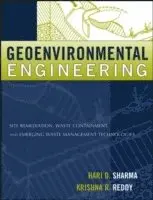
    Geoenvironmental Engineering

    Site Remediation, Waste Containment, and Emerging Waste Management Technologies

    AvHari D. Sharma,Krishna R. Reddy

    Inbunden, Engelska, 2004

    2 939 kr

    Beställningsvara. Skickas inom 5-8 vardagar. Fri frakt över 249 kr.

    Beskrivning

    Geoenvironmental Engineering covers the application of basic geological and hydrological science, including soil and rock mechanics and groundwater hydrology, to any number of different environmental problems.* Includes end-of-chapter summaries, design examples and worked-out numerical problems, and problem questions.* Offers thorough coverage of the role of geotechnical engineering in a wide variety of environmental issues.* Addresses such issues as remediation of in-situ hazardous waste, the monitoring and control of groundwater pollution, and the creation and management of landfills and other above-ground and in-situ waste containment systems.

    Produktinformation

    • Utgivningsdatum:2004-06-15
    • Mått:196 x 236 x 46 mm
    • Vikt:1 588 g
    • Format:Inbunden
    • Språk:Engelska
    • Antal sidor:992
    • Förlag:John Wiley & Sons Inc
    • ISBN:9780471215998

    Utforska kategorier

    • Miljöteknik inom Naturvetenskap och teknik

    Mer om författaren

    HARI SHARMA, PHD, PE, GE, is a Principal with GeoSyntec Consultants specializing in geoenvironmental and geotechnical engineering. He is the author of Waste Containment Systems and coauthor of Pile Foundations in Engineering Practice (both from Wiley). He has authored more than thirty-five research papers and has more than thirty years of experience in engineering practice. KRISHNA REDDY, PHD, PE, is Associate Professor of Civil and Environmental Engineering at the University of Illinois, Chicago. He has earned numerous awards and honors for both his teaching and his research. He teaches geoenvironmental engineering courses, such as environmental geotechnology, environmental remediation, and landfill design, among others. He is a registered professional engineer in the State of Illinois.

    Recensioner i media

    "Appropriately balanced.... The authors possess the special ability of presenting scientific and engineering information while maintaining an easy-to-read style. Almost all topics dealt with include one or more examples of practical application (this feature may be one of the authors' secrets which make their book so reader friendly). This book provides an extensive compilation of up-to-date knowledge on geoenvironmental technologies and makes a major contribution to putting this essential discipline on a solid footing. It will not be surprising if it rapidly becomes a best seller." (Land Contamination and Reclamation, 13:1, 2005) "Sharma and Reddy cover the topic [of Geoenvironmental Engineering] thoroughly in this book...this is an excellent text that may very well dominate this field for several years." (Journal of Hazardous Materials, November 2004)

    Innehållsförteckning

    • Preface. PART I: BASIC PRINCIPLES.1. INTRODUCTION.1.1 Emergence of Geoenvironmental Engineering.1.2 Types of Geoenvironmental Problems.1.3 Book Organization.1.4 Summary.Questions/Problems.References.2. RELEVANT ENVIRONMENTAL LAWS AND REGULATIONS.2.1 Introduction.2.2 Development of Laws and Regulations.2.3 Federal Environmental Laws and Regulations.2.4 State and Local Laws and Regulations.2.5 Impact of Regulations on Geoenvironmental Practice.2.6 Summary.Questions/Problems.References.3. CHEMICAL BACKGROUND.3.1 Introduction.3.2 Toxic Chemicals.3.3 Inorganic Chemistry Background.3.4 Organic Chemistry Background.3.5 Nuclear Chemistry Background.3.6 Chemical Analysis Methods.3.7 Summary.Questions/Problems.References.4. COMPOSITION OF SOILS.4.1 Introduction.4.2 Soil Formation.4.3 Soil Composition.4.4 Soil Fabric.4.5 Summary.Questions/Problems.References.5. SOIL PROPERTIES.5.1 Introduction.5.2 Geotechnical Properties.5.3 Chemical Properties.5.4 Summary.Questions/Problems.References.6. GEOCHEMISTRY BACKGROUND.6.1 Introduction.6.2 Inorganic Geochemistry.6.3 Organic Geochemistry.6.4 Summary.Questions/Problems.References.7. GROUNDWATER FLOW.7.1 Introduction.7.2 Hydrologic Cycle and Groundwater.7.3 Aquifer, Aquiclude, and Aquitard.7.4 Hydraulic Head and Aquifer Properties.7.5 Groundwater Flow in Aquifers.7.6 One-Dimensional Steady Flow.7.7 Flow Toward a Pumping Well.7.8 Pumping and Slug Testing.7.9 Two- and Three-Dimensional Groundwater Flow.7.10 Summary.Questions/Problems.References.8. CONTAMINANT TRANSPORT AND FATE.8.1 Introduction.8.2 Transport Processes.8.3 Chemical Mass Transfer Processes.8.4 Biological Process (Biodegradation).8.5 Contaminant Transport and Fate Modeling.8.6 Applications.8.7 Summary.Questions/Problems.References.PART II: REMEDIATION TECHNOLOGIES.9. SUBSURFACE CONTAMINATION: SOURCES, CONTAMINANTS, REGULATIONS, AND REMEDIAL APPROACH.9.1 Introduction.9.2 Sources of Contamination.9.3 Types of Contaminants.9.4 Relevant Regulations.9.5 Other Considerations.9.6 Remediation Approach.9.7 Summary.Questions/Problems.References.10. CONTAMINATED SITE CHARACTERIZATION.10.1 Introduction.10.2 General Methodology.10.3 Preliminary Site Assessment.10.4 Exploratory Site Investigation.10.5 Detailed Site Investigation.10.6 Expedited or Accelerated Site Characterization.10.7 Summary.Questions/Problems.References.11. RISK ASSESSMENT AND REMEDIAL STRATEGY.11.1 Introduction.11.2 Risk Assessment Procedures.11.3 USEPA Procedure.11.4 ASTM Procedure.11.5 Other Risk Assessment Methods.11.6 Remedial Strategy.Questions/Problems.References.12. IN-SITU WASTE CONTAINMENT.12.1 Introduction.12.2 Vertical Barriers.12.3 Bottom Barriers.12.4 Surface Caps or Covers.12.5 Groundwater Pumping Systems.12.6 Subsurface Drains.12.7 Summary.Questions/Problems.References.13. SOIL REMEDIATION TECHNOLOGIES.13.1 Introduction.13.2 Soil Vapor Extraction.13.3 Soil Washing.13.4 Stabilization and Solidification.13.5 Electrokinetic Remediation.13.6 Thermal Desorption.13.7 Vitrification.13.8 Bioremediation.13.9 Phytoremediation.13.10 Soil Fracturing.13.11 Summary.Questions/Problems.References.14. GROUNDWATER REMEDIATION TECHNOLOGIES.14.1 Introduction.14.2 Pump and Treat.14.3 In-Situ Flushing.14.4 Permeable Reactive Barriers.14.5 In-Situ Air Sparging.14.6 Monitored Natural Attenuation.14.7 Bioremediation.14.8 Summary.Questions/Problems.References.PART III LANDFILLS AND SURFACE IMPOUNDMENTS.15. SOURCES AND CHARACTERISTICS OF WASTES 60515.1 Introduction.15.2 Sources of Wastes.15.3 Classification of Wastes.15.4 Waste Characterization.15.5 Environmental Concerns with Wastes.15.6 Waste Management Strategies.15.7 Engineered Waste Disposal Facilities.15.8 Summary.Questions/Problems.References.16. LANDFILL REGULATIONS, SITING, AND CONFIGURATIONS 63516.1 Introduction.16.2 Federal Regulations.16.3 State and Local Regulations.16.4 Siting Methodology.16.5 Site Permit Application.16.6 Landfill Configurations.16.7 Summary.Questions/Problems.References.17. WASTE CONTAINMENT LINER SYSTEMS.17.1 Introduction.17.2 Low-Permeability Soil Liners.17.3 Geomembrane Liners.17.4 Geotextiles.17.5 Geosynthetic Clay Liners.17.6 Geonets and Geocomposite Drains.17.7 Geogrids.17.8 Interface Strengths among Various Liner Components.17.9 Manufacturing and Construction Quality Assurance.17.10 Estimation of Leakage through Liner Systems.17.11 Performance of Liners in Waste Containment Systems.17.12 Summary.Questions/Problems.References.18. LEACHATE COLLECTION AND REMOVAL SYSTEMS AND LINER DESIGN.18.1 Introduction.18.2 Design Criteria.18.3 Leachate Generation and Management.18.4 Containment System Liner Design.18.5 Summary.Questions/Problems.References.19. FINAL COVER SYSTEMS.19.1 Introduction.19.2 Purpose and Design Criteria.19.3 Regulatory Minimum Requirements.19.4 Design Procedure.19.5 Summary.Questions/Problems.References.20. GAS GENERATION AND MANAGEMENT.20.1 Introduction.20.2 Gas Generation Mechanisms.20.3 Gas Characteristics.20.4 Gas Production Rates.20.5 Gas Migration.20.6 Gas Collection Systems.20.7 Gas Flaring and Energy Recovery.20.8 Summary.Questions/Problems.References.21. GROUNDWATER MONITORING.21.1 Introduction.21.2 Regulatory Requirements.21.3 Groundwater Monitoring Systems.21.4 Detection Monitoring Program.21.5 Assessment Monitoring Program.21.6 Corrective Action Program.21.7 Summary.Questions/Problems.References.22. SURFACE IMPOUNDMENTS.22.1 Introduction.22.2 Regulatory Setting.22.3 Liner Systems.22.4 Surface Impoundment Design.22.5 Cover Design.22.6 Closure and Postclosure Care.22.7 Summary.Questions/Problems.References.PART IV: EMERGING TECHNOLOGIES.23. BENEFICIAL USE OF WASTE MATERIALS: RECYCLING.23.1 Introduction.23.2 Types and Evaluation of Waste Materials.23.3 Fly Ash.23.4 Blast Furnace Slag.23.5 Foundry Sand.23.6 Papermill Sludge.23.7 Municipal Sludge.23.8 Incinerator Ash (Sewage Sludge Ash).23.9 Glass.23.10 Plastics.23.11 Scrap Tires.23.12 Demolition Debris and Recycled Concrete.23.13 Wood Wastes.23.14 Summary.Questions/Problems.References.24. END USES OF CLOSED LANDFILLS.24.1 Introduction.24.2 Various End Uses of Closed Landfills.24.3 Design Considerations.24.4 Case Studies.24.5 Summary.Questions/Problems.References.25. BIOREACTOR LANDFILLS.25.1 Introduction.25.2 Types and Advantages of Bioreactor Landfills.25.3 Regulatory Issues.25.4 Bioreactor Design.25.5 Bioreactor Landfill Operations and Maintenance.25.6 Case Studies.25.7 Research Issues.25.8 Summary.Questions/Problems.References.26. SUBAQUATIC SEDIMENT WASTE: IN-SITU CAPPING.26.1 Introduction.26.2 Relevant Terminology and Definitions.26.3 Site Evaluation.26.4 Cap Design.26.5 Construction and Monitoring.26.6 Regulatory and Economic Considerations.26.7 Case Studies.26.8 Summary.Questions/Problems.References.Index.