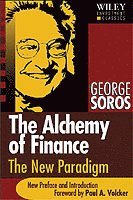
Häftad, Engelska, 2015
Alchemy of Finance
Av George Soros
249 kr
Beställningsvara. Skickas inom 5-8 vardagar. Fri frakt över 249 kr.
Beskrivning
Produktinformation
- Utgivningsdatum: 2015-06-15
- Mått: 155 x 230 x 28 mm
- Vikt: 500 g
- Format: Häftad
- Språk: Engelska
- Antal sidor: 416
- Upplaga: 2
- Förlag: John Wiley & Sons Inc
- Medarbetare: Paul A. Volcker
- ISBN: 9780471445494
Utforska kategorier
Betyg & recensioner
2 recensioner, genomsnitt 4.5/5
- 5/5 Karl
Den här boken bör läsas av alla ekonomer och i synnerhet av alla nationalekonomer och politiker. George Soros har genom sin verksamhet visat sin överlägsna förmåga i ämnet, här ger han en djup analys av svagheterna i huvudfåra- synen ("Main-stream") på nationalekonomi. Han är mer filosof än ekonom, därför går han ner till grunden. Min korta tolkning är att nationalekonomi är konst, inte vetenskap, därav titeln "The Alchemy of Finance". Ekonomerna försöker behandla ämnet vetenskapligt som t ex teknik, men det är inte möjligt, eftersom det innehåller ett viktigt socialt element, människors förväntningar, som introducerar genuin osäkerhet. Natinalekonomi är en social konst, inte vetenskap.
Nassim N. Taleb formulerar samma osäkerhet i sin bok "Fooled by Randomness" där han pratar om "Black Swans" (sällsyntheter). Fritt tolkat säger han att man inte kan använda sig av Gauss-fördelningen (Normal-fördelningen) för att förutse ekonomiska händelser.
Tidsnära bekräftelse kom i fastighetskrisen i USA som försatte världsekonomin i djup kris. På grund av bankekonomernas grunda kunskap i statistik räknade de med att de "fattiga" låntagarnas svaga ekonomi skulle "absorberas" av medeltalet, när man gick vidare med osäkra lån i flera led. I praktiken fungerar det inte så och vid målet är det verkligheten som gäller.
Skuggan av "Svarta svanar" faller även över den aktuella svenska skoldebatten om teknikutbildning. Den högre utbildningen i statistik har kraftig slagsida mot normalfördelningen, där finns lite, om ens något utrymme för "svarta svanar".
Nassim N. Taleb;s syn på slumpen kommer även i efterorden till "The new evolution Diet, what our paleolithic ancestors can teach us about weight loss, fitness and aging." av Arthur de Vany. Boken rekommmenderas. Taleb säger om Wild Randomness: The consequence is that the randomness we observe in real life is rather more "rugged", more uneven, and more dependent on extreme outcomes than the one we study in textbooks and imagine in our mental representations. The type of randomness I call Mandelbrotian (or fractal) power laws is a different paradigm (in which extreme events play a large role) that tracks reality much better than the "bell curve" taught in schools. - 4/5 Leinad