• Fri frakt över 249 kr
  • •
  • Snabba leveranser
  • •
  • Billiga böcker
Kundservice

Du är på sajten för privatpersoner.

Företag, bibliotek eller offentlig verksamhet?

Du handlar på classic.bokus.com, där alla dina funktioner finns intakta.
Till classic.bokus.com
Bokus logotyp. Gå till startsidan.
  • Erbjudanden
  • Nyheter
  • Student
  • Topplistor
  • Barn & ungdom
  • Bokus Play
  • E-böcker
  • Pocketböcker
  • Spel & pussel

10% studentrabatt med kod TERM26

Sidfot

Mina sidor

    Hjälp

    • Kundservice
    • Vanliga frågor och svar
    • Frakt och leverans
    • Retur vid ångerrätt
    • Reklamera vara
    • Betalning
    • Köpvillkor
    • Allmänna villkor
    • Information om webbplatsens tillgänglighet

    Om Bokus

    • Om oss
    • Pressrum
    • För studenter
    • För företag
    • För bibliotek och offentlig verksamhet
    • För leverantörer
    • Hållbarhet

    Populärt

    • Aktuella erbjudanden
    • Presentkort
    • Studentlitteratur
    • Nya böcker
    • Topplistor
    • Signerade böcker
    • Engelska böcker

    Inspiration

    • Boktips
    • BookTok
    • Populära bokserier
    • Barnbokskaraktärer
    • Populära författare
    Logotyp för Bokus
    Följ oss på Facebook (extern länk)Följ oss på Instagram (extern länk)Följ oss på YouTube (extern länk)Följ oss på TikTok (extern länk)
    bokus @ CookiesAnpassa cookiesIntegritetspolicyKöpvillkor
    Till Citymail hemsida (extern länk)Till Budbee hemsida (extern länk)Till Postnord hemsida (extern länk)Till Schenker hemsida (extern länk)Till Early Bird hemsida (extern länk)Till Walleys hemsida (extern länk)
    1. Psykologi och pedagogik
    2. Psykologi

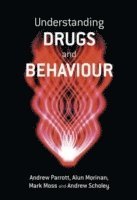
    Understanding Drugs and Behaviour

    AvAndrew Parrott,Alun Morinan

    Häftad, Engelska, 2004

    592 kr

    Beställningsvara. Skickas inom 5-8 vardagar. Fri frakt över 249 kr.

    Beskrivning

    Why are some drugs highly addictive? What exactly are the effects of different types of psychoactive drugs? How can they produce such dramatic effects on mood, cognition, sensation, awareness, health and well-being? Understanding Drugs and Behaviour describes in detail how the main psychoactive drugs can alter brain chemistry and modify behaviour. Basic drug effects tolerance and addiction, are discussed, together with diverse medical, social, and psychological reasons for drug taking.Written by experienced lecturers with a high level of research expertise, all the main drugs used in today's society are included, such as alcohol, nicotine, cannabis, LSD and Ecstacy, opiates, CNS stimulants, as well as clinical medications.  Teaching and learning features include: Chapter overviews     In-depth core material   End of chapter questions   Key referencesExtensive glossary     Journals and websites of interestThis introductory text will be of use to students of psychology, behavioural sciences, health sciences, nursing, physiology and pharmacology.

    Produktinformation

    • Utgivningsdatum:2004-05-26
    • Mått:169 x 246 x 19 mm
    • Vikt:539 g
    • Format:Häftad
    • Språk:Engelska
    • Antal sidor:336
    • Förlag:John Wiley & Sons Inc
    • ISBN:9780471986409

    Utforska kategorier

    • Psykologi inom Psykologi och pedagogik

    Mer om författaren

    Andy Parrott has published over 300 journal articles and conference papers, covering a wide range of psychoactive drugs. The first publications from his PhD at the University of Leeds were concerned with antipsychotic medications. Then, as a postdoctoral researcher with the Human Psychopharmacology Research Unit at Leeds University, he investigated the effects of second-generation antidepressants and benzodiazepines on cognitive performance and car-driving skills. Moving to the Institute of Naval Medicine in Hampshire, he was tasked with determining the practical utility of anti-seasickness medications, such as transdermal scopolamine, in land and sea trials. Further trials investigated the cognitive side effects of nerve agent prophylactics. At the University of East London he established the Recreational Drugs Research Group, which investigated a number of disparate topics: caffeine in shift workers, anabolic steroids in weightlifters, amphetamine and LSD in party goers and nootropics as potential ‘‘smart drugs’’. At Humboldt State University in California, he assessed the everyday functioning of excessive cannabis users. However, his two main research areas are nicotine and MDMA/Ecstasy. In an extensive research programme he has shown how nicotine dependency is psychologically damaging and causes increased psychological distress. The Recreational Drugs Research Group which he founded at the University of East London is, however, most well known for its work with recreational MDMA/Ecstasy users. Their cognitive research papers have been awarded the British Association for Psychopharmacology Organon prize on two occasions. Professor Parrott’s work is featured regularly in the media. He sits on the editorial boards of leading psychopharmacology journals, and he has organised a number of international symposia. Recently, he moved to the University of Wales at Swansea. Here, he is continuing with a number of collaborative studies, including a large UK/US prospective study investigating the effects of recreational drug use during pregnancy. Alun Morinan graduated in Biochemistry from the University of Wales at Aberystwyth and went on to complete an MSc in Pharmacology at the University of London and a PhD in Neuropharmacology at the National University of Ireland in Galway. After postdoctoral research in Pharmacology at Galway and Biochemistry at the Institute of Psychiatry, he was appointed Lecturer in Pharmacology at North East Surrey College of Technology before moving to his current post of Principal Lecturer at the University of East London. His publications have been mainly in the fields of experimental psychopharmacology and neurochemistry covering topics such as alcohol dependence, anxiety, schizophrenia and enzymology.Mark Moss studied applied chemistry and spent 10 years in industry before returning to university to study Psychology. He completed his PhD in 1999 and was involved in the establishment of the Human Cognitive Neuroscience Unit at Northumbria University. His research portfolio has focused primarily on aspects of cognitive functioning in healthy young volunteers, with journal articles and conference presentations relating to both enhancement through natural interventions and drug-induced impairments. Mark is currently programme leader for the Division of Psychology at Northumbria University.Andrew choley is a Reader in Psychology at the Division of Psychology, Northumbria University, Newcastle-upon-Tyne. He has published hundreds of journal articles and conference papers, covering the cognitive effects of many recreational and medicinal drugs. His PhD and postdoctoral fellowship at the Brain and Behaviour Research Group, Open University, examined the neurochemical substrates of memory formation. He moved to Northumbria University in 1993, where his research has concentrated on the acute and chronic impairing and enhancing effects of various drugs including benzodiazepines, alcohol, caffeine, glucose, oxygen (with Mark Moss) and herbal extracts. In 1999 Andrew established the Human Cognitive Neuroscience Unit, of which he is the director. The work of this unit concentrates on the potential for nonmainstream treatments to enhance cognitive performance. These have ranged from metabolic interventions (notably glucose and oxygen) to low doses of alcohol and even to drinking water (in thirsty individuals) and to chewing gum. Andrew is also the co-director of the Medicinal Plant Research Centre. His present focus of research aims to disentangle the neurocognitive effects of herbal extracts, to attempt to identify relationships between their behavioural effects and their neurochemical properties and to identify safe treatments that may be effective in the treatment of conditions where cognition becomes fragile, including dementia. He is currently involved in trials examining the effects of herbal extracts in Alzheimer’s disease. Andrew is also committed to the public dissemination of science which has led to numerous appearances in the print, radio and television media.

    Recensioner i media

    "...useful resource for a wider range of health and social care staff...takes a constructively critical approach to mainstream assumptions..." (Care and Health, 17th August, 2004) “…really helps the reader to understand both conditions and treatments…a very informative and useful resource...” (Accident & Emergency Nursing, No.13, 2005)“The coverage of the behavioural effects of a number of recreational substances is clear and informative, with particularly fine chapters on nicotine and cannabis” (Psychological Medicine, Vol.35 2005)

    Innehållsförteckning

    • About the authors ixPreface xiPart I Drugs and Their Actions 11 Psychoactive drugs: introduction and overview 32 The brain, neurons and neurotransmission 93 Principles of drug action 25Part II Non-medical Use of Psychoactive Drugs 394 CNS stimulants: amphetamine, cocaine and caffeine 415 Nicotine and cigarette smoking 556 LSD and Ecstasy/MDMA 717 Cannabis 858 Heroin and opiates 1039 CNS depressants: alcohol, barbiturates and benzodiazepines 11910 Alcoholism and drug dependence 133Part III Clinical and Medicinal Use of Drugs 15111 Antipsychotics for schizophrenia 15312 Antidepressants and mood stabilisers 17113 Nootropics for Alzheimer’s disease 18714 Cognitive enhancers 203Part IV Final Overview 21915 Current knowledge and future possibilities 221Glossary 235Key psychopharmacology and addiction journals 251Internet sources of information about psychoactive drugs 253References 257Index 291