• Fri frakt över 249 kr
  • •
  • Snabba leveranser
  • •
  • Billiga böcker
Kundservice

Du är på sajten för privatpersoner.

Företag, bibliotek eller offentlig verksamhet?

Du handlar på classic.bokus.com, där alla dina funktioner finns intakta.
Till classic.bokus.com
Bokus logotyp. Gå till startsidan.
  • Erbjudanden
  • Nyheter
  • Student
  • Topplistor
  • Barn & ungdom
  • Bokus Play
  • E-böcker
  • Pocketböcker
  • Spel & pussel

10% rabatt på allt med kod NYSTART10 →

Sidfot

Mina sidor

    Hjälp

    • Kundservice
    • Vanliga frågor och svar
    • Frakt och leverans
    • Retur vid ångerrätt
    • Reklamera vara
    • Betalning
    • Köpvillkor
    • Allmänna villkor
    • Information om webbplatsens tillgänglighet

    Om Bokus

    • Om oss
    • Pressrum
    • För studenter
    • För företag
    • För bibliotek och offentlig verksamhet
    • För leverantörer
    • Hållbarhet

    Populärt

    • Aktuella erbjudanden
    • Presentkort
    • Studentlitteratur
    • Nya böcker
    • Topplistor
    • Signerade böcker
    • Engelska böcker

    Inspiration

    • Boktips
    • BookTok
    • Populära bokserier
    • Barnbokskaraktärer
    • Populära författare
    Logotyp för Bokus
    Följ oss på Facebook (extern länk)Följ oss på Instagram (extern länk)Följ oss på YouTube (extern länk)Följ oss på TikTok (extern länk)
    bokus @ CookiesAnpassa cookiesIntegritetspolicyKöpvillkor
    Till Citymail hemsida (extern länk)Till Budbee hemsida (extern länk)Till Postnord hemsida (extern länk)Till Schenker hemsida (extern länk)Till Early Bird hemsida (extern länk)Till Walleys hemsida (extern länk)
    1. Skönlitteratur
    2. Litteraturvetenskap
    3. Litteraturvetenskap

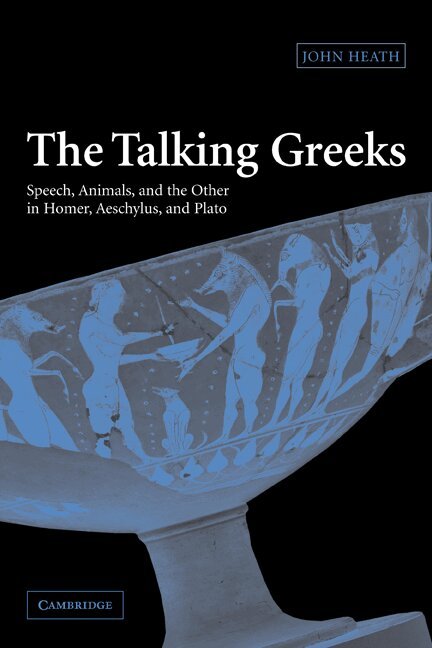
    The Talking Greeks

    Speech, Animals, and the Other in Homer, Aeschylus, and Plato

    AvJohn Heath

    Häftad, Engelska, 2009

    748 kr

    Beställningsvara. Skickas inom 10-15 vardagar. Fri frakt över 249 kr.

    Fler format och utgåvor

    Inbunden

    1 705 kr

    Beskrivning

    When considering the question of what makes us human, the ancient Greeks provided numerous suggestions. This book argues that the defining criterion in the Hellenic world, however, was the most obvious one: speech. It explores how it was the capacity for authoritative speech which was held to separate humans from other animals, gods from humans, men from women, Greeks from non-Greeks, citizens from slaves, and the mundane from the heroic. John Heath illustrates how Homer's epics trace the development of immature young men into adults managing speech in entirely human ways and how in Aeschylus' Oresteia only human speech can disentangle man, beast, and god. Plato's Dialogues are shown to reveal the consequences of Socratically imposed silence. With its examination of the Greek focus on speech, animalization, and status, this book offers new readings of key texts and provides significant insights into the Greek approach to understanding our world.

    Produktinformation

    • Utgivningsdatum:2009-07-30
    • Mått:152 x 229 x 23 mm
    • Vikt:590 g
    • Format:Häftad
    • Språk:Engelska
    • Antal sidor:404
    • Förlag:Cambridge University Press
    • ISBN:9780521117784

    Utforska kategorier

    • Litteraturvetenskap inom Skönlitteratur

    Mer om författaren

    John Heath is Professor of Classics at Santa Clara University. He is the author of numerous articles on Latin and Greek literature, myth and culture. His previous publications include Actaeon, the Unmannerly Intruder (1992), Who Killed Homer? (with Victor Davis Hanson) (1998, revised edition, 2001) and Bonfire of the Humanities (with Victor Davis Hanson and Bruce Thornton) (2001).

    Recensioner i media

    Review of the hardback: '… impressive in its richness of ideas and references, imaginative in its approach, and interesting to all.' The London Association of Classical Teachers Newsletter

    Innehållsförteckning

    • Introduction; Part I. Speech, Animals, and Human Status in Homer: 1. Bellowing like a bull: humans and other animals in Homer; 2. Controlling language: Telemachus learns to speak; 3. Talking through the heroic code: Achilles learns to tell tales; Part II. Listening for the Other in Classical Greece: 4. Making a difference: the silence of otherness; Part III. Speech, Animals, and Human Status in Classical Athens: 5. Disentangling the beast: humans and other animals in the Oresteia; 6. Socratic silence: the shame of the Athenians; Epilogue.