• Fri frakt över 249 kr
  • •
  • Snabba leveranser
  • •
  • Billiga böcker
Kundservice

Du är på sajten för privatpersoner.

Företag, bibliotek eller offentlig verksamhet?

Du handlar på classic.bokus.com, där alla dina funktioner finns intakta.
Till classic.bokus.com
Bokus logotyp. Gå till startsidan.
  • Erbjudanden
  • Nyheter
  • Student
  • Topplistor
  • Barn & ungdom
  • Bokus Play
  • E-böcker
  • Pocketböcker
  • Spel & pussel

10% rabatt på allt med kod: NYSTART10 →

Sidfot

Mina sidor

    Hjälp

    • Kundservice
    • Vanliga frågor och svar
    • Frakt och leverans
    • Retur vid ångerrätt
    • Reklamera vara
    • Betalning
    • Köpvillkor
    • Allmänna villkor
    • Information om webbplatsens tillgänglighet

    Om Bokus

    • Om oss
    • Pressrum
    • För studenter
    • För företag
    • För bibliotek och offentlig verksamhet
    • För leverantörer
    • Hållbarhet

    Populärt

    • Aktuella erbjudanden
    • Presentkort
    • Studentlitteratur
    • Nya böcker
    • Topplistor
    • Signerade böcker
    • Engelska böcker

    Inspiration

    • Boktips
    • BookTok
    • Populära bokserier
    • Barnbokskaraktärer
    • Populära författare
    Logotyp för Bokus
    Följ oss på Facebook (extern länk)Följ oss på Instagram (extern länk)Följ oss på YouTube (extern länk)Följ oss på TikTok (extern länk)
    bokus @ CookiesAnpassa cookiesIntegritetspolicyKöpvillkor
    Till Citymail hemsida (extern länk)Till Budbee hemsida (extern länk)Till Postnord hemsida (extern länk)Till Schenker hemsida (extern länk)Till Early Bird hemsida (extern länk)Till Walleys hemsida (extern länk)
    1. Skönlitteratur
    2. Litteraturvetenskap
    3. Litteraturvetenskap

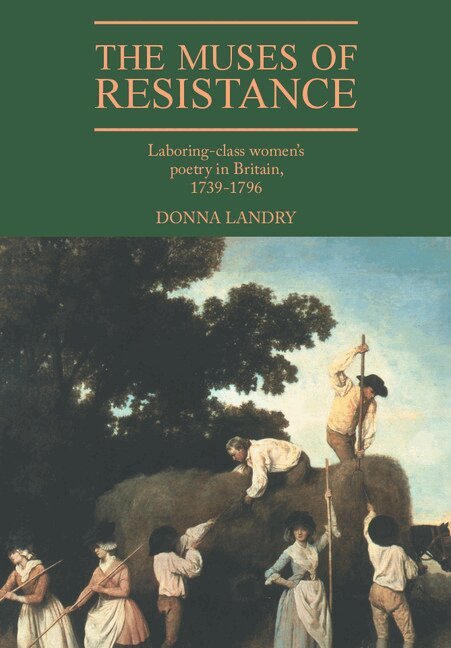
    The Muses of Resistance

    Laboring-Class Women's Poetry in Britain, 1739-1796

    AvDonna Landry

    Inbunden, Engelska, 1990

    1 473 kr

    Beställningsvara. Skickas inom 10-15 vardagar. Fri frakt över 249 kr.

    Fler format och utgåvor

    Häftad

    533 kr

    Beskrivning

    In this challenging 1990 study, Donna Landry shows how an understanding of the remarkable but neglected careers of laboring-class women poets in the eighteenth century provokes a reassessment of our ideas concerning the literature of the period. Poets such as the washerwoman Mary Collier, the milkwoman Ann Yearsley, the domestic servants Mary Leapor and Elizabeth Hands, the dairywoman Janet Little, and the slave Phyllis Wheatley can be seen adapting the conventions of polite verse for the purposes of social criticism. Some of their strategies relate to earlier texts, revealing ideological blind spots in the tropes of male poets. Elsewhere, they made interesting innovations in poetic form. Mary Leapor's 'Crumble Hall', for instance, by attending to sexual politics, extends the critique of aristocratic privilege in the country-house poem beyond that of Pope and Crabbe. In Ann Yearsley's verse, landscape description, historical narrative, and philosophical meditation are infused with political comment. Historically important, technically impressive and often aesthetically innovative, the poetic achievements of these plebeian women writers constitute an exciting literary discovery.

    Produktinformation

    • Utgivningsdatum:1990-10-26
    • Mått:174 x 247 x 23 mm
    • Vikt:692 g
    • Format:Inbunden
    • Språk:Engelska
    • Antal sidor:336
    • Förlag:Cambridge University Press
    • ISBN:9780521374125

    Utforska kategorier

    • Litteraturvetenskap inom Skönlitteratur

    Recensioner i media

    "For anyone interested in women's poetry, in class politics and art, or in eighteenth-century literature, this book is a real find." The Women's Review of Books

    Innehållsförteckning

    • Acknowledgements; Preface; 1. Sensibility and slavery: the discourse of working women's verse; 2. The resignation of Mary Collier: some problems in feminist literary history; 3. An English Sappho brilliant, young and dead? Mary Leapor laughs at the fathers; 4. The complex contradictions of Ann Yearsley: working-class writer, bourgeois subject?; 5. Laboring in pastures new: the two Elizabeths; 6. Other others: the marginality of cultural difference; 7. The 1790s and after: 'Revolutions that as yet have no model'.