• Fri frakt över 249 kr
  • •
  • Snabba leveranser
  • •
  • Billiga böcker
Kundservice

Du är på sajten för privatpersoner.

Företag, bibliotek eller offentlig verksamhet?

Du handlar på classic.bokus.com, där alla dina funktioner finns intakta.
Till classic.bokus.com
Bokus logotyp. Gå till startsidan.
  • Erbjudanden
  • Nyheter
  • Student
  • Topplistor
  • Barn & ungdom
  • Bokus Play
  • E-böcker
  • Pocketböcker
  • Spel & pussel

Må bättre, för mindre! Upp till 50% rabatt på hälsoböcker

Sidfot

Mina sidor

    Hjälp

    • Kundservice
    • Vanliga frågor och svar
    • Frakt och leverans
    • Retur vid ångerrätt
    • Reklamera vara
    • Betalning
    • Köpvillkor
    • Allmänna villkor
    • Information om webbplatsens tillgänglighet

    Om Bokus

    • Om oss
    • Pressrum
    • För studenter
    • För företag
    • För bibliotek och offentlig verksamhet
    • För leverantörer
    • Hållbarhet

    Populärt

    • Aktuella erbjudanden
    • Presentkort
    • Studentlitteratur
    • Nya böcker
    • Topplistor
    • Signerade böcker
    • Engelska böcker

    Inspiration

    • Boktips
    • BookTok
    • Populära bokserier
    • Barnbokskaraktärer
    • Populära författare
    Logotyp för Bokus
    Följ oss på Facebook (extern länk)Följ oss på Instagram (extern länk)Följ oss på YouTube (extern länk)Följ oss på TikTok (extern länk)
    bokus @ CookiesAnpassa cookiesIntegritetspolicyKöpvillkor
    Till Citymail hemsida (extern länk)Till Budbee hemsida (extern länk)Till Postnord hemsida (extern länk)Till Schenker hemsida (extern länk)Till Early Bird hemsida (extern länk)Till Walleys hemsida (extern länk)
    1. Skönlitteratur
    2. Poesi

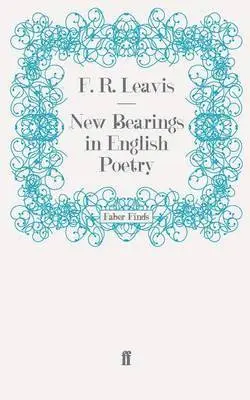
    New Bearings in English Poetry

    AvF. R. Leavis

    Häftad, Engelska, 2008

    246 kr

    Beställningsvara. Skickas inom 10-15 vardagar. Fri frakt över 249 kr.

    Fler format och utgåvor

    E-bok

    143 kr

    Beskrivning

    It is difficult now to imagine the shock that this book caused when it was first published in 1932. The author was a teacher at a Cambridge college, an intensely serious man who had been seriously wounded by poison gas on the Western Front, and he was not disposed to suffer foolishness gladly. His opening sentences were arresting: 'Poetry matters little to the modern world. That is, very little of contemporary intelligence concerns itself with poetry'. What followed was nothing less than the welcoming of a revolution in English verse, set against the moral and social crisis that followed the trauma of the First World War. It was this situation, this feeling of breakdown and disorder, that gave such force to Leavis's dismissal of most late Romantic poetry and his welcoming of the modernists T. S. Eliot and Ezra Pound, and of the writer who Leavis regarded as their forebear, Gerard Manley Hopkins. The tone of high moral urgency, and the message that the experience of literature could become an engagement with life that was almost a secular equivalent to religion, seemed new and abrasively refreshing. Leavis despised the reigning dilettantism in both poetry and criticism, and in this book he threw down the gauntlet to the establishment as he understood it. In the same year he founded the journal Scrutiny, and began his long career as the most formidably serious literary critic of his time.

    Produktinformation

    • Utgivningsdatum:2008-05-29
    • Mått:126 x 198 x 13 mm
    • Vikt:192 g
    • Format:Häftad
    • Språk:Engelska
    • Antal sidor:176
    • Förlag:Faber & Faber
    • ISBN:9780571243358

    Utforska kategorier

    • Poesi inom Skönlitteratur

    Mer om författaren

    F.R. Leavis was born in 1895 in Cambridge, where he would live and teach for most of the rest of his life. He volunteered as a stretcher-bearer in the First World War, and was badly gassed on the Western Front. Appointed Director of Studies in English at Downing College, Cambridge, in 1930, he remained there for the next thirty years, often at odds with the University establishment. In 1932 he and his wife Queenie Roth founded the hugely influential journal Scrutiny, which ran until 1953. He was one of the most important figures in the development of modern literary criticism, and in the elevation of English as a serious academic subject. He died in 1978.