• Fri frakt över 249 kr
  • •
  • Snabba leveranser
  • •
  • Billiga böcker
Kundservice

Du är på sajten för privatpersoner.

Företag, bibliotek eller offentlig verksamhet?

Du handlar på classic.bokus.com, där alla dina funktioner finns intakta.
Till classic.bokus.com
Bokus logotyp. Gå till startsidan.
  • Erbjudanden
  • Nyheter
  • Student
  • Topplistor
  • Barn & ungdom
  • Bokus Play
  • E-böcker
  • Pocketböcker
  • Spel & pussel

10% rabatt på allt med kod: NYSTART10 →

Sidfot

Mina sidor

    Hjälp

    • Kundservice
    • Vanliga frågor och svar
    • Frakt och leverans
    • Retur vid ångerrätt
    • Reklamera vara
    • Betalning
    • Köpvillkor
    • Allmänna villkor
    • Information om webbplatsens tillgänglighet

    Om Bokus

    • Om oss
    • Pressrum
    • För studenter
    • För företag
    • För bibliotek och offentlig verksamhet
    • För leverantörer
    • Hållbarhet

    Populärt

    • Aktuella erbjudanden
    • Presentkort
    • Studentlitteratur
    • Nya böcker
    • Topplistor
    • Signerade böcker
    • Engelska böcker

    Inspiration

    • Boktips
    • BookTok
    • Populära bokserier
    • Barnbokskaraktärer
    • Populära författare
    Logotyp för Bokus
    Följ oss på Facebook (extern länk)Följ oss på Instagram (extern länk)Följ oss på YouTube (extern länk)Följ oss på TikTok (extern länk)
    bokus @ CookiesAnpassa cookiesIntegritetspolicyKöpvillkor
    Till Citymail hemsida (extern länk)Till Budbee hemsida (extern länk)Till Postnord hemsida (extern länk)Till Schenker hemsida (extern länk)Till Early Bird hemsida (extern länk)Till Walleys hemsida (extern länk)
    1. Samhälle och politik
    2. Politik och statsskick

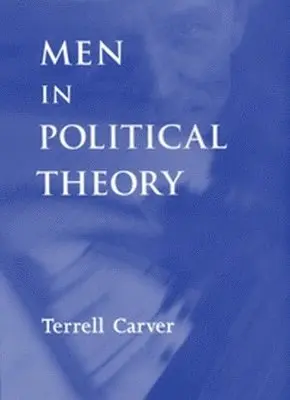
    Men in Political Theory

    AvTerrell Carver

    Häftad, Engelska, 2009

    328 kr

    Beställningsvara. Skickas inom 7-10 vardagar. Fri frakt över 249 kr.

    Beskrivning

    Men in political theory builds on feminist re-readings of the traditional canon of male writers in Political Philosophy by turning the 'gender lens' on to the representation of men in widely studies texts. It explains the distinction between 'man' as an apparently de-gendered 'individual' or 'citizen', and 'man' as an overtly gendered being in human society. Both these representations of 'man' are crucial to a clearer understanding of the operation of gender.Newly available in paperback, the book is the first to use the 'men's studies' and 'masculinities' literatures in re-thinking the political problems that students and specialists in the social sciences and humanities must encounter: consent, obligation, patriarchy, gender, sexuality, life-cycle, and discriminatory disadvantage related to sex, age, class, race/ethnicity and disability. It does this by re-examining the historical materials from which present-day concepts of citizenship, individuality, identity, subjectivity, normativity and legitimacy arise.The ten chapters on Plato, Aristotle, Jesus, Augustine, Machiavelli, Hobbes, Locke, Rousseau, Marx and Engels show the operation of the 'gender lens' in different ways, depending on how the philosopher deploys concepts of men and masculinity to pose and solve classic problems. They can all be read independently and are as suitable for those just making the acquaintance of these classic writers as for those with specialist knowledge and interests.

    Produktinformation

    • Utgivningsdatum:2009-03-01
    • Mått:156 x 234 x 15 mm
    • Vikt:386 g
    • Format:Häftad
    • Språk:Engelska
    • Antal sidor:266
    • Förlag:Manchester University Press
    • ISBN:9780719059148

    Utforska kategorier

    • Politik och statsskick inom Samhälle och politik

    Mer om författaren

    Terrell Carver is Professor of Political Theory at the University of Bristol

    Innehållsförteckning

    • Introduction1. Plato: men/women and order/disorder in The Republic2. Aristotle: men, masculinities and metaphors3. Jesus: masculinity and the ‘son of man’4. Augustine: confessing like a man5. Machiavelli: discourses on masculinities6. Hobbes: materialism, mechanism, masculinity7. Locke: overtly and covertly gendered narratives of political society8. Rousseau: fantasising men9. Marx: (non)critique of the gender categories10. Engels: men behaving naturallyConclusion