• Fri frakt över 249 kr
  • •
  • Snabba leveranser
  • •
  • Billiga böcker
Kundservice

Du är på sajten för privatpersoner.

Företag, bibliotek eller offentlig verksamhet?

Du handlar på classic.bokus.com, där alla dina funktioner finns intakta.
Till classic.bokus.com
Bokus logotyp. Gå till startsidan.
  • Erbjudanden
  • Nyheter
  • Student
  • Topplistor
  • Barn & ungdom
  • Bokus Play
  • E-böcker
  • Pocketböcker
  • Spel & pussel

10% rabatt på allt med kod NYSTART10 →

Sidfot

Mina sidor

    Hjälp

    • Kundservice
    • Vanliga frågor och svar
    • Frakt och leverans
    • Retur vid ångerrätt
    • Reklamera vara
    • Betalning
    • Köpvillkor
    • Allmänna villkor
    • Information om webbplatsens tillgänglighet

    Om Bokus

    • Om oss
    • Pressrum
    • För studenter
    • För företag
    • För bibliotek och offentlig verksamhet
    • För leverantörer
    • Hållbarhet

    Populärt

    • Aktuella erbjudanden
    • Presentkort
    • Studentlitteratur
    • Nya böcker
    • Topplistor
    • Signerade böcker
    • Engelska böcker

    Inspiration

    • Boktips
    • BookTok
    • Populära bokserier
    • Barnbokskaraktärer
    • Populära författare
    Logotyp för Bokus
    Följ oss på Facebook (extern länk)Följ oss på Instagram (extern länk)Följ oss på YouTube (extern länk)Följ oss på TikTok (extern länk)
    bokus @ CookiesAnpassa cookiesIntegritetspolicyKöpvillkor
    Till Citymail hemsida (extern länk)Till Budbee hemsida (extern länk)Till Postnord hemsida (extern länk)Till Schenker hemsida (extern länk)Till Early Bird hemsida (extern länk)Till Walleys hemsida (extern länk)
    1. Samhälle och politik
    2. Politik och statsskick
    3. Internationella relationer

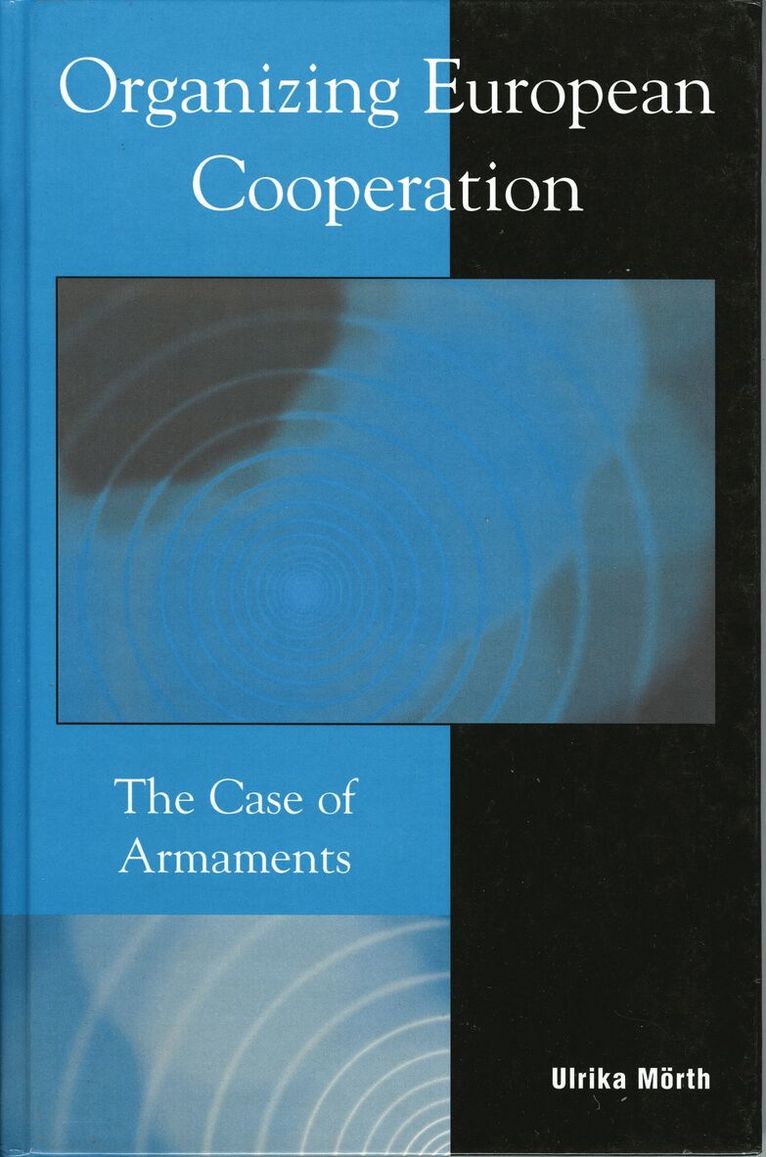
    Organizing European Cooperation

    The Case of Armaments

    AvUlrika Mörth

    Häftad, Engelska, 2005

    701 kr

    Beställningsvara. Skickas inom 10-15 vardagar. Fri frakt över 249 kr.

    Fler format och utgåvor

    Inbunden

    1 535 kr

    Beskrivning

    The emergence of a European policy on armaments is an important and politically controversial component in the building of Europe. Should European cooperation on armaments be designed from a market and a competition perspective, and according to supranational decision making? Or is it the emerging European defense policy and intergovernmental decision-making style that should determine such cooperation? The controversy and tension between the ways of framing this issue highlight fundamental questions in European politics. Organizing European Cooperation shows that the issue of armaments has been conceptualized within two different projects of European integration: the political economy project, developed through the EC, and the defense and security project, organized through NATO, the WEU, and recently through the EU. By employing an innovative theoretical framework for the empirical analysis of European politics the author's analysis of both public actors, such as the Council, the European Commission, and NATO, and non-state actors, such as aerospace companies and business interest organizations, makes this book a valuable tool for anyone trying to understand the interaction between two European organizational fields-market and defense-and the emergence of a new European organizational field on armaments.

    Produktinformation

    • Utgivningsdatum:2005-10-12
    • Mått:166 x 228 x 19 mm
    • Vikt:322 g
    • Format:Häftad
    • Språk:Engelska
    • Antal sidor:216
    • Förlag:Bloomsbury Publishing Plc
    • ISBN:9780742528086

    Utforska kategorier

    • Internationella relationer inom Samhälle och politik

    Mer om författaren

    Ulrika Msrth is associate professor and lecturer at the Department of Political Science, Stockholm University, and senior researcher and research coordinator at the Stockholm Center for Organizational Research (SCORE).

    Innehållsförteckning

    • Chapter 1 IntroductionChapter 2 Theoretical Approach on European OrganizingChapter 3 The Defense FieldChapter 4 The Market FieldChapter 5 The Formation of a European Organizational Field on ArmamentsChapter 6 The Organizational Fields: Frames, Authority, and InteractionChapter 7 Organizing European Cooperation on Armaments: Conclusions and Discussion