• Fri frakt över 249 kr
  • •
  • Snabba leveranser
  • •
  • Billiga böcker
Kundservice

Du är på sajten för privatpersoner.

Företag, bibliotek eller offentlig verksamhet?

Du handlar på classic.bokus.com, där alla dina funktioner finns intakta.
Till classic.bokus.com
Bokus logotyp. Gå till startsidan.
  • Erbjudanden
  • Nyheter
  • Student
  • Topplistor
  • Barn & ungdom
  • Bokus Play
  • E-böcker
  • Pocketböcker
  • Spel & pussel

10% rabatt på allt med kod: NYSTART10 →

Sidfot

Mina sidor

    Hjälp

    • Kundservice
    • Vanliga frågor och svar
    • Frakt och leverans
    • Retur vid ångerrätt
    • Reklamera vara
    • Betalning
    • Köpvillkor
    • Allmänna villkor
    • Information om webbplatsens tillgänglighet

    Om Bokus

    • Om oss
    • Pressrum
    • För studenter
    • För företag
    • För bibliotek och offentlig verksamhet
    • För leverantörer
    • Hållbarhet

    Populärt

    • Aktuella erbjudanden
    • Presentkort
    • Studentlitteratur
    • Nya böcker
    • Topplistor
    • Signerade böcker
    • Engelska böcker

    Inspiration

    • Boktips
    • BookTok
    • Populära bokserier
    • Barnbokskaraktärer
    • Populära författare
    Logotyp för Bokus
    Följ oss på Facebook (extern länk)Följ oss på Instagram (extern länk)Följ oss på YouTube (extern länk)Följ oss på TikTok (extern länk)
    bokus @ CookiesAnpassa cookiesIntegritetspolicyKöpvillkor
    Till Citymail hemsida (extern länk)Till Budbee hemsida (extern länk)Till Postnord hemsida (extern länk)Till Schenker hemsida (extern länk)Till Early Bird hemsida (extern länk)Till Walleys hemsida (extern länk)
    1. Skönlitteratur
    2. Litteraturvetenskap
    3. Litteraturvetenskap

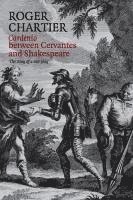
    Cardenio between Cervantes and Shakespeare

    The Story of a Lost Play

    AvRoger Chartier

    Häftad, Engelska, 2012

    291 kr

    Beställningsvara. Skickas inom 5-8 vardagar. Fri frakt över 249 kr.

    Fler format och utgåvor

    Inbunden

    853 kr

    E-bok

    327 kr

    Beskrivning

    How should we read a text that does not exist, or present a play the manuscript of which is lost and the identity of whose author cannot be established for certain?Such is the enigma posed by Cardenio – a play performed in England for the first time in 1612 or 1613 and attributed forty years later to Shakespeare (and Fletcher). Its plot is that of a ‘novella’ inserted into Don Quixote, a work that circulated throughout the major countries of Europe, where it was translated and adapted for the theatre. In England, Cervantes’ novel was known and cited even before it was translated in 1612 and had inspired Cardenio.But there is more at stake in this enigma. This was a time when, thanks mainly to the invention of the printing press, there was a proliferation of discourses. There was often a reaction when it was feared that this proliferation would become excessive, and many writings were weeded out. Not all were destined to survive, in particular plays for the theatre, which, in many cases, were never published. This genre, situated at the bottom of the literary hierarchy, was well suited to the existence of ephemeral works. However, if an author became famous, the desire for an archive of his works prompted the invention of textual relics, the restoration of remainders ruined by the passing of time or, in order to fill in the gaps, in some cases, even the fabrication of forgeries. Such was the fate of Cardenio in the eighteenth century.Retracing the history of this play therefore leads one to wonder about the status, in the past, of works today judged to be canonical. In this book the reader will rediscover the malleability of texts, transformed as they were by translations and adaptations, their migrations from one genre to another, and their changing meanings constructed by their various publics. Thanks to Roger Chartier’s forensic skills, fresh light is cast upon the mystery of a play lacking a text but not an author.

    Produktinformation

    • Utgivningsdatum:2012-12-21
    • Mått:152 x 229 x 19 mm
    • Vikt:386 g
    • Format:Häftad
    • Språk:Engelska
    • Antal sidor:256
    • Förlag:John Wiley and Sons Ltd
    • ISBN:9780745661858

    Utforska kategorier

    • Litteraturvetenskap inom Skönlitteratur

    Mer om författaren

    Roger Chartier is Professor of History at the Collège de France, Directeur d'Études at the École des Hautes Études en Sciences Sociales in Paris and Annenberg Professor of History at the University of Pennsylvania.

    Recensioner i media

    "Intriguing … Chartier's elegant analysis of 'the story of a lost play' is predicated upon the disjunction between Renaissance literary production and post-Romantic ideas of authorship that obsess about the creative genius of the single author who breathes originality into a work that remains recognisably and forever, his own."Times Higher Education "Roger Chartier is one of our most enthralling historians of the book. Cardenio between Cervantes and Shakespeare is a brilliant investigation of elusive textual traces across borders, languages, and centuries. Chartier has written an essential case study of the pleasures and perils of cultural mobility."Stephen Greenblatt, Harvard University"In this magnificent new book, Roger Chartier extends cultural history into unexplored territory, a pre-modern world where texts proliferated promiscuously, crossing genres, languages, and publics in ways undreamt of today, except by writers like Borges.  Chartier challenges the notions of fixed authorship and authoritative texts in a tour of literature between Cervantes and Shakespeare that will surprise and delight readers inside and outside the Academy."Robert Darnton, Harvard University "The great contribution of Chartier’s book is to treat the Shakespearean and Theobaldean Cardenios as two among many versions of this story, for it seems that Cervantes’s convoluted novella caught the imaginations of readers and spectators across Europe and even in the New World."Adrian Johns, University of Chicago

    Innehållsförteckning

    • Introduction READING A TEXT THAT DOES NOT EXIST Chapter I CARDENIO AT COURTLONDON, 1613Spain in EnglandDon Quixote in translationWhy Cardenio?Dorotea’s storyHappy ending Chapter II CARDENIO AND DON QUIXOTESPAIN, 1605-1608Don Quixote as he is depicted in his bookDouble marriagesDon Quixote ‘gracioso de comedia’The madman, the poet and the princeSeeming and being: an exchange of sons Chapter III A FRENCH CARDENIOPARIS, 1628 AND 1638Don Quixote in FranceLuscinde’s marriageThe mad fits of CardenioThe mad fits of Don QuixoteGuérin de Bouscal: the queen of MiconmiconThe bearded dueña and the wooden horseNovel, novellas and theatre Chapter IV CARDENIO IN THE REVOLUTION LONDON, 1653Writing in collaboration. Fletcher and ShakespeareThe famous history of the life of King Henry VIIIThe two noble cousinsA play never publishedDon Quixote in the revolutionFrom Shelton to Gayton. Cardenio in verse Chapter V CARDENIO REDISCOVEREDLONDON, 1727The miracle of the Theatre RoyalPublishing and politics Theobald, editor and authorPreliminaries, dedications and privilegeTheatrical enthusiasm. An authentically Shakespearean playEditorial prudence. A play excluded from the canon Chapter VI REPRESENTATIONS OF CARDENIOENGLAND, 1660-1727Images and words. The illustrated Spanish textThe engravings of translationsDon Quixote without Cardenio. The booklets sold by peddlersCardenio abridgedDon Quixote in serial formCardenio in the theatre. First D’Urfey, then Theobald Chapter VII CARDENIO ON STAGELONDON, 1727The double betrayalThe interrupted marriageRuses and a denouement1727, 1660, 1613Double Falshood, a mystification or an adaptation? Epilogue. CARDENIO FEVERThe manuscript recoveredHow should a lost play be staged?Cardenio publishedThe discrepancy between different periods Postscript THE PERMANENCE OF WORKS AND THE PLURALITY OF TEXTSAPPENDICESNotesIndex of namesTables of Illustrations