• Fri frakt över 249 kr
  • •
  • Snabba leveranser
  • •
  • Billiga böcker
Kundservice

Du är på sajten för privatpersoner.

Företag, bibliotek eller offentlig verksamhet?

Du handlar på classic.bokus.com, där alla dina funktioner finns intakta.
Till classic.bokus.com
Bokus logotyp. Gå till startsidan.
  • Erbjudanden
  • Student
  • Topplistor
  • Barn & ungdom
  • Bokus Play
  • E-böcker
  • Ljudböcker
  • Pocketböcker
  • Spel och pussel

5% studentrabatt – använd koden KURSBOK27 →

Sidfot

Mina sidor

    Hjälp

    • Kundservice
    • Vanliga frågor och svar
    • Frakt och leverans
    • Retur vid ångerrätt
    • Reklamera vara
    • Betalning
    • Köpvillkor
    • Allmänna villkor
    • Information om webbplatsens tillgänglighet

    Om Bokus

    • Om oss
    • Pressrum
    • För studenter
    • För företag
    • För bibliotek och offentlig verksamhet
    • För leverantörer
    • Hållbarhet

    Populärt

    • Aktuella erbjudanden
    • Presentkort
    • Studentlitteratur
    • Nya böcker
    • Topplistor
    • Signerade böcker
    • Engelska böcker

    Inspiration

    • Boktips
    • BookTok
    • Barnbokskaraktärer
    • Populära författare
    Logotyp för Bokus
    Följ oss på Facebook (extern länk)Följ oss på Instagram (extern länk)Följ oss på YouTube (extern länk)Följ oss på TikTok (extern länk)
    bokus @ CookiesAnpassa cookiesIntegritetspolicyKöpvillkor
    Till Citymail hemsida (extern länk)Till Budbee hemsida (extern länk)Till Postnord hemsida (extern länk)Till Schenker hemsida (extern länk)Till Early Bird hemsida (extern länk)Till Walleys hemsida (extern länk)
    1. Ekonomi och Ledarskap
    2. Nationalekonomi
    3. Makroekonomi

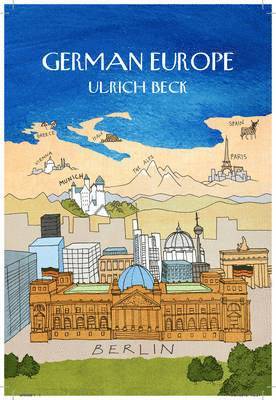
    German Europe

    AvUlrich Beck

    Inbunden, Engelska, 2013

    208 kr

    Beställningsvara. Skickas inom 5-8 vardagar. Fri frakt över 249 kr.

    Fler format och utgåvor

    Häftad

    143 kr

    E-bok

    158 kr

    Beskrivning

    The euro crisis is tearing Europe apart. But the heart of the matter is that, as the crisis unfolds, the basic rules of European democracy are being subverted or turned into their opposite, bypassing parliaments, governments and EU institutions. Multilateralism is turning into unilateralism, equality into hegemony, sovereignty into the dependency and recognition into disrespect for the dignity of other nations. Even France, which long dominated European integration, must submit to Berlin’s strictures now that it must fear for its international credit rating. How did this happen? The anticipation of the European catastrophe has already fundamentally changed the European landscape of power. It is giving birth to a political monster: a German Europe. Germany did not seek this leadership position - rather, it is a perfect illustration of the law of unintended consequences. The invention and implementation of the euro was the price demanded by France in order to pin Germany down to a European Monetary Union in the context of German unification. It was a quid pro quo for binding a united Germany into a more integrated Europe in which France would continue to play the leading role. But the precise opposite has happened. Economically the euro turned out to be very good for Germany, and with the euro crisis Chancellor Angela Merkel became the informal Queen of Europe. The new grammar of power reflects the difference between creditor and debtor countries; it is not a military but an economic logic. Its ideological foundation is ‘German euro nationalism’ - that is, an extended European version of the Deutschmark nationalism that underpinned German identity after the Second World War. In this way the German model of stability is being surreptitiously elevated into the guiding idea for Europe. The Europe we have now will not be able to survive in the risk-laden storms of the globalized world. The EU has to be more than a grim marriage sustained by the fear of the chaos that would be caused by its breakdown. It has to be built on something more positive: a vision of rebuilding Europe bottom-up, creating a Europe of the citizen. There is no better way to reinvigorate Europe than through the coming together of ordinary Europeans acting on their own behalf.

    Produktinformation

    • Utgivningsdatum:2013-03-08
    • Mått:145 x 224 x 15 mm
    • Vikt:272 g
    • Format:Inbunden
    • Språk:Engelska
    • Antal sidor:120
    • Förlag:John Wiley and Sons Ltd
    • ISBN:9780745665399
    • Översättare:Rodney Livingstone

    Utforska kategorier

    • Makroekonomi inom Ekonomi och Ledarskap
    • Internationella relationer inom Samhälle och politik

    Mer om författaren

    Ulrich Beck is one of the world’s leading sociologists and social thinkers, well-known for his best-selling book Risk Society. He is Emeritus Professor at Munich and Professor of Sociology at the LSE.

    Recensioner i media

    "A compelling analysis of Germany."—The Economist"A blistering indictment of Germany's modern-day economic domination, by one of Germany's most distinguished intellectuals."—Daily Mail"A brilliant and succinct analysis of the political genius of Angela Merkel."—Charles Moore, Sunday Telegraph"A short but punchy book by the distinguished German sociologist."—Prospect"A welcome tonic to reactionary discourses on the ills of Brussels."—Times Literary Supplement"Democracy won't be real in Europe until that kind of law has to be proposed, debated, and voted on by all concerned. Beck has moved us a small step closer to this highly desirable consummation, and to a unified political will in Europe, by getting his readers accustomed to thinking of a 'European Germany' rather than a 'German Europe'."—Los Angeles Review of Books"Diagnoses Europe's troubles with a realism and clarity that suggests a long and arduous road ahead."—Financial Times"A thought-provoking essay on the European economic crisis, recommended to all interested in this topic."—Journal of Global Faultlines"A brilliant analysis of Europe's shifting landscape of power."—Joschka Fischer, Foreign Minister and Vice Chancellor of Germany, 1998-2005"An immensely incisive and encouraging book. Not only does it present an eye-opening outlook on Europe's crisis, it also offers a credible solution."—Daniel Cohn-Bendit, MEP and co-president of the Greens/Free European Alliance Group in the European Parliament"Ulrich Beck's German Europe is one of those rare and brilliant political tracts that offers us a new language with which to understand the present crisis so that we can shape the future."—Mary Kaldor, Professor of Global Governance, LSE

    Innehållsförteckning

    • Preface viiAcknowledgements xIntroduction: Europe: To Be or Not to Be: The Decision Facing Germany 11 How the Euro Crisis is both Tearing Europe Apart and Uniting It 5How German austerity policies are dividing Europe – the governments are for it, the peoples are against 5The achievements of the European Union 10The blindness of economics 13European domestic politics: the national concept of politics is outmoded 15The EU crisis is not a debt crisis 192 Europe's New Power Coordinates: The Path to a German Europe 22Europe under threat and the crisis of politics 22The new landscape of European power 39'Merkiavelli': hesitation as a means of coercion 453 A Social Contract for Europe 66More freedom through more Europe 68More social security through more Europe 72More democracy through more Europe 74The question of power: who will enforce the social contract? 79A European spring? 82Notes 87