• Fri frakt över 249 kr
  • •
  • Snabba leveranser
  • •
  • Billiga böcker
Kundservice

Du är på sajten för privatpersoner.

Företag, bibliotek eller offentlig verksamhet?

Du handlar på classic.bokus.com, där alla dina funktioner finns intakta.
Till classic.bokus.com
Bokus logotyp. Gå till startsidan.
  • Erbjudanden
  • Nyheter
  • Student
  • Topplistor
  • Barn & ungdom
  • Bokus Play
  • E-böcker
  • Pocketböcker
  • Spel & pussel

10% rabatt på allt med kod: NYSTART10 →

Sidfot

Mina sidor

    Hjälp

    • Kundservice
    • Vanliga frågor och svar
    • Frakt och leverans
    • Retur vid ångerrätt
    • Reklamera vara
    • Betalning
    • Köpvillkor
    • Allmänna villkor
    • Information om webbplatsens tillgänglighet

    Om Bokus

    • Om oss
    • Pressrum
    • För studenter
    • För företag
    • För bibliotek och offentlig verksamhet
    • För leverantörer
    • Hållbarhet

    Populärt

    • Aktuella erbjudanden
    • Presentkort
    • Studentlitteratur
    • Nya böcker
    • Topplistor
    • Signerade böcker
    • Engelska böcker

    Inspiration

    • Boktips
    • BookTok
    • Populära bokserier
    • Barnbokskaraktärer
    • Populära författare
    Logotyp för Bokus
    Följ oss på Facebook (extern länk)Följ oss på Instagram (extern länk)Följ oss på YouTube (extern länk)Följ oss på TikTok (extern länk)
    bokus @ CookiesAnpassa cookiesIntegritetspolicyKöpvillkor
    Till Citymail hemsida (extern länk)Till Budbee hemsida (extern länk)Till Postnord hemsida (extern länk)Till Schenker hemsida (extern länk)Till Early Bird hemsida (extern länk)Till Walleys hemsida (extern länk)
    1. Juridik
    2. Rättsvetenskap

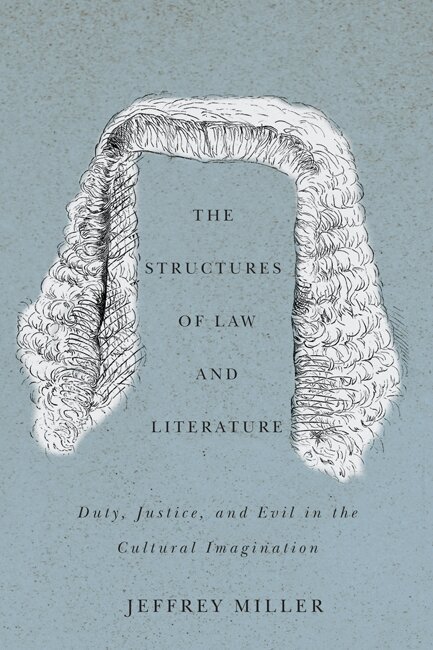
    Structures of Law and Literature

    Duty, Justice, and Evil in the Cultural Imagination

    AvJeffrey Miller

    Häftad, Engelska, 2013

    433 kr

    Beställningsvara. Skickas inom 5-8 vardagar. Fri frakt över 249 kr.

    Fler format och utgåvor

    E-bok

    381 kr

    E-bok

    381 kr

    Beskrivning

    Do law and literature really have anything to say to each other? Until now, that threshold question has vexed law and literature studies. This revolutionary work provides a bold new answer, showing how law and literature spring from the same cultural impulses. Drawing on the archetypal criticism of Northrop Frye, the book takes a unique, quasi-scientific approach to the subject, covering both law in literature and law as literature. The Structures of Law and Literature moves beyond the works usually studied in the field (Charles Dickens, Franz Kafka, Herman Melville, Harper Lee) to consider traditional ballads, the biblical narratives of Moses and Job, literature from South Africa and France, as well as works in Yiddish and Hebrew, the poetry of W.B. Yeats, stories by John Updike, John Mortimer, and John Sayles, Scottish nationalist writing by James Kelman, the golem legend from the Talmud to modern novels, and more. It also investigates legalese as a dialect in a universe of its own making, provides a concise summary of the entire method proposed, and concludes with essays on selected works that render the method's application particularly graphic. Original and systematically argued, The Structures of Law and Literature is a provocative work that adds new dimensions to the cultural interplay of law and the humanities.

    Produktinformation

    • Utgivningsdatum:2013-05-01
    • Mått:152 x 229 x 18 mm
    • Vikt:369 g
    • Format:Häftad
    • Språk:Engelska
    • Antal sidor:256
    • Förlag:McGill-Queen's University Press
    • ISBN:9780773541634

    Utforska kategorier

    • Rättsvetenskap inom Juridik
    • Litteraturvetenskap inom Skönlitteratur

    Mer om författaren

    Jeffrey Miller is a writer, law professor, translator, broadcaster, and former barrister. He lives in Toronto.

    Recensioner i media

    "Miller presents a valid argument for promoting Fryegian analysis in the law and literature field without discounting other critical views of the subject. While it would be impossible to delineate any one "right way" to conduct law and literature criticism, Miller illustrates numerous areas that are ripe for further study." Osgoode Hall Law Journal