• Fri frakt över 249 kr
  • •
  • Snabba leveranser
  • •
  • Billiga böcker
Kundservice

Du är på sajten för privatpersoner.

Företag, bibliotek eller offentlig verksamhet?

Du handlar på classic.bokus.com, där alla dina funktioner finns intakta.
Till classic.bokus.com
Bokus logotyp. Gå till startsidan.
  • Erbjudanden
  • Nyheter
  • Student
  • Topplistor
  • Barn & ungdom
  • Bokus Play
  • E-böcker
  • Pocketböcker
  • Spel & pussel

10% studentrabatt med kod TERM26

Sidfot

Mina sidor

    Hjälp

    • Kundservice
    • Vanliga frågor och svar
    • Frakt och leverans
    • Retur vid ångerrätt
    • Reklamera vara
    • Betalning
    • Köpvillkor
    • Allmänna villkor
    • Information om webbplatsens tillgänglighet

    Om Bokus

    • Om oss
    • Pressrum
    • För studenter
    • För företag
    • För bibliotek och offentlig verksamhet
    • För leverantörer
    • Hållbarhet

    Populärt

    • Aktuella erbjudanden
    • Presentkort
    • Studentlitteratur
    • Nya böcker
    • Topplistor
    • Signerade böcker
    • Engelska böcker

    Inspiration

    • Boktips
    • BookTok
    • Populära bokserier
    • Barnbokskaraktärer
    • Populära författare
    Logotyp för Bokus
    Följ oss på Facebook (extern länk)Följ oss på Instagram (extern länk)Följ oss på YouTube (extern länk)Följ oss på TikTok (extern länk)
    bokus @ CookiesAnpassa cookiesIntegritetspolicyKöpvillkor
    Till Citymail hemsida (extern länk)Till Budbee hemsida (extern länk)Till Postnord hemsida (extern länk)Till Schenker hemsida (extern länk)Till Early Bird hemsida (extern länk)Till Walleys hemsida (extern länk)
    1. Skönlitteratur
    2. Litteraturvetenskap
    3. Litteraturvetenskap

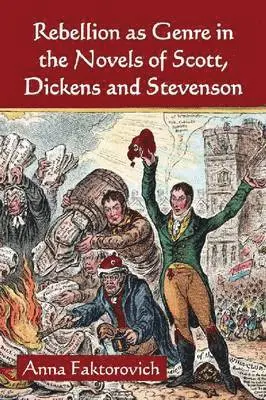
    Rebellion as Genre in the Novels of Scott, Dickens and Stevenson

    AvAnna Faktorovich

    Häftad, Engelska, 2013

    543 kr

    Beställningsvara. Skickas inom 5-8 vardagar. Fri frakt över 249 kr.

    Beskrivning

    When three of Britain's best-loved and best-selling authors each publish at least two novels with a historical rebellion theme, there might be an interesting pattern worth examining. This is a long overdue study of the previously overlooked rebellion novel genre, with a close look at the works of Sir Walter Scott (Waverly and Rob Roy), Charles Dickens (A Tale of Two Cities and Barnaby Rudge), and Robert Louis Stevenson (Kidnapped and The Young Chevalier). The linguistic and structural formulas that these novels share are presented, along with a comparative study of how these authors individualized the genre to adjust it to their needs. Scott, Dickens and Stevenson were led to the rebellion genre by direct radical interests. They used the tools of political literary propaganda to assist the poor, disenfranchised and peripheral people, with whom they identified and hoped to see free from oppression and poverty.

    Produktinformation

    • Utgivningsdatum:2013-03-13
    • Mått:152 x 229 x 13 mm
    • Vikt:358 g
    • Format:Häftad
    • Språk:Engelska
    • Antal sidor:264
    • Förlag:McFarland & Co Inc
    • ISBN:9780786471492

    Utforska kategorier

    • Litteraturvetenskap inom Skönlitteratur

    Mer om författaren

    Anna Faktorovich is the founder and director of the Anaphora Literary Press and the editor-in-chief of the Pennsylvania Literary Journal. She has been a professor of English for Middle Georgia College and for Edinboro University of Pennsylvania. She lives in Hephzibah, Georgia.

    Recensioner i media

    “a seminal body of impeccable scholarship...highly recommended”—Midwest Book Review.

    Innehållsförteckning

    • Table of ContentsChronologyAbbreviations Used for SourcesIntroductionPart I: A Genre under a Microscope1. Rebellions and Reforms in Britain2. Genre Theory and the Rebellion Novel3. Criteria for Selecting Rebellion Novels4. Readers of Rebellion Novels5. Censorship, the Publishing Business, and Subversive deleteLiterary Warfare6. The Elements of Rebellion NovelsPart II: Sir Walter Scott and the Invention of the Rebellion Genre7. Scott’s Scottish Nationalism8. Scott’s Structural Features9. Scott’s Linguistic FeaturesPart III: Charles Dickens: The Radical Socialist10. Dickens’ Socialist Purpose11. Dickens’ Structural Features12. Dickens’ Linguistic FeaturesPart IV: Robert Louis Stevenson: Patronage and Rebellion13. Stevenson’s Radical Purpose14. Stevenson’s Structural Features15. Stevenson’s Linguistic FeaturesConclusionChapter NotesBibliographyIndex