• Fri frakt över 249 kr
  • •
  • Snabba leveranser
  • •
  • Billiga böcker
Kundservice

Du är på sajten för privatpersoner.

Företag, bibliotek eller offentlig verksamhet?

Du handlar på classic.bokus.com, där alla dina funktioner finns intakta.
Till classic.bokus.com
Bokus logotyp. Gå till startsidan.
  • Erbjudanden
  • Nyheter
  • Student
  • Topplistor
  • Barn & ungdom
  • Bokus Play
  • E-böcker
  • Pocketböcker
  • Spel & pussel

10% rabatt på allt med kod NYSTART10 →

Sidfot

Mina sidor

    Hjälp

    • Kundservice
    • Vanliga frågor och svar
    • Frakt och leverans
    • Retur vid ångerrätt
    • Reklamera vara
    • Betalning
    • Köpvillkor
    • Allmänna villkor
    • Information om webbplatsens tillgänglighet

    Om Bokus

    • Om oss
    • Pressrum
    • För studenter
    • För företag
    • För bibliotek och offentlig verksamhet
    • För leverantörer
    • Hållbarhet

    Populärt

    • Aktuella erbjudanden
    • Presentkort
    • Studentlitteratur
    • Nya böcker
    • Topplistor
    • Signerade böcker
    • Engelska böcker

    Inspiration

    • Boktips
    • BookTok
    • Populära bokserier
    • Barnbokskaraktärer
    • Populära författare
    Logotyp för Bokus
    Följ oss på Facebook (extern länk)Följ oss på Instagram (extern länk)Följ oss på YouTube (extern länk)Följ oss på TikTok (extern länk)
    bokus @ CookiesAnpassa cookiesIntegritetspolicyKöpvillkor
    Till Citymail hemsida (extern länk)Till Budbee hemsida (extern länk)Till Postnord hemsida (extern länk)Till Schenker hemsida (extern länk)Till Early Bird hemsida (extern länk)Till Walleys hemsida (extern länk)
    1. Ekonomi och Ledarskap
    2. Ledarskapsböcker
    3. Projektledning

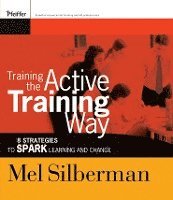
    Training the Active Training Way

    8 Strategies to Spark Learning and Change

    AvMelvin L. Silberman

    Häftad, Engelska, 2006

    Del 12 i serien Active Training Series

    599 kr

    Beställningsvara. Skickas inom 5-8 vardagar. Fri frakt över 249 kr.

    Beskrivning

    Training expert Mel Silberman is the father of the popular and effective active training method. In his landmark textbook, Active Training, he identified the specific characteristics of the active training method that results in deeper learning and improved retention. Now, Training the Active Training Way takes the next step by distilling the active training method into eight core strategies that trainers can use to craft interactive and engaging training, even for the most challenging training assignments such as technical skills training, and information-rich (and often dull) content.

    Produktinformation

    • Utgivningsdatum:2006-03-07
    • Mått:200 x 234 x 11 mm
    • Vikt:386 g
    • Format:Häftad
    • Språk:Engelska
    • Serie:Active Training Series
    • Antal sidor:208
    • Förlag:John Wiley & Sons Inc
    • ISBN:9780787976132

    Utforska kategorier

    • Projektledning inom Ekonomi och Ledarskap

    Mer om författaren

    Mel Silberman, Ph.D. is Professor of Adult and Organizational Development at Temple University, where he received its Great Teacher Award. He is also president of Active Training, Princeton, NJ, a consulting firm that provides courses on active training techniques, interpersonal intelligence, and team facilitation.Dr. Silberman is a graduate of Brandeis University and holds an M.A. and Ph.D. in educational psychology from the University of Chicago. He is the author and editor of over 30 books, including Active Training 2e (Pfeiffer, 1998), 101 Ways to Make Training Active (Pfeiffer, 1998), and The Consultant's Tool Kit (McGraw-Hill, 2002), and a regular conference speaker for ASTD and ISPI.Dr. Silberman has conducted training for hundreds of corporate, governmental, educational, and human-service organizations. Among his recent clients have been: Valero Refining Co., BMW of North America, MGM Grand, New York University School of Dentistry, Merck, Girl Scouts of the USA, and International Teachers of Business Management Program.

    Innehållsförteckning

    • Acknowledgments xiIntroduction 1Strategy 1: Engage Your Participants From the Start 7Tip 1: Give Participants Something to Do Before the Session Formally Begins 9Tip 2: Structure the Initial Social Interactions Among Participants 12Tip 3: Create Icebreakers That Focus Solely on Immediate Learning Involvement 17Tip 4: Enlarge the Pool of Participation at the Very Beginning 22Strategy 2: Be a Brain-friendly Presenter 25Tip 5: Build Brain Interest in What Is Being Presented 27Tip 6: Help Your Participants’ Brains to “Get It” 32Tip 7: Involve Participants Throughout Your Presentation 39Tip 8: Help Participants “Save” the Presentation in Their Brains 46Strategy 3: Encourage Lively and Focused Discussion 49Tip 9: Engage Participants Before Plunging into the Discussion 51Tip 10: State Effective Questions for Discussion 55Tip 11: Improve the Quality of Discussion Through Participant Preparation 60Tip 12: Alter the Discussion Format 64Tip 13: Facilitate the Flow of Conversation 70Strategy 4: Urge Participants to Ask Questions 75Tip 14: Help Participants Get Started 77Tip 15: Create the Need for Questions 82Tip 16: Let Participants Know You Expect Questions 87Strategy 5: Let Your Participants Learn From Each other 91Tip 17: Choose How You Compose Learning Teams 93Tip 18: Build Learning Teams Before Giving Them Work 98Tip 19: Gradually Immerse Participants in Team Learning 103Tip 20: Use a Variety of Team Learning Activities 108Tip 21: Invite Participants to Teach Each Other 113Strategy 6: Enhance Learning by Experiencing and Doing 119Tip 22: Create Experiences That Simulate or Match Reality 121Tip 23: Ask Participants to Reflect on the Experience 128Tip 24: Avoid “Monkey See, Monkey Do” 132Tip 25: Use Role Play to Develop Verbal Skills 136Strategy 7: Blend in Technology Wisely 141Tip 26: Transform Active Classroom Strategies into e-Learning 143Tip 27: Use e-Learning to Supplement Classroom Learning 147Tip 28: Use Classroom Sessions to Supplement e-Learning Activities 150Strategy 8: Make the End Unforgettable 153Tip 29: Get Participants to Review What’s Been Learned 155Tip 30: Ask Participants to Evaluate Their Accomplishments 161Tip 31: Have Participants Plan for the Future 165Tip 32: Let Participants Celebrate the End 170Final Advice 175About the Author 181Pfeiffer Publications Guide 183