• Fri frakt över 249 kr
  • •
  • Snabba leveranser
  • •
  • Billiga böcker
Kundservice

Du är på sajten för privatpersoner.

Företag, bibliotek eller offentlig verksamhet?

Du handlar på classic.bokus.com, där alla dina funktioner finns intakta.
Till classic.bokus.com
Bokus logotyp. Gå till startsidan.
  • Erbjudanden
  • Nyheter
  • Student
  • Topplistor
  • Barn & ungdom
  • Bokus Play
  • E-böcker
  • Pocketböcker
  • Spel & pussel

10% rabatt på allt med kod NYSTART10 →

Sidfot

Mina sidor

    Hjälp

    • Kundservice
    • Vanliga frågor och svar
    • Frakt och leverans
    • Retur vid ångerrätt
    • Reklamera vara
    • Betalning
    • Köpvillkor
    • Allmänna villkor
    • Information om webbplatsens tillgänglighet

    Om Bokus

    • Om oss
    • Pressrum
    • För studenter
    • För företag
    • För bibliotek och offentlig verksamhet
    • För leverantörer
    • Hållbarhet

    Populärt

    • Aktuella erbjudanden
    • Presentkort
    • Studentlitteratur
    • Nya böcker
    • Topplistor
    • Signerade böcker
    • Engelska böcker

    Inspiration

    • Boktips
    • BookTok
    • Populära bokserier
    • Barnbokskaraktärer
    • Populära författare
    Logotyp för Bokus
    Följ oss på Facebook (extern länk)Följ oss på Instagram (extern länk)Följ oss på YouTube (extern länk)Följ oss på TikTok (extern länk)
    bokus @ CookiesAnpassa cookiesIntegritetspolicyKöpvillkor
    Till Citymail hemsida (extern länk)Till Budbee hemsida (extern länk)Till Postnord hemsida (extern länk)Till Schenker hemsida (extern länk)Till Early Bird hemsida (extern länk)Till Walleys hemsida (extern länk)
    1. Ekonomi och Ledarskap
    2. Nationalekonomi

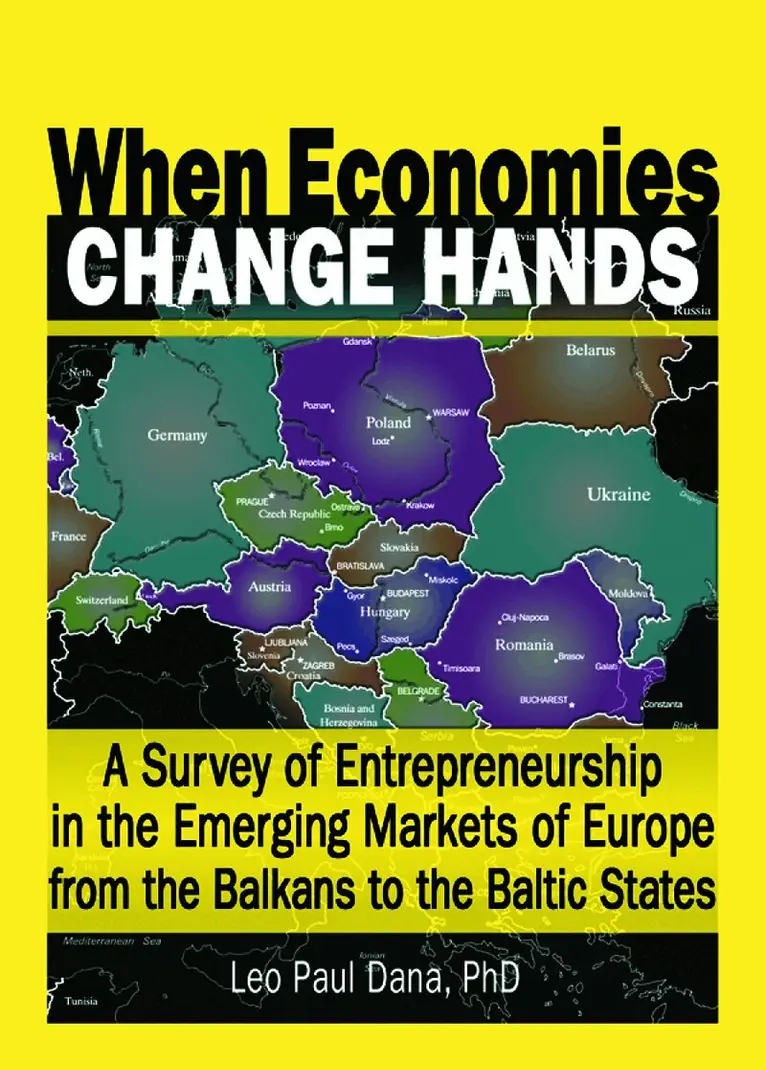
    When Economies Change Hands

    A Survey of Entrepreneurship in the Emerging Markets of Europe from the Balkans to the Baltic States

    AvLeo Paul Dana

    Häftad, Engelska, 2005

    1 554 kr

    Beställningsvara. Skickas inom 5-8 vardagar. Fri frakt över 249 kr.

    Fler format och utgåvor

    E-bok

    1 258 kr

    E-bok

    1 258 kr

    Beskrivning

    Gain a comprehensive understanding of the development of entrepreneurship across Eastern Europe Throughout Eastern Europe, post-Communist countries transitioning to market-based economies are obtaining a variety of results due to diverse policy approaches. When Economies Change Hands evaluates the nature of entrepreneurship in this region, the consequences of central planning, the reasons for internal subsistence activity, and the emergence of the sex trade in Eastern Europe. The wealth of information in this resource is clearly presented and includes thought-provoking policy prescriptions for the future.It is challenging to predict the direction emerging markets will take, particularly when dealing with the wide-ranging social and economic situations taking place in post-Communist Eastern Europe. When Economies Change Hands can help. This reference volume for policymakers, educators, investors, and researchers provides a much-needed and timely survey of the transitioning markets of post-Communist Europe. It examines the historical, sociocultural, and economic impacts of market transition. The text includes a discussion of the creation and distribution of wealth in the countries of Eastern Europe that will leave you better informed about the dynamics of transitioning economies and the growth of entrepreneurship across Eastern Europe. In addition, the book demonstrates the problems and advantages of both slow reform and rapid reform models in a thorough and easy-to-read manner. When Economies Change Hands includes vivid photos of notable entrepreneurs and a sophisticated trail of references for academics that complements the useful and meaningful information you will find in the text.When Economies Change Hands examines how various policies affect the economies of transitioning countries by incorporating and discussing:detailed definitions and comparisons of formal and parallel economies an in-depth study of entrepreneurship in the Republic of Albania, the Eastern Bloc of Comecon, The Baltic States, and the Commonwealth of Independent States pluralism in the former Yugoslav Republics analyses of governmental programs and policy prescriptions for the future and much more!As the market economies of Eastern Europe develop and expand, the value of this meticulous yet accessible text will continue to increase. Whether you are a policymaker, an educator, an investor, or a researcher, When Economies Change Hands is a resource that you’ll return to again and again as you work to understand and predict the future of post-Communist economies in Eastern Europe.

    Produktinformation

    • Utgivningsdatum:2005-07-25
    • Mått:156 x 234 x 24 mm
    • Vikt:700 g
    • Format:Häftad
    • Språk:Engelska
    • Antal sidor:380
    • Förlag:Taylor & Francis Inc
    • ISBN:9780789016478

    Utforska kategorier

    • Nationalekonomi inom Ekonomi och Ledarskap

    Innehållsförteckning

    • Foreword (Robert D. Hisrich) Preface Acknowledgments Chapter 1. Introduction The Context for Entrepreneurship Methodology The Formal Economy: The Firm-Type Sector and the Bazaar The Parallel Economy: Informal, Internal, and Covert Chapter 2. Land of the Perseritje Model The Republic of Albania Chapter 3. The Former Yugoslav Republics Pluralism and the Yugopluralist Model An Introduction to Yugoslavia The Federation of Bosnia-Herzegovina The Republic of Croatia The Former Yugoslav Republic of Macedonia (FYROM) The State Union of Serbia and Montenegro The Republic of Slovenia Chapter 4. The East Bloc of Comecon The Republic of Bulgaria The Czech Republic The German Democratic Republic (East Germany) The Republic of Hungary The Republic of Poland The Republic of Romania The Slovak Republic (Slovakia) Chapter 5. The Commonwealth of Independent States (CIS) The Union of Soviet Socialist Republics and Perestroika The Republic of Belarus (White Russia) The Republic of Moldova The Russian Federation The Ukraine (Little Russia) Chapter 6. The Baltic States The Republic of Estonia The Republic of Latvia The Republic of Lithuania Chapter 7. Toward the Future Implications for Policymakers Implications for Educators Implications for Western Managers and Investors Toward Future Research Toward the Future References Index