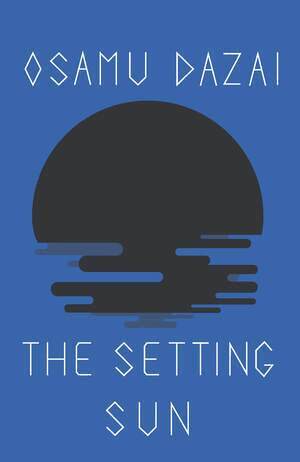
Set in the early postwar years, it probes the destructive effects of war and the transition from a feudal Japan to an industrial society. Ozamu Dazai died, a suicide, in 1948. But the influence of his book has made "people of the setting sun" a permanent part of the Japanese language, and his heroine, Kazuko, a young aristocrat who deliberately abandons her class, a symbol of the anomie which pervades so much of the modern world.
The author of the global bestseller No Longer Human and The Setting Sun, Osamu Dazai (1909-1948) was famous for confronting head-on the social and moral crises of postwar Japan. He committed suicide by drowning in Tokyo’s Tamagawa Aqueduct.Donald Keene, the author of dozens of books in both English andJapanese as well as the famed translator of Dazai, Kawabata, and Mishima, was thefirst non-Japanese to receive the Yomiuri Prize for Literature.
Recensioner i media
"Written with beauty, refinement, and force: a work of unmistakable distinction…"
Set in the early postwar years, it probes the destructive effects of war and the transition from a feudal Japan to an industrial society. Ozamu Dazai died, a suicide, in 1948. But the influence of his book has made "people of the setting sun" a permanent part of the Japanese language, and his heroine, Kazuko, a young aristocrat who deliberately abandons her class, a symbol of the anomie which pervades so much of the modern world.
The author of the global bestseller No Longer Human and The Setting Sun, Osamu Dazai (1909-1948) was famous for confronting head-on the social and moral crises of postwar Japan. He committed suicide by drowning in Tokyo’s Tamagawa Aqueduct.Donald Keene, the author of dozens of books in both English andJapanese as well as the famed translator of Dazai, Kawabata, and Mishima, was thefirst non-Japanese to receive the Yomiuri Prize for Literature.
Recensioner i media
"Written with beauty, refinement, and force: a work of unmistakable distinction…"