• Fri frakt över 249 kr
  • •
  • Snabba leveranser
  • •
  • Billiga böcker
Kundservice

Du är på sajten för privatpersoner.

Företag, bibliotek eller offentlig verksamhet?

Du handlar på classic.bokus.com, där alla dina funktioner finns intakta.
Till classic.bokus.com
Bokus logotyp. Gå till startsidan.
  • Erbjudanden
  • Nyheter
  • Student
  • Topplistor
  • Barn & ungdom
  • Bokus Play
  • E-böcker
  • Pocketböcker
  • Spel & pussel

10% rabatt på allt med kod NYSTART10 →

Sidfot

Mina sidor

    Hjälp

    • Kundservice
    • Vanliga frågor och svar
    • Frakt och leverans
    • Retur vid ångerrätt
    • Reklamera vara
    • Betalning
    • Köpvillkor
    • Allmänna villkor
    • Information om webbplatsens tillgänglighet

    Om Bokus

    • Om oss
    • Pressrum
    • För studenter
    • För företag
    • För bibliotek och offentlig verksamhet
    • För leverantörer
    • Hållbarhet

    Populärt

    • Aktuella erbjudanden
    • Presentkort
    • Studentlitteratur
    • Nya böcker
    • Topplistor
    • Signerade böcker
    • Engelska böcker

    Inspiration

    • Boktips
    • BookTok
    • Populära bokserier
    • Barnbokskaraktärer
    • Populära författare
    Logotyp för Bokus
    Följ oss på Facebook (extern länk)Följ oss på Instagram (extern länk)Följ oss på YouTube (extern länk)Följ oss på TikTok (extern länk)
    bokus @ CookiesAnpassa cookiesIntegritetspolicyKöpvillkor
    Till Citymail hemsida (extern länk)Till Budbee hemsida (extern länk)Till Postnord hemsida (extern länk)Till Schenker hemsida (extern länk)Till Early Bird hemsida (extern länk)Till Walleys hemsida (extern länk)
    1. Skönlitteratur
    2. Litteraturvetenskap
    3. Litteraturvetenskap

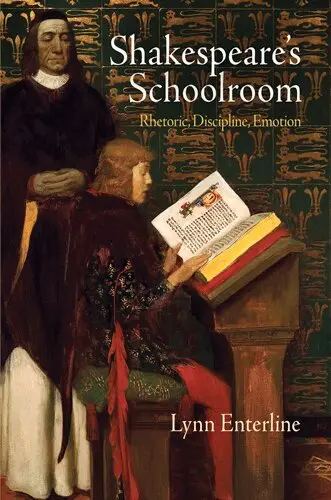
    Shakespeare's Schoolroom

    Rhetoric, Discipline, Emotion

    AvLynn Enterline

    Häftad, Engelska, 2016

    375 kr

    Beställningsvara. Skickas inom 10-15 vardagar. Fri frakt över 249 kr.

    Fler format och utgåvor

    E-bok

    544 kr

    Beskrivning

    Shakespeare's Schoolroom places moments of considerable emotional power in Shakespeare's poetry-portraits of what his contemporaries called "the passions"-alongside the discursive and material practices of sixteenth-century English pedagogy. Humanist training in Latin grammar and rhetorical facility was designed to intervene in social reproduction, to sort out which differences between bodies (male and female) and groups (aristocrats, the middling sort, and those below) were necessary to producing proper English "gentlemen." But the method adopted by Lynn Enterline in this book uncovers a rather different story from the one schoolmasters invented to promote the social efficacy of their pedagogical innovations. Beginning with the observation that Shakespeare frequently reengaged school techniques through the voices of those it excluded (particularly women), Enterline shows that when his portraits of "love" and "woe" betray their institutional origins, they reveal both the cost of a Latin education as well as the contradictory conditions of genteel masculinity in sixteenth-century Britain.In contrast to attempts to explain early modern emotion in relation to medical discourse, Enterline uncovers the crucial role that rhetoric and the texts of the classical past play in Shakespeare's passions. She relies throughout on the axiom that rhetoric has two branches that continuously interact: tropological (requiring formal literary analysis) and transactional (requiring social and historical analysis). Each chapter moves between grammar school archives and literary canon, using linguistic, rhetorical, and literary detail to illustrate the significant difference between what humanists claimed their methods would achieve and what the texts of at least one former schoolboy reveal about the institution's unintended literary and social consequences. When Shakespeare creates the convincing effects of character and emotion for which he is so often singled out as a precursor of "modern" subjectivity, he signals his debt to the Latin institution that granted him the cultural capital of an early modern gentleman precisely when undercutting the socially normative categories schoolmasters invoked as their educational goal.

    Produktinformation

    • Utgivningsdatum:2016-10-03
    • Mått:152 x 229 x 13 mm
    • Vikt:318 g
    • Format:Häftad
    • Språk:Engelska
    • Antal sidor:208
    • Förlag:University of Pennsylvania Press
    • ISBN:9780812223712

    Utforska kategorier

    • Litteraturvetenskap inom Skönlitteratur

    Mer om författaren

    Lynn Enterline is Nancy Perot Mulford Professor of English at Vanderbilt University. She is author of The Rhetoric of the Body from Ovid to Shakespeare and The Tears of Narcissus: Melancholia and Masculinity in Early Modern Writing.

    Recensioner i media

    "No other scholar has offered such a thoughtful and substantive treatment of pedagogy as construed imaginatively in the Shakespearean plays and poems. . . . Enterline deeply embeds her analysis of early modern pedagogy and rhetoric in a contemporary psychoanalytic framework . . . intent on destabilizing conventional ideas about the gendering of the early modern pedagogical project." (Renaissance Quarterly) "A short, tightly argued and crisply written book that aims to show how the rhetorical and grammatical exercises of Shakespeare's schoolroom might inform our reading of his narrative poems and some of his plays, in particular with regard to his handling of gender." (Review of English Studies) "Intertwining a close reading of Shakespearean texts with thorough research into the Tudor grammar school, Enterline focuses not only on the literary exercises of humanism, but also on the material practices of education. It is this attention to affect, bodily gestures, physical violence, and other non-textual aspects of early modern pedagogical practice that makes this book both innovative and inspiring." (Sixteenth Century Journal) "Lynn Enterline locates in the schoolroom a complex of formative issues that on the one hand describe broad-based cultural processes in Elizabethan society, and on the other turn up in and illuminate the works of Shakespeare. What is striking and noteworthy is the persuasiveness with which she demonstrates their emergence in a vast body of sixteenth-century pedagogical literature and their aptness to our own contemporary theories of personality and gender formation." (Leonard Barkan, Princeton University)

    Innehållsförteckning

    • Introduction: "Thou art translated!"Chapter 1. Rhetoric and the Passions in Shakespeare's SchoolroomChapter 2. Imitate and Punish: The Theatricality of Everyday Life in Elizabethan SchoolroomsChapter 3. The Art of Loving Mastery: Venus, Adonis, and the Erotics of Early Modern PedagogyChapter 4. Translation, Ekphrasis, and the Cruelties of Character in Taming of the ShrewChapter 5. "What's Hecuba to Him": Transferring Woe in Hamlet, Lucrece, and The Winter's TaleNotesBibliographyAcknowledgmentsIndex