• Fri frakt över 249 kr
  • •
  • Snabba leveranser
  • •
  • Billiga böcker
Kundservice

Du är på sajten för privatpersoner.

Företag, bibliotek eller offentlig verksamhet?

Du handlar på classic.bokus.com, där alla dina funktioner finns intakta.
Till classic.bokus.com
Bokus logotyp. Gå till startsidan.
  • Erbjudanden
  • Nyheter
  • Student
  • Topplistor
  • Barn & ungdom
  • Bokus Play
  • E-böcker
  • Pocketböcker
  • Spel & pussel

10% rabatt på allt med kod NYSTART10 →

Sidfot

Mina sidor

    Hjälp

    • Kundservice
    • Vanliga frågor och svar
    • Frakt och leverans
    • Retur vid ångerrätt
    • Reklamera vara
    • Betalning
    • Köpvillkor
    • Allmänna villkor
    • Information om webbplatsens tillgänglighet

    Om Bokus

    • Om oss
    • Pressrum
    • För studenter
    • För företag
    • För bibliotek och offentlig verksamhet
    • För leverantörer
    • Hållbarhet

    Populärt

    • Aktuella erbjudanden
    • Presentkort
    • Studentlitteratur
    • Nya böcker
    • Topplistor
    • Signerade böcker
    • Engelska böcker

    Inspiration

    • Boktips
    • BookTok
    • Populära bokserier
    • Barnbokskaraktärer
    • Populära författare
    Logotyp för Bokus
    Följ oss på Facebook (extern länk)Följ oss på Instagram (extern länk)Följ oss på YouTube (extern länk)Följ oss på TikTok (extern länk)
    bokus @ CookiesAnpassa cookiesIntegritetspolicyKöpvillkor
    Till Citymail hemsida (extern länk)Till Budbee hemsida (extern länk)Till Postnord hemsida (extern länk)Till Schenker hemsida (extern länk)Till Early Bird hemsida (extern länk)Till Walleys hemsida (extern länk)
    1. Samhälle och politik
    2. Politik och statsskick
    3. Internationella relationer

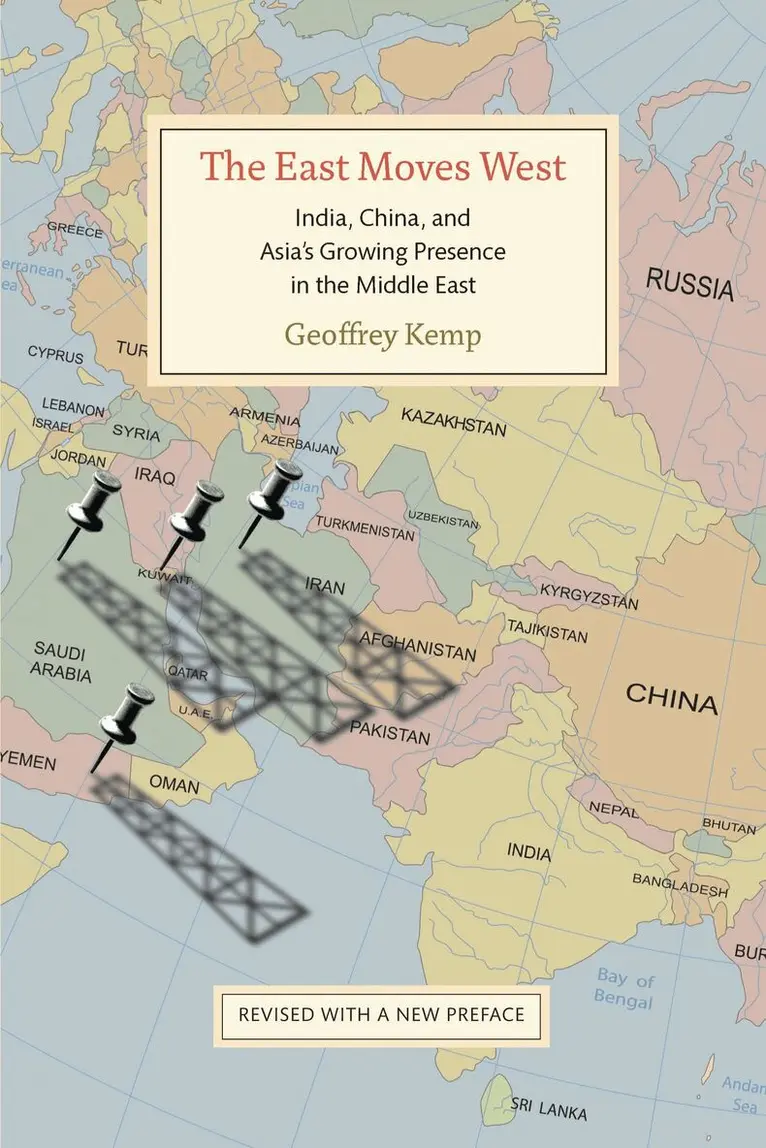
    East Moves West

    India, China, and Asia's Growing Presence in the Middle East

    AvGeoffrey Kemp

    Häftad, Engelska, 2012

    368 kr

    Beställningsvara. Skickas inom 10-15 vardagar. Fri frakt över 249 kr.

    Fler format och utgåvor

    E-bok

    453 kr

    E-bok

    393 kr

    Beskrivning

    While traditionally powerful Western economies are treading water at best, beset by crises in banking, housing, and employment, industrial growth and economic development are exploding in China and India. The world's two most populous nations are the biggest reasons for Asia's growing footprint on other global regions. The increasing size and impact of that footprint are especially important in the Middle East, an economic, religious, and geopolitical linchpin. The East Moves West details the growing interdependence of the Middle East and Asia and projects the likely ramifications of this evolving relationship. It also examines the role of Pakistan, Japan, and South Korea in the region.Geoffrey Kemp, a longtime analyst of global security and political economy, compares and contrasts Indian and Chinese involvement in the Middle East. He stresses an embedded historical dimension that gives India substantially more familiarity and interest in the region—India was there first, and it has maintained that head start. Both nations, however, are clearly on the rise and leaving an indelible mark on the Middle East, and that enhanced influence has international ramifications for the United States and throughout the world.Does the emergence of these Asian giants—with their increasingly huge need for energy—strengthen the case for cooperative security, particularly in the maritime arena? After all, safe and open sea-lanes remain an essential component of mutually beneficial intercontinental trade, making India and China increasingly dependent on safe passage of oil tankers. Or will we see reversion to more traditional competition and even conflict, given that the major Asian powers themselves have so many unresolved problems and that the future of the U.S. presence in the area is uncertain. Kemp believes the United States will remain the dominant military power in the region but will have to share some security responsibilities with the Asians, especially in the Indian Ocean.

    Produktinformation

    • Utgivningsdatum:2012-06-14
    • Mått:153 x 228 x 21 mm
    • Vikt:513 g
    • Format:Häftad
    • Språk:Engelska
    • Antal sidor:340
    • Upplaga:2
    • Förlag:Bloomsbury Publishing Plc
    • ISBN:9780815724070

    Utforska kategorier

    • Internationella relationer inom Samhälle och politik

    Mer om författaren

    Geoffrey Kemp is the director of Regional Strategic Programs at the Nixon Center in Washington, D.C. He served in the White House under Ronald Reagan, as special assistant to the president for National Security Affairs and senior director for Near East and South Asian Affairs on the National Security Council staff. Prior to his current position, he directed the Middle East Arms Control Project at the Carnegie Endowment for International Peace. He is coauthor of Strategic Geography and the Changing Middle East (Carnegie).

    Recensioner i media

    " The East Moves West confirms Geoffrey Kemp's reputation as a scholar who combinesa broad geopolitical vision with an extraordinarily detailed knowledge of the manybilateral relationships between so many Middle East countries, on the one hand, andso many Asian powers, on the other. It will be of great value to policymakers, journalists,scholars, and students." — Middle East Policy|"Geoffrey Kemp has written a book of startling originality. Much is said about a "new"Middle East, and here it is, India and China pushing westward into the Persian Gulf andthe Mediterranean. This is strategic and political analysis of the highest order." —Fouad Ajami, professor and director of Middle East Studies,Johns Hopkins University|"Kemp offers an effective and broad survey of the Asian-Middle East-America nexuswhich covers new ground and offers a wealth of information, data, and analysis. Hisbook should benefit area specialists and policymakers who seek to understandthe Asian role in the Middle East and the dynamics between rising powers and thequasi-hegemon." — Middle East Journal|"Kemp adeptly steers the reader through the ties that bind Asia together, from thegeostrategic importance of Central Asia to the big players China, India, Pakistan, Japan,and South Korea." — Executive (Lebanon)|"As any reader watches the inexorable swing of Gulf oil exports from the west to theeast, this volume should be perused to provide a far fuller picture. Key events are dissected thoroughly and the political implications considered." —Ewan W. Anderson, in the Mackinder Forum