• Fri frakt över 249 kr
  • •
  • Snabba leveranser
  • •
  • Billiga böcker
Kundservice

Du är på sajten för privatpersoner.

Företag, bibliotek eller offentlig verksamhet?

Du handlar på classic.bokus.com, där alla dina funktioner finns intakta.
Till classic.bokus.com
Bokus logotyp. Gå till startsidan.
  • Erbjudanden
  • Nyheter
  • Student
  • Topplistor
  • Barn & ungdom
  • Bokus Play
  • E-böcker
  • Pocketböcker
  • Spel & pussel

10% studentrabatt med kod TERM26

Sidfot

Mina sidor

    Hjälp

    • Kundservice
    • Vanliga frågor och svar
    • Frakt och leverans
    • Retur vid ångerrätt
    • Reklamera vara
    • Betalning
    • Köpvillkor
    • Allmänna villkor
    • Information om webbplatsens tillgänglighet

    Om Bokus

    • Om oss
    • Pressrum
    • För studenter
    • För företag
    • För bibliotek och offentlig verksamhet
    • För leverantörer
    • Hållbarhet

    Populärt

    • Aktuella erbjudanden
    • Presentkort
    • Studentlitteratur
    • Nya böcker
    • Topplistor
    • Signerade böcker
    • Engelska böcker

    Inspiration

    • Boktips
    • BookTok
    • Populära bokserier
    • Barnbokskaraktärer
    • Populära författare
    Logotyp för Bokus
    Följ oss på Facebook (extern länk)Följ oss på Instagram (extern länk)Följ oss på YouTube (extern länk)Följ oss på TikTok (extern länk)
    bokus @ CookiesAnpassa cookiesIntegritetspolicyKöpvillkor
    Till Citymail hemsida (extern länk)Till Budbee hemsida (extern länk)Till Postnord hemsida (extern länk)Till Schenker hemsida (extern länk)Till Early Bird hemsida (extern länk)Till Walleys hemsida (extern länk)
    1. Skönlitteratur
    2. Litteraturvetenskap
    3. Litteraturvetenskap

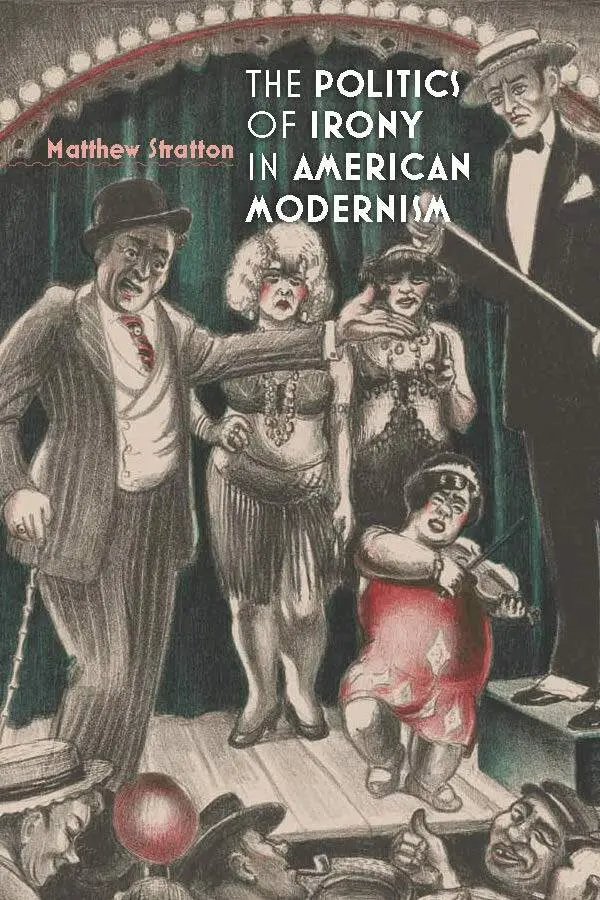
    Politics of Irony in American Modernism

    AvMatthew Stratton

    Inbunden, Engelska, 2013

    827 kr

    Beställningsvara. Skickas inom 5-8 vardagar. Fri frakt över 249 kr.

    Beskrivning

    Shortlisted for the 2015 Modernist Studies Association Book PrizeThis book shows how American literary culture in the first half of the twentieth century saw "irony" emerge as a term to describe intersections between aesthetic and political practices. Against conventional associations of irony with political withdrawal, Stratton shows how the term circulated widely in literary and popular culture to describe politically engaged forms of writing.It is a critical commonplace to acknowledge the difficulty of defining irony before stipulating a particular definition as a stable point of departure for literary, cultural, and political analysis. This book, by contrast, is the first to derive definitions of "irony" inductively, showing how writers employed it as a keyword both before and in opposition to the institutionalization of New Criticism. It focuses on writers who not only composed ironic texts but talked about irony and satire to situate their work politically: Randolph Bourne, Benjamin De Casseres, Ellen Glasgow, John Dos Passos, Ralph Ellison, and many others.

    Produktinformation

    • Utgivningsdatum:2013-11-01
    • Mått:152 x 229 x 28 mm
    • Vikt:517 g
    • Format:Inbunden
    • Språk:Engelska
    • Antal sidor:304
    • Förlag:Fordham University Press
    • ISBN:9780823255450
    • Utmärkelser:Short-listed for Modernist Studies Association First Book Prize 2015

    Utforska kategorier

    • Litteraturvetenskap inom Skönlitteratur

    Mer om författaren

    Matthew Stratton is Assistant Professor of English at the University of California, Davis.

    Recensioner i media

    "The major achievement of The Politics of Irony in American Modernism is that it teaches us to see modernist irony in a new light. It recovers an understanding of modernism that predates its New Critical canonization in the United States. The most effective instrument of this archeological work is the reinterpretation of the meaning of "irony," one of the central categories of New Criticism itself. What makes the book into a significant intervention into contemporary discussions of modernism is that it shows us that for a select group of authors irony did not serve as a means of apolitical detachment (as formalist readings would have it) but precisely as its opposite: for them, irony was a tool of political activism." -- -Roland Vegso University of Nebraska-Lincoln "The Politics of Irony in American Modernism is a remarkable work of scholarship, wedding theoretical acuity with bold and lively readings across an impressive range of contexts. Stratton argues with conviction for a genealogy of modernism that foregrounds attention to irony as a critical practice aiming to change the disposition of readers toward their own acts of political and imaginative engagement. Assembling a varied and surprising set of interlocutors, from Kenneth Burke, Ellen Glasgow, and American Nietzscheans to Northrop Frye, Adorno, and Ralph Ellison, Stratton conducts a rich meditation on literary work as political work, and on forms of feeling and thinking worthy of the epithet "democracy". He not only offers us a bold new frame for reading modernism; he makes modernism itself richly new as an object of study. This work will shape conversations among scholars of modernism and its discontents for many years to come." -- -Sara Blair University of Michigan "An important and deeply insightful book. Moving past familiar debates on the politics of irony, Stratton argues for an understanding of modernist irony as an aesthetic practice that not only sharply reorients political perception, but also promotes dispositions and habits of analysis that are indispensable to political thought and action." -- -Amanda Anderson Brown University "Readers who like their scholarship to be ecumenical in its sourcing and counterintuitive in its findings will find much to admire in 'The Politics of Irony in American Modernism.'" -- T. Austin Graham, Columbia University -ALH Online Review "Stratton makes a highly original contribution both to our understanding of irony as it is used in literary critical discourse and to the political history of American modernism. He succeeds in historicizing this notoriously vague and slippery concept, and he persuasively articulates new ways of connecting the literary and the political that don't privilege either one at the expense of the other." -- -Jonathan Greenberg author of Modernism, Satire, and the Novel

    Innehållsförteckning

    • Introduction: Irony and How It Got That Way Chapter 1: The Eye in Irony: New York, Nietzsche, and the 1910s Chapter 2: Gendering Irony and Its History: Ellen Glasgow and the Lost 1920s Chapter 3: The Focus of Satire: Irony and Public Opinions of Propaganda in the U.S.A. of John Dos Passos Page Chapter 4: Visible Decisions : Irony, Law, and the Political Constitution of Ralph Ellison Beyond Hope and Memory: A Conclusion Bibliography Page