• Fri frakt över 249 kr
  • •
  • Snabba leveranser
  • •
  • Billiga böcker
Kundservice

Du är på sajten för privatpersoner.

Företag, bibliotek eller offentlig verksamhet?

Du handlar på classic.bokus.com, där alla dina funktioner finns intakta.
Till classic.bokus.com
Bokus logotyp. Gå till startsidan.
  • Erbjudanden
  • Nyheter
  • Student
  • Topplistor
  • Barn & ungdom
  • Bokus Play
  • E-böcker
  • Pocketböcker
  • Spel & pussel

10% studentrabatt med kod TERM26

Sidfot

Mina sidor

    Hjälp

    • Kundservice
    • Vanliga frågor och svar
    • Frakt och leverans
    • Retur vid ångerrätt
    • Reklamera vara
    • Betalning
    • Köpvillkor
    • Allmänna villkor
    • Information om webbplatsens tillgänglighet

    Om Bokus

    • Om oss
    • Pressrum
    • För studenter
    • För företag
    • För bibliotek och offentlig verksamhet
    • För leverantörer
    • Hållbarhet

    Populärt

    • Aktuella erbjudanden
    • Presentkort
    • Studentlitteratur
    • Nya böcker
    • Topplistor
    • Signerade böcker
    • Engelska böcker

    Inspiration

    • Boktips
    • BookTok
    • Populära bokserier
    • Barnbokskaraktärer
    • Populära författare
    Logotyp för Bokus
    Följ oss på Facebook (extern länk)Följ oss på Instagram (extern länk)Följ oss på YouTube (extern länk)Följ oss på TikTok (extern länk)
    bokus @ CookiesAnpassa cookiesIntegritetspolicyKöpvillkor
    Till Citymail hemsida (extern länk)Till Budbee hemsida (extern länk)Till Postnord hemsida (extern länk)Till Schenker hemsida (extern länk)Till Early Bird hemsida (extern länk)Till Walleys hemsida (extern länk)
    1. Ekonomi och Ledarskap
    2. Nationalekonomi

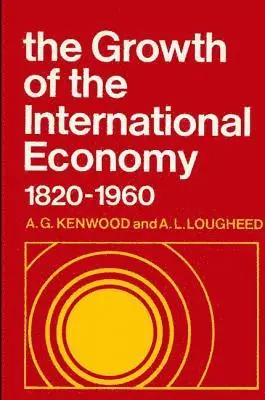
    Growth of the International Economy, 1820-1960

    An Introductory Text

    AvA. G. Kenwood,A. L. Lougheed

    Inbunden, Engelska, 1971

    1 108 kr

    Tillfälligt slut

    Beskrivning

    Here is an introduction to the study of the international economy as a mechanism for diffusing modern economic growth between nations. It is divided into three parts, of which the first examines the workings of the system in the years before 1914. This includes an analysis of the conditions favorable to the growth of international economic relations during the period, examines the changing character of the international flows of labor, capital and trade, and surveys contemporary commercial and international monetary policies. This first part concludes with a chapter analyzing the international economy as a mechanism for diffusing economic growth, and another chapter examining the nature of the economic trends and fluctuations associated with this phase in the growth of the international economic system.The second part gives an account of the collapse of the international economy during the interwar years, and traces the causes of collapse to changes in the structure and functioning of the system brought about by World War I and the depression of the 1930s.The final part takes the story beyond World War II. It describes the wartime and post-war efforts to reconstruct the international economic system, and examines the working of the new system in the period after 1945, bringing out both its strengths and its weaknesses.

    Produktinformation

    • Utgivningsdatum:1971-06-30
    • Vikt:572 g
    • Format:Inbunden
    • Språk:Engelska
    • Antal sidor:319
    • Förlag:State University of New York Press
    • ISBN:9780873951371

    Utforska kategorier

    • Nationalekonomi inom Ekonomi och Ledarskap

    Mer om författaren

    Both the authors are Senior Lecturers in Economics at the University of Queensland, one specializing in Economic History, and the other in International Trade. Between them they have written a textbook of very high quality and one likely to be a great help to students.

    Innehållsförteckning

    • Introduction Part I: The International Economy, 1820-1913 1. The causes of the growth of the international economy in the nineteenth century Technological progress: industry and agricultureTechnological progress: transport and communicationsThe accumulation of capitalThe growth of world populationThe supply of natural resourcesThe growth of real incomesThe spread of economic freedom2. International long-term capital movements, 1820-1913 The growth of foreign investmentThe direction of foreign investmentDeterminants of capital outflowThe use of foreign funds in borrowing countriesEconomic consequences of foreign investment3. International migration, 1820-1913 European migration, 1821-1913Migration and its causesAids to mass emigrationEconomic consequences of migrationIntracontinental migrationAsiatic migration and tropical development4. Commercial policy in the nineteenth century Britain adopts free tradeThe spread of free tradeThe consequences of free tradeThe return to protectionThe economic consequences of protection5. Foreign trade in the nineteenth century The growth of world trade before 1913The direction of world trade before 1913The composition of world trade before 1913Conclusion6. The growth of a multilateral payments network IntroductionDevelopment of the systemForeign investment and the multilateral settlements networkConcluding remarks7. The growth of an international monetary system: the gold standard before 1913 Bimetallic and monometallic standardsBritain adopts the gold standardInternational monetary standards up to 1870The spread of the gold standardThe role of sterling as an international currency and the importance of the London capital marketThe working of the gold standardDivergence between classical theory and empirical evidenceOther features of the adjustment mechanismConclusion8. International aspects of economic growth in the nineteenth century: the spread of industrialization IntroductionThe spread of industrializationThe contribution of the international economyCauses of the limited spread of industrializationConclusion9. International aspects of economic growth in the nineteenth century: the export economies IntroductionRegions of recent settlementThe export economiesEconomic imperialism and colonialism10. Trends and fluctuations in the international economy before 1913 The international transmission of business cyclesLong swings and the international economyLong-run trends in the terms of tradePart II: The Interwar Years 11. The international economy in the interwar years Primary productionPopulation growth and migrationManufacturing productionThe intensification of protectionism12. The restoration of the gold standard and the economic recovery of the twenties Post-war inflation and the restoration of the gold standardWeaknesses in the post-war gold standard:international investmentInstitutional weaknesses of the restored gold standardThe economic boom of the late twenties13. The collapse of the gold standard and the disintegration of the international economy Crisis in agricultureFinancial crisis in EuropeThe end of the gold standardGrowth of restrictions on finance and tradeInternational financial co-operationRegional economic co-operationInternational commodity control schemesConclusion14. International trade during the interwar period The growth of world trade in the interwar yearsThe direction of world trade between the warsThe changing composition of world tradeDiminishing trade hypothesisPart III: The Post-1945 International Economy 15. Wartime preparations for the future international economy and post-war reconstruction The International Monetary FundThe International Bank for Reconstruction and DevelopmentPost-war reconstruction16. The international economy in the 1950s Population growth and migrationInternational capital flows: private investmentInternational capital flows: foreign aid and official long-term loansTechnological change and world tradeConclusion17. The international monetary system, 1945-60 Performance of the system, 1945-52Performance of the system, 1953-6018. International commercial policy, 1945-60 The International Trade OrganizationThe inauguration of GATTDiscrimination in trade relationsRegional trading blocsInternational commodity agreementsConclusion19. Trade and growth in the international economy, 1945-60: the developed economies Trends in tradeEconomic growth in the developed economies, 1945-6020. Trade and growth in the international economy, 1945-60: the developing and centrally-planned economies The developing economiesThe centrally-planned economies21. Epilogue Index