• Fri frakt över 249 kr
  • •
  • Snabba leveranser
  • •
  • Billiga böcker
Kundservice

Du är på sajten för privatpersoner.

Företag, bibliotek eller offentlig verksamhet?

Du handlar på classic.bokus.com, där alla dina funktioner finns intakta.
Till classic.bokus.com
Bokus logotyp. Gå till startsidan.
  • Erbjudanden
  • Nyheter
  • Student
  • Topplistor
  • Barn & ungdom
  • Bokus Play
  • E-böcker
  • Pocketböcker
  • Spel & pussel

10% rabatt på allt med kod NYSTART10 →

Sidfot

Mina sidor

    Hjälp

    • Kundservice
    • Vanliga frågor och svar
    • Frakt och leverans
    • Retur vid ångerrätt
    • Reklamera vara
    • Betalning
    • Köpvillkor
    • Allmänna villkor
    • Information om webbplatsens tillgänglighet

    Om Bokus

    • Om oss
    • Pressrum
    • För studenter
    • För företag
    • För bibliotek och offentlig verksamhet
    • För leverantörer
    • Hållbarhet

    Populärt

    • Aktuella erbjudanden
    • Presentkort
    • Studentlitteratur
    • Nya böcker
    • Topplistor
    • Signerade böcker
    • Engelska böcker

    Inspiration

    • Boktips
    • BookTok
    • Populära bokserier
    • Barnbokskaraktärer
    • Populära författare
    Logotyp för Bokus
    Följ oss på Facebook (extern länk)Följ oss på Instagram (extern länk)Följ oss på YouTube (extern länk)Följ oss på TikTok (extern länk)
    bokus @ CookiesAnpassa cookiesIntegritetspolicyKöpvillkor
    Till Citymail hemsida (extern länk)Till Budbee hemsida (extern länk)Till Postnord hemsida (extern länk)Till Schenker hemsida (extern länk)Till Early Bird hemsida (extern länk)Till Walleys hemsida (extern länk)
    1. Barn och ungdom
    2. Faktaböcker
    3. Djur och natur
    4. Vilda djur

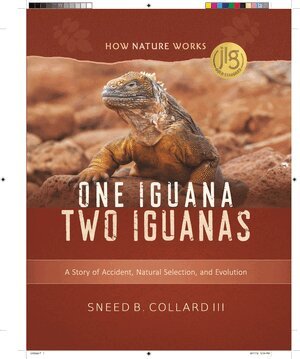
    One Iguana, Two Iguanas

    A Story of Accident, Natural Selection, and Evolution

    AvSneed B. Collard III

    Inbunden, Engelska, 2018

    Del i serien How Nature Works

    187 kr

    Beställningsvara. Skickas inom 5-8 vardagar. Fri frakt över 249 kr.

    Beskrivning

    Natural selection and speciation are all but ignored in children’s nonfiction. To help address this glaring deficiency, award-winning children’s science writer Sneed Collard traveled to the Galapagos Islands to see for himself, where Charles Darwin saw, how new species form. The result is this fascinating story of two species of iguana, one land-based and one marine, both of which developed from a single ancestor that reached the islands millions of years ago. The animals evolved in different directions while living within sight of one another. How is that possible?  Collard uses the iguanas to explore Charles Darwin’s great discovery.F&P Level V

    Produktinformation

    • Utgivningsdatum:2018-12-04
    • Mått:213 x 262 x 10 mm
    • Vikt:395 g
    • Format:Inbunden
    • Språk:Engelska
    • Serie:How Nature Works
    • Antal sidor:48
    • Förlag:Tilbury House,U.S.
    • ISBN:9780884486497

    Utforska kategorier

    • Vilda djur inom Barn och ungdom
    • Djur och natur inom Barn och ungdom
    • Naturvetenskap och teknik inom Barn och ungdom

    Mer om författaren

    Science writer Sneed B. Collard III (Missoula, MT; www.sneedbcollardiii.com) is the author of more than 80 children’s books, including One Iguana, Two Iguanasand Catching Air. He has received the Washington Post Children’s Book Guild Nonfiction Award for his body of work, and his books are featured regularly in the Junior Library Guild, NSTA/CBC Outstanding Science Trade Book lists, and other best-of lists.

    Recensioner i media

    "The evolution of iguanas in the Galápagos provides a striking example of the workings of natural selection. This entry in the How Nature Works series explains how scientists have determined that two surprisingly different species evolved from a single ancestor. Collard's smoothly written text introduces two kinds of iguanas now living on these islands: a prickly pear-eating land iguana and a marine iguana that feeds on green algae underwater. He goes on to describe the volcanic origin of the archipelago and how plants and animals arrived. Drawing on well-grounded scientific conjecture (described in one of six informative sidebars), he then imagines the arrival of the first ctenosaur from Central America 8.25 million years ago and, after 3.75 million more years, the evolution of its algae-eating descendent. He introduces the theory of natural selection and, in another sidebar, explains how genes and their alleles contribute to individual differences. Returning to the continuing evolution of these two species, he shows how each has become perfectly adapted to its habitat. Finally he touches on other unique Galápagos inhabitants and the development of the theory of natural selection. A helpful map locates the Galápagos; images of its reptiles, birds, sea lions, and scenery will help readers picture the setting today. The attractive design makes good use of these well-reproduced photographs, some taken by the author. A fresh and accessible approach to an important scientific concept. (glossary, suggestions for further research, author's note)"