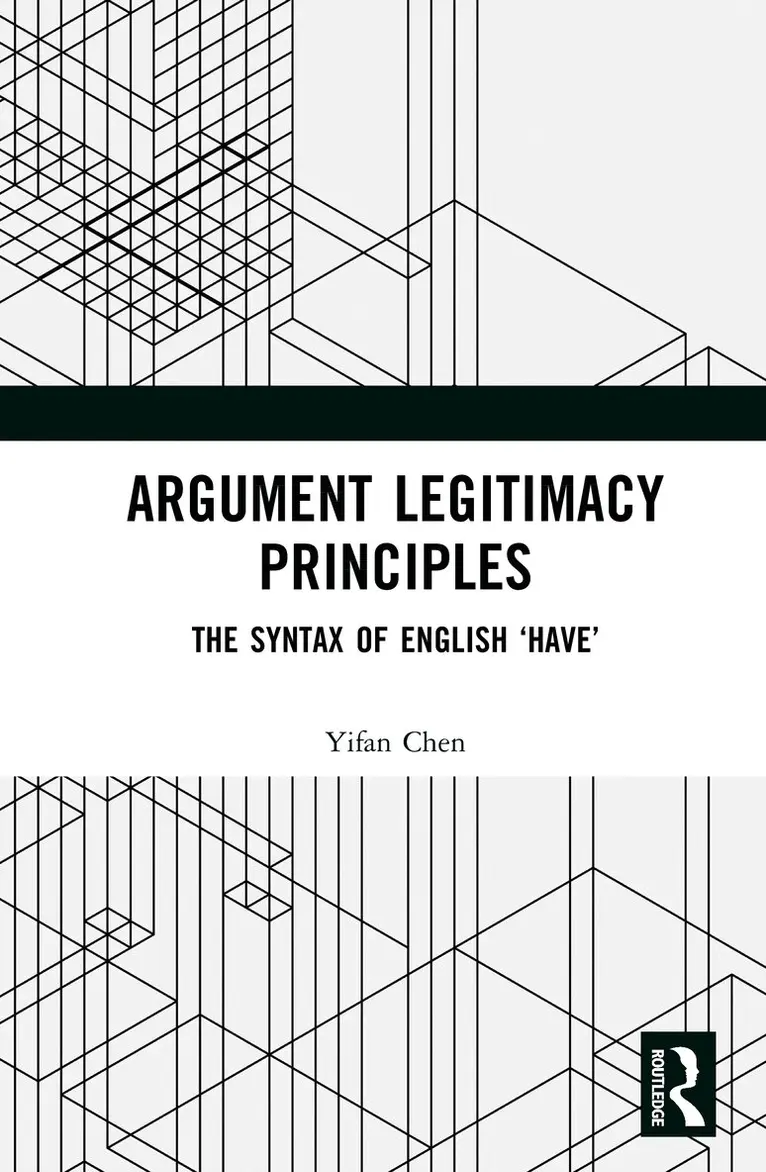
Inbunden, Engelska, 2026
Argument Legitimacy Principles
Av Yifan Chen
2554 kr
Kommande
Beskrivning
This book introduces a novel framework for argument structure and demonstrates its explanatory power through a unified analysis of the diverse uses of the English verb ‘have.’Argument structure, a core topic in linguistic theory, explores the relationship between syntactic structure and meaning in human languages. The polysemous verb ‘have’ poses a significant challenge in this domain. By applying four governing principles of argument structure, this book provides a cohesive analysis of ‘have’ while establishing a general framework that extends to broader linguistic phenomena. Central to this framework is the question of how nominal expressions are interpreted in specific structural positions.Designed for linguistic researchers and graduate students, the book is particularly relevant to those studying syntax, semantics, pragmatics, or linguistic theory, especially within the generative tradition. However, its insights also offer value to scholars working in non-generative approaches.
Produktinformation
- Utgivningsdatum: 2026-11-17
- Mått: 156 x 234 x undefined mm
- Format: Inbunden
- Språk: Engelska
- Antal sidor: 168
- Förlag: Taylor & Francis Ltd
- ISBN: 9781041324577
Utforska kategorier
Betyg & recensioner
0 recensioner
Inga recensioner tillgängliga.