• Fri frakt över 249 kr
  • •
  • Snabba leveranser
  • •
  • Billiga böcker
Kundservice

Du är på sajten för privatpersoner.

Företag, bibliotek eller offentlig verksamhet?

Du handlar på classic.bokus.com, där alla dina funktioner finns intakta.
Till classic.bokus.com
Bokus logotyp. Gå till startsidan.
  • Erbjudanden
  • Nyheter
  • Student
  • Topplistor
  • Barn & ungdom
  • Bokus Play
  • E-böcker
  • Pocketböcker
  • Spel & pussel

Må bättre, för mindre! Upp till 50% rabatt på hälsoböcker

Sidfot

Mina sidor

    Hjälp

    • Kundservice
    • Vanliga frågor och svar
    • Frakt och leverans
    • Retur vid ångerrätt
    • Reklamera vara
    • Betalning
    • Köpvillkor
    • Allmänna villkor
    • Information om webbplatsens tillgänglighet

    Om Bokus

    • Om oss
    • Pressrum
    • För studenter
    • För företag
    • För bibliotek och offentlig verksamhet
    • För leverantörer
    • Hållbarhet

    Populärt

    • Aktuella erbjudanden
    • Presentkort
    • Studentlitteratur
    • Nya böcker
    • Topplistor
    • Signerade böcker
    • Engelska böcker

    Inspiration

    • Boktips
    • BookTok
    • Populära bokserier
    • Barnbokskaraktärer
    • Populära författare
    Logotyp för Bokus
    Följ oss på Facebook (extern länk)Följ oss på Instagram (extern länk)Följ oss på YouTube (extern länk)Följ oss på TikTok (extern länk)
    bokus @ CookiesAnpassa cookiesIntegritetspolicyKöpvillkor
    Till Citymail hemsida (extern länk)Till Budbee hemsida (extern länk)Till Postnord hemsida (extern länk)Till Schenker hemsida (extern länk)Till Early Bird hemsida (extern länk)Till Walleys hemsida (extern länk)
    1. Skönlitteratur
    2. Litteraturvetenskap
    3. Litteraturvetenskap

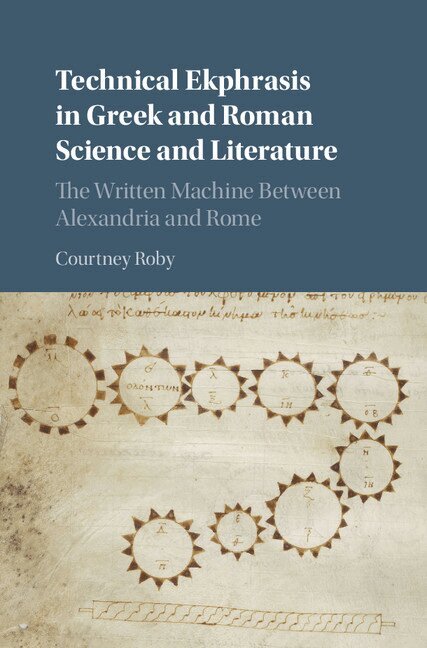
    Technical Ekphrasis in Greek and Roman Science and Literature

    The Written Machine between Alexandria and Rome

    AvCourtney Roby

    Inbunden, Engelska, 2016

    1 663 kr

    Beställningsvara. Skickas inom 10-15 vardagar. Fri frakt över 249 kr.

    Beskrivning

    Ekphrasis is familiar as a rhetorical tool for inducing enargeia, the vivid sense that a reader or listener is actually in the presence of the objects described. This book focuses on the ekphrastic techniques used in ancient Greek and Roman literature to describe technological artifacts. Since the literary discourse on technology extended beyond technical texts, this book explores 'technical ekphrasis' in a wide range of genres, including history, poetry, and philosophy as well as mechanical, scientific, and mathematical works. Technical authors like Philo of Byzantium, Vitruvius, Hero of Alexandria, and Claudius Ptolemy are put into dialogue with close contemporaries in other genres, like Diodorus Siculus, Cicero, Ovid, and Aelius Theon. The treatment of 'technical ekphrasis' here covers the techniques of description, the interaction of verbal and visual elements, the role of instructions, and the balance between describing the artifact's material qualities and the other bodies of knowledge it evokes.

    Produktinformation

    • Utgivningsdatum:2016-02-24
    • Mått:160 x 235 x 22 mm
    • Vikt:630 g
    • Format:Inbunden
    • Språk:Engelska
    • Antal sidor:334
    • Förlag:Cambridge University Press
    • ISBN:9781107077300

    Utforska kategorier

    • Litteraturvetenskap inom Skönlitteratur

    Mer om författaren

    Courtney Roby is Assistant Professor in the Department of Classics at Cornell University. Her research interests include the literary techniques used in scientific and technical texts from the ancient Mediterranean, the interaction of verbal and visual elements in those texts, and the role of the imagination in ancient scientific discourse.

    Recensioner i media

    'Even those who are already familiar with the antique specialist literature can benefit from this careful study and take away new insights.' Thorsten Fögen, GNOMON

    Innehållsförteckning

    • Introduction: the written machine; 1. Genres: texts and artifacts; 2. Cultural contexts; 3. The ekphrastic complex; 4. Diagram and artifact; 5. Description and instruction; 6. Knowledge and artifact; 7. Conclusion: the limits of description.