• Fri frakt över 249 kr
  • •
  • Snabba leveranser
  • •
  • Billiga böcker
Kundservice

Du är på sajten för privatpersoner.

Företag, bibliotek eller offentlig verksamhet?

Du handlar på classic.bokus.com, där alla dina funktioner finns intakta.
Till classic.bokus.com
Bokus logotyp. Gå till startsidan.
  • Erbjudanden
  • Nyheter
  • Student
  • Topplistor
  • Barn & ungdom
  • Bokus Play
  • E-böcker
  • Pocketböcker
  • Spel & pussel

10% studentrabatt med kod TERM26

Sidfot

Mina sidor

    Hjälp

    • Kundservice
    • Vanliga frågor och svar
    • Frakt och leverans
    • Retur vid ångerrätt
    • Reklamera vara
    • Betalning
    • Köpvillkor
    • Allmänna villkor
    • Information om webbplatsens tillgänglighet

    Om Bokus

    • Om oss
    • Pressrum
    • För studenter
    • För företag
    • För bibliotek och offentlig verksamhet
    • För leverantörer
    • Hållbarhet

    Populärt

    • Aktuella erbjudanden
    • Presentkort
    • Studentlitteratur
    • Nya böcker
    • Topplistor
    • Signerade böcker
    • Engelska böcker

    Inspiration

    • Boktips
    • BookTok
    • Populära bokserier
    • Barnbokskaraktärer
    • Populära författare
    Logotyp för Bokus
    Följ oss på Facebook (extern länk)Följ oss på Instagram (extern länk)Följ oss på YouTube (extern länk)Följ oss på TikTok (extern länk)
    bokus @ CookiesAnpassa cookiesIntegritetspolicyKöpvillkor
    Till Citymail hemsida (extern länk)Till Budbee hemsida (extern länk)Till Postnord hemsida (extern länk)Till Schenker hemsida (extern länk)Till Early Bird hemsida (extern länk)Till Walleys hemsida (extern länk)
    1. Historia och arkeologi
    2. Historia
    3. Forntidens historia

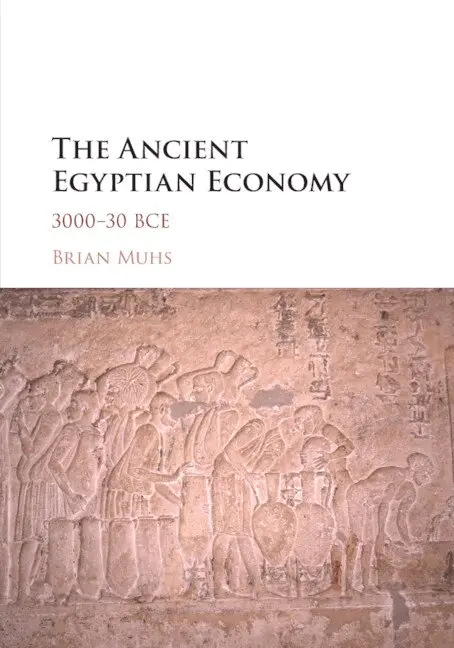
    The Ancient Egyptian Economy

    3000-30 BCE

    AvBrian Muhs

    Häftad, Engelska, 2018

    477 kr

    Beställningsvara. Skickas inom 10-15 vardagar. Fri frakt över 249 kr.

    Fler format och utgåvor

    Inbunden

    1 586 kr

    Beskrivning

    This book is the first economic history of ancient Egypt covering the entire pharaonic period, 3000-30 BCE, and employing a New Institutional Economics approach. It argues that the ancient Egyptian state encouraged an increasingly widespread and sophisticated use of writing through time, primarily in order to better document and more efficiently exact taxes for redistribution. The increased use of writing, however, also resulted in increased documentation and enforcement of private property titles and transfers, gradually lowering their transaction costs relative to redistribution. The book also argues that the increasing use of silver as a unified measure of value, medium of exchange, and store of wealth also lowered transaction costs for high value exchanges. The increasing use of silver in turn allowed the state to exact transfer taxes in silver, providing it with an economic incentive to further document and enforce private property titles and transfers.

    Produktinformation

    • Utgivningsdatum:2018-11-08
    • Mått:178 x 256 x 20 mm
    • Vikt:760 g
    • Format:Häftad
    • Språk:Engelska
    • Antal sidor:406
    • Förlag:Cambridge University Press
    • ISBN:9781107533950

    Utforska kategorier

    • Forntidens historia inom Historia och arkeologi

    Mer om författaren

    Brian Muhs is Associate Professor of Egyptology at the Oriental Institute and the Department of Near Eastern Languages and Civilizations at the University of Chicago. He studies the history of ancient Egyptian social, economic, and legal institutions, particularly during the transition from pharaonic to Ptolemaic and Roman rule, and has published two books on taxation in Ptolemaic Egypt, and numerous articles.

    Innehållsförteckning

    • Introduction; 1. The Early Dynastic Period (c.3000–2686 BCE); 2. The Old Kingdom and First Intermediate Period (c.2686–2025 BCE); 3. The Middle Kingdom and Second Intermediate Period (c.2025–1550 BCE; 4. The New Kingdom (c.1550–1069 BCE); 5. The Third Intermediate Period (c.1069–664 BCE); 6. The Saite and Persian Periods (664–332 BCE); 7. The Ptolemaic Period (332–30 BCE); Conclusion.