• Fri frakt över 249 kr
  • •
  • Snabba leveranser
  • •
  • Billiga böcker
Kundservice

Du är på sajten för privatpersoner.

Företag, bibliotek eller offentlig verksamhet?

Du handlar på classic.bokus.com, där alla dina funktioner finns intakta.
Till classic.bokus.com
Bokus logotyp. Gå till startsidan.
  • Erbjudanden
  • Nyheter
  • Student
  • Topplistor
  • Barn & ungdom
  • Bokus Play
  • E-böcker
  • Pocketböcker
  • Spel & pussel

10% studentrabatt med kod TERM26

Sidfot

Mina sidor

    Hjälp

    • Kundservice
    • Vanliga frågor och svar
    • Frakt och leverans
    • Retur vid ångerrätt
    • Reklamera vara
    • Betalning
    • Köpvillkor
    • Allmänna villkor
    • Information om webbplatsens tillgänglighet

    Om Bokus

    • Om oss
    • Pressrum
    • För studenter
    • För företag
    • För bibliotek och offentlig verksamhet
    • För leverantörer
    • Hållbarhet

    Populärt

    • Aktuella erbjudanden
    • Presentkort
    • Studentlitteratur
    • Nya böcker
    • Topplistor
    • Signerade böcker
    • Engelska böcker

    Inspiration

    • Boktips
    • BookTok
    • Populära bokserier
    • Barnbokskaraktärer
    • Populära författare
    Logotyp för Bokus
    Följ oss på Facebook (extern länk)Följ oss på Instagram (extern länk)Följ oss på YouTube (extern länk)Följ oss på TikTok (extern länk)
    bokus @ CookiesAnpassa cookiesIntegritetspolicyKöpvillkor
    Till Citymail hemsida (extern länk)Till Budbee hemsida (extern länk)Till Postnord hemsida (extern länk)Till Schenker hemsida (extern länk)Till Early Bird hemsida (extern länk)Till Walleys hemsida (extern länk)
    1. Samhälle och politik
    2. Politik och statsskick
    3. Internationella relationer

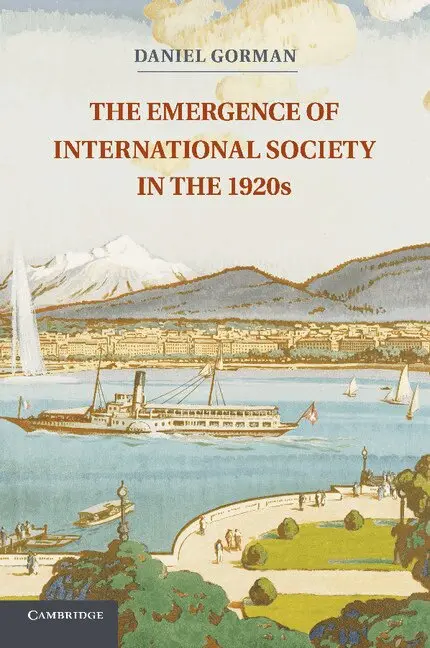
    The Emergence of International Society in the 1920s

    AvDaniel Gorman

    Häftad, Engelska, 2014

    664 kr

    Beställningsvara. Skickas inom 10-15 vardagar. Fri frakt över 249 kr.

    Fler format och utgåvor

    Inbunden

    1 458 kr

    Beskrivning

    Chronicling the emergence of an international society in the 1920s, Daniel Gorman describes how the shock of the First World War gave rise to a broad array of overlapping initiatives in international cooperation. Though national rivalries continued to plague world politics, ordinary citizens and state officials found common causes in politics, religion, culture and sport with peers beyond their borders. The League of Nations, the turn to a less centralized British Empire, the beginning of an international ecumenical movement, international sporting events and audacious plans for the abolition of war all signaled internationalism's growth. State actors played an important role in these developments and were aided by international voluntary organizations, church groups and international networks of academics, athletes, women, pacifists and humanitarian activists. These international networks became the forerunners of international NGOs and global governance.

    Produktinformation

    • Utgivningsdatum:2014-03-06
    • Mått:152 x 229 x 22 mm
    • Vikt:570 g
    • Format:Häftad
    • Språk:Engelska
    • Antal sidor:390
    • Förlag:Cambridge University Press
    • ISBN:9781107640948

    Utforska kategorier

    • Internationella relationer inom Samhälle och politik

    Mer om författaren

    Daniel Gorman is Associate Professor of History and Political Science at the University of Waterloo and the Balsillie School of International Affairs. He is the author of Imperial Citizenship: Empire and the Question of Belonging (2007). He has contributed essays on aspects of the history of globalization to several books: Mobilities, Knowledge and Social Justice (2012), edited by Suzan Ilcan; Property, Territory, Globalization: Struggles over Autonomy (2011), edited by William Coleman; and Empires and Autonomy: Moments in the History of Globalization (2010), edited by Steven Streeter, John Weaver and William Coleman.

    Recensioner i media

    'Daniel Gorman's argument, that international society during the 1920s developed out of the interaction of imperialism and internationalism, is an arresting one. His stage is peopled with private citizens and public officials, nations and foundations, interest groups and interested individuals, all trying to remake the world into a safer place. Beginnings were made and seeds were sown, but there was not enough time. This important book details the philosophies, the aspirations, the successes, and the failures of his well-intentioned actors.' Kathleen Burk, University College London

    Innehållsförteckning

    • Part I. Imperial Internationalism: 1. The dominions and Britain in the 1920s; 2. Servants of the world: Rachel Crowdy at the League of Nations; 3. Moral politics at the League of Nations and its imperial ramifications; 4. Conflict and travail, bitterness and tears: overseas Indians' failed campaign for imperial citizenship; 5. The empire at play, the empire on display: the 1911 Festival of Empire and the 1930 British Empire Games; Part II. Transatlantic Internationalism: 6. Anglo-American conceptions of 'international society' in the 1920s; 7. Little more than a hope? The world alliance for promoting international friendship through the churches; 8. Internationalism by decree: outlawry of war and the Kellogg–Briand Pact; 9. British and American responses to the Kellogg–Briand Pact.