• Fri frakt över 249 kr
  • •
  • Snabba leveranser
  • •
  • Billiga böcker
Kundservice

Du är på sajten för privatpersoner.

Företag, bibliotek eller offentlig verksamhet?

Du handlar på classic.bokus.com, där alla dina funktioner finns intakta.
Till classic.bokus.com
Bokus logotyp. Gå till startsidan.
  • Erbjudanden
  • Nyheter
  • Student
  • Topplistor
  • Barn & ungdom
  • Bokus Play
  • E-böcker
  • Pocketböcker
  • Spel & pussel

10% rabatt på allt med kod: NYSTART10 →

Sidfot

Mina sidor

    Hjälp

    • Kundservice
    • Vanliga frågor och svar
    • Frakt och leverans
    • Retur vid ångerrätt
    • Reklamera vara
    • Betalning
    • Köpvillkor
    • Allmänna villkor
    • Information om webbplatsens tillgänglighet

    Om Bokus

    • Om oss
    • Pressrum
    • För studenter
    • För företag
    • För bibliotek och offentlig verksamhet
    • För leverantörer
    • Hållbarhet

    Populärt

    • Aktuella erbjudanden
    • Presentkort
    • Studentlitteratur
    • Nya böcker
    • Topplistor
    • Signerade böcker
    • Engelska böcker

    Inspiration

    • Boktips
    • BookTok
    • Populära bokserier
    • Barnbokskaraktärer
    • Populära författare
    Logotyp för Bokus
    Följ oss på Facebook (extern länk)Följ oss på Instagram (extern länk)Följ oss på YouTube (extern länk)Följ oss på TikTok (extern länk)
    bokus @ CookiesAnpassa cookiesIntegritetspolicyKöpvillkor
    Till Citymail hemsida (extern länk)Till Budbee hemsida (extern länk)Till Postnord hemsida (extern länk)Till Schenker hemsida (extern länk)Till Early Bird hemsida (extern länk)Till Walleys hemsida (extern länk)
    1. Naturvetenskap och teknik
    2. Teknik och industri
    3. Byggnadsteknik

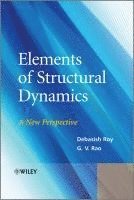
    Elements of Structural Dynamics

    A New Perspective

    AvDebasish Roy,G. V. Rao

    Inbunden, Engelska, 2012

    1 308 kr

    Beställningsvara. Skickas inom 11-20 vardagar. Fri frakt över 249 kr.

    Beskrivning

    Structural dynamics is a subset of structural analysis which covers the behavior of structures subjected to dynamic loading. The subject has seen rapid growth and also change in how the basic concepts can be interpreted. For instance, the classical notions of discretizing the operator of a dynamic structural model have given way to a set-theoretic, function-space based framework, which is more conducive to implementation with a computer. This modern perspective, as adopted in this book, is also helpful in putting together the various tools and ideas in a more integrated style. Elements of Structural Dynamics: A New Perspective is devoted to covering the basic concepts in linear structural dynamics, whilst emphasizing their mathematical moorings and the associated computational aspects that make their implementation in software possible. Key features: Employs a novel ‘top down’ approach to structural dynamics.Contains an insightful treatment of the  computational aspects, including the finite element method, that translate into numerical solutions of the dynamic equations of motion.Consistently touches upon the modern mathematical basis for the theories and approximations involved.Elements of Structural Dynamics: A New Perspective is a holistic treatise on structural dynamics and is an ideal textbook for senior undergraduate and graduate students in Mechanical, Aerospace and Civil engineering departments. This book also forms a useful reference for researchers and engineers in industry.

    Produktinformation

    • Utgivningsdatum:2012-09-14
    • Mått:178 x 254 x 26 mm
    • Vikt:807 g
    • Format:Inbunden
    • Språk:Engelska
    • Antal sidor:438
    • Förlag:John Wiley & Sons Inc
    • ISBN:9781118339626

    Utforska kategorier

    • Byggnadsteknik inom Naturvetenskap och teknik

    Mer om författaren

    Debasish Roy, Indian Institute of Science, Bangalore, IndiaDebasish Roy is a professor in the Department of Civil Engineering at the Indian Institute of Science. He is a member of the editorial board for seven journals and has published circa 80 journal articles. His current research interests include Nonlinear and Stochastic Structural Dynamics, Linearization Techniques in Non-linear Dynamics, and Mesh-free and Finite Element Methods.G. V. Rao, Vasthu Shilpa Associates, Bangalore, IndiaDr. Rao obtained his Ph. D in civil engineering from the Indian Institute of Science and has since been employed in industry. He has many years experience in experimental testing and research in structural engineering and also in research and software development in the area of structural dynamics using FEM. He is currently employed as an engineering consultant at Vasthu Shilpa Associates in India.

    Innehållsförteckning

    • Preface xiAcknowledgements xvIntroduction xviiGeneral Notations xxi1 Structural Dynamics and Mathematical Modelling 11.1 Introduction 11.2 System of Rigid Bodies and Dynamic Equations of Motion 21.2.1 Principle of Virtual Work 21.2.2 Hamilton’s Principle 31.2.3 Lagrangian Equations of Motion 41.3 Continuous Dynamical Systems and Equations of Motion from Hamilton’s Principle 61.3.1 Strain and Stress Tensors and Strain Energy 71.4 Dynamic Equilibrium Equations from Newton’s Force Balance 111.4.1 Displacement–Strain Relationships 111.4.2 Stress–Strain Relationships 131.5 Equations of Motion by Reynolds Transport Theorem 131.5.1 Mass Conservation 151.5.2 Linear Momentum Conservation 161.6 Conclusions 17Exercises 17Notations 18References 19Bibliography 192 Continuous Systems – PDEs and Solution 212.1 Introduction 212.2 Some Continuous Systems and PDEs 222.2.1 A Taut String – the One-Dimensional Wave Equation 222.2.2 An Euler–Bernoulli Beam – the One-Dimensional Biharmonic Wave Equation 232.2.3 Beam Equation with Rotary Inertia and Shear Deformation Effects 272.2.4 Equations of Motion for 2D Plate by Classical Plate Theory (Kirchhoff Theory) 292.3 PDEs and General Solution 362.3.1 PDEs and Canonical Transformations 362.3.2 General Solution to the Wave Equation 382.3.3 Particular Solution (D’Alembert’s Solution) to the Wave Equation 382.4 Solution to Linear Homogeneous PDEs – Method of Separation of Variables 402.4.1 Homogeneous PDE with Homogeneous Boundary Conditions 412.4.2 Sturm–Liouville Boundary-Value Problem (BVP) for the Wave Equation 422.4.3 Adjoint Operator and Self-Adjoint Property 422.4.4 Eigenvalues and Eigenfunctions of the Wave Equation 452.4.5 Series Solution to the Wave Equation 452.4.6 Mixed Boundary Conditions and Wave Equation 462.4.7 Sturm–Liouville Boundary-Value Problem for the Biharmonic Wave Equation 482.4.8 Thin Rectangular Plates – Free Vibration Solution 532.5 Orthonormal Basis and Eigenfunction Expansion 562.5.1 Best Approximation to f(x) 572.6 Solutions of Inhomogeneous PDEs by Eigenfunction-Expansion Method 592.7 Solutions of Inhomogeneous PDEs by Green’s Function Method 642.8 Solution of PDEs with Inhomogeneous Boundary Conditions 682.9 Solution to Nonself-adjoint Continuous Systems 692.9.1 Eigensolution of Nonself-adjoint System 692.9.2 Biorthogonality Relationship between L and L∗ 702.9.3 Eigensolutions of L and L∗ 732.10 Conclusions 74Exercises 75Notations 75References 77Bibliography 773 Classical Methods for Solving the Equations of Motion 793.1 Introduction 793.2 Rayleigh–Ritz Method 803.2.1 Rayleigh’s Principle 843.3 Weighted Residuals Method 853.3.1 Galerkin Method 863.3.2 Collocation Method 913.3.3 Subdomain Method 933.3.4 Least Squares Method 943.4 Conclusions 95Exercises 95Notations 96References 97Bibliography 974 Finite Element Method and Structural Dynamics 994.1 Introduction 994.2 Weak Formulation of PDEs 1014.2.1 Well-Posedness of the Weak Form 1034.2.2 Uniqueness and Stability of Solution to Weak Form 1044.2.3 Numerical Integration by Gauss Quadrature 1074.3 Element-Wise Representation of the Weak Form and the FEM 1114.4 Application of the FEM to 2D Problems 1134.4.1 Membrane Vibrations and FEM 1134.4.2 Plane (2D) Elasticity Problems – Plane Stress and Plane Strain 1154.5 Higher Order Polynomial Basis Functions 1184.5.1 Beam Vibrations and FEM 1184.5.2 Plate Vibrations and FEM 1204.6 Some Computational Issues in FEM 1214.6.1 Element Shape Functions in Natural Coordinates 1224.7 FEM and Error Estimates 1244.7.1 A-Priori Error Estimate 1244.8 Conclusions 126Exercises 126Notations 127References 129Bibliography 1295 MDOF Systems and Eigenvalue Problems 1315.1 Introduction 1315.2 Discrete Systems through a Lumped Parameter Approach 1325.2.1 Positive Definite and Semi-Definite Systems 1345.3 Coupled Linear ODEs and the Linear Differential Operator 1355.4 Coupled Linear ODEs and Eigensolution 1365.5 First Order Equations and Uncoupling 1425.6 First Order versus Second Order ODE and Eigensolutions 1435.7 MDOF Systems and Modal Dynamics 1455.7.1 SDOF Oscillator and Modal Solution 1465.7.2 Rayleigh Quotient 1535.7.3 Rayleigh–Ritz Method for MDOF Systems 1555.8 Damped MDOF Systems 1565.8.1 Damped System and Quadratic Eigenvalue Problem 1575.8.2 Damped System and Unsymmetric Eigenvalue Problem 1585.8.3 Proportional Damping and Uncoupling MDOF Systems 1595.8.4 Damped Systems and Impulse Response 1605.8.5 Response under General Loading 1615.8.6 Response under Harmonic Input 1615.8.7 Complex Frequency Response 1635.8.8 Force Transmissibility 1655.8.9 System Response and Measurement of Damping 1675.9 Conclusions 173Exercises 173Notations 175References 177Bibliography 1776 Structures under Support Excitations 1796.1 Introduction 1796.2 Continuous Systems and Base Excitations 1816.3 MDOF Systems under Support Excitation 1856.4 SDOF Systems under Base Excitation 1916.4.1 Frequency Response of SDOF System under Base Motion 1926.5 Support Excitation and Response Spectra 1966.5.1 Peak Response Estimates of an MDOF System Using Response Spectra 1976.6 Structures under multi-support excitation 1986.6.1 Continuous system under multi-support excitation 1996.6.2 MDOF systems under multi-support excitation 2026.7 Conclusions 203Exercises 204Notations 205References 206Bibliography 2067 Eigensolution Procedures 2097.1 Introduction 2097.2 Power and Inverse Iteration Methods and Eigensolutions 2107.2.1 Order and Rate of Convergence – Distinct Eigenvalues 2127.2.2 Shifting and Convergence 2137.2.3 Multiple Eigenvalues 2157.2.4 Eigenvalues within an Interval-Shifting Scheme with Gram–Schmidt Orthogonalisation and Sturm Sequence Property 2167.3 Jacobi, Householder, QR Transformation Methods and Eigensolutions 2207.3.1 Jacobi Method 2207.3.2 Householder and QR Transformation Methods 2247.4 Subspace Iteration 2317.4.1 Convergence in Subspace Iteration 2327.5 Lanczos Transformation Method 2337.5.1 Lanczos Method and Error Analysis 2357.6 Systems with Unsymmetric Matrices 2377.6.1 Skew-Symmetric Matrices and Eigensolution 2457.6.2 Unsymmetric Matrices – A Rotor Bearing System 2467.6.3 Unsymmetric Systems and Eigensolutions 2537.7 Dynamic Condensation and Eigensolution 2607.7.1 Symmetric Systems and Dynamic Condensation 2627.7.2 Unsymmetric Systems and Dynamic Condensation 2647.8 Conclusions 268Exercises 268Notations 269References 272Bibliography 2738 Direct Integration Methods 2758.1 Introduction 2758.2 Forward and Backward Euler Methods 2818.2.1 Forward Euler Method 2818.2.2 Backward (Implicit) Euler Method 2848.3 Central Difference Method 2868.4 Newmark-β Method – a Single-Step Implicit Method 2898.4.1 Some Degenerate Cases of the Newmark-β Method and Stability 2928.4.2 Undamped Case – Amplitude and Periodicity Errors 2958.4.3 Amplitude and Periodicity Errors 2958.5 HHT-α and Generalized-α Methods 2978.6 Conclusions 303Exercises 305Notations 305References 306Bibliography 3079 Stochastic Structural Dynamics 3099.1 Introduction 3099.2 Probability Theory and Basic Concepts 3119.3 Random Variables 3129.3.1 Joint Random Variables, Distributions and Density Functions 3149.3.2 Expected (Average) Values of a Random Variable 3159.3.3 Characteristic and Moment-Generating Functions 3179.4 Conditional Probability, Independence and Conditional Expectation 3179.4.1 Conditional Expectation 3199.5 Some oft-Used Probability Distributions 3199.5.1 Binomial Distribution 3209.5.2 Poisson Distribution 3209.5.3 Normal Distribution 3219.5.4 Uniform Distribution 3229.5.5 Rayleigh Distribution 3229.6 Stochastic Processes 3239.6.1 Stationarity of a Stochastic Process 3239.6.2 Properties of Autocovariance/Autocorrelation Functions of Stationary Processes 3259.6.3 Spectral Representation of a Stochastic Process 3259.6.4 SXX(λ) as the Mean Energy Density of X(t) 3279.6.5 Some Basic Stochastic Processes 3289.7 Stochastic Dynamics of Linear Structural Systems 3319.7.1 Continuous Systems under Stochastic Input 3319.7.2 Discrete Systems under Stochastic Input – Modal Superposition Method 3379.8 An Introduction to Ito Calculus 3389.8.1 Brownian Filtration 3409.8.2 Measurability 3409.8.3 An Adapted Stochastic Process 3409.8.4 Ito Integral 3419.8.5 Martingale 3429.8.6 Ito Process 3439.8.7 Computing the Response Moments 3529.8.8 Time Integration of SDEs 3579.9 Conclusions 360Exercises 361Notations 363References 365Bibliography 366Appendix A 367Appendix B 369Appendix C 375Appendix D 379Appendix E 387Appendix F 391Appendix G 393Appendix H 399Appendix I 407Index 413