• Fri frakt över 249 kr
  • •
  • Snabba leveranser
  • •
  • Billiga böcker
Kundservice

Du är på sajten för privatpersoner.

Företag, bibliotek eller offentlig verksamhet?

Du handlar på classic.bokus.com, där alla dina funktioner finns intakta.
Till classic.bokus.com
Bokus logotyp. Gå till startsidan.
  • Erbjudanden
  • Student
  • Topplistor
  • Barn & ungdom
  • Bokus Play
  • E-böcker
  • Ljudböcker
  • Pocketböcker
  • Spel och pussel

Skapa nya rutiner – hälsoböcker upp till 50% →

Sidfot

Mina sidor

    Hjälp

    • Kundservice
    • Vanliga frågor och svar
    • Frakt och leverans
    • Retur vid ångerrätt
    • Reklamera vara
    • Betalning
    • Köpvillkor
    • Allmänna villkor
    • Information om webbplatsens tillgänglighet

    Om Bokus

    • Om oss
    • Pressrum
    • För studenter
    • För företag
    • För bibliotek och offentlig verksamhet
    • För leverantörer
    • Hållbarhet

    Populärt

    • Aktuella erbjudanden
    • Presentkort
    • Studentlitteratur
    • Nya böcker
    • Topplistor
    • Signerade böcker
    • Engelska böcker

    Inspiration

    • Boktips
    • BookTok
    • Barnbokskaraktärer
    • Populära författare
    Logotyp för Bokus
    Följ oss på Facebook (extern länk)Följ oss på Instagram (extern länk)Följ oss på YouTube (extern länk)Följ oss på TikTok (extern länk)
    bokus @ CookiesAnpassa cookiesIntegritetspolicyKöpvillkor
    Till Citymail hemsida (extern länk)Till Budbee hemsida (extern länk)Till Postnord hemsida (extern länk)Till Schenker hemsida (extern länk)Till Early Bird hemsida (extern länk)Till Walleys hemsida (extern länk)
    1. Naturvetenskap och teknik
    2. Geovetenskap
    3. Geovetenskap
    4. Geologi

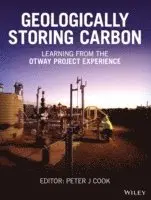
    Geologically Storing Carbon

    Learning from the Otway Project Experience

    AvPeter J. Cook

    Inbunden, Engelska, 2014

    1 332 kr

    Beställningsvara. Skickas inom 11-20 vardagar. Fri frakt över 249 kr.

    Beskrivning

    Carbon capture and geological storage (CCS) is presently the only way that we can make deep cuts in emissions from fossil fuel-based, large-scale sources of CO2 such as power stations and industrial plants. But if this technology is to be acceptable to the community, it is essential that it is credibly demonstrated by world-class scientists and engineers in an open and transparent manner at a commercially significant scale. The aim of the Australian Otway Project was to do just this.Geologically Storing Carbon provides a detailed account of the CO2CRC Otway Project, one of the most comprehensive demonstrations of the deep geological storage or geosequestration of carbon dioxide undertaken anywhere. This book of 18 comprehensive chapters, written by leading experts in the field, is more than a record of outstanding science- it is about "learning by doing". For example, it explains how the project was organised, managed, funded and constructed, as well as the approach taken to community issues, regulations and approvals. It also describes how to understand the site: Are the rocks mechanically suitable? Will the CO2 leak? Is there enough storage capacity? Is monitoring effective?This is the book for geologists, engineers, regulators, project developers, industry, communities, indeed anyone who wants to better understand how a carbon storage project really works. It is also for people concerned with obtaining an in-depth appreciation of one of the key technology options for decreasing greenhouse emissions to the atmosphere.

    Produktinformation

    • Utgivningsdatum:2014-08-29
    • Mått:217 x 285 x 28 mm
    • Vikt:1 647 g
    • Format:Inbunden
    • Språk:Engelska
    • Antal sidor:352
    • Förlag:John Wiley & Sons Inc
    • ISBN:9781118986189

    Utforska kategorier

    • Geologi inom Naturvetenskap och teknik

    Mer om författaren

    Professor Peter J Cook CBE FTSE is a leading geologist and a Professorial Fellow at the University of Melbourne (the University established the Peter Cook Centre for CCS Research in 2012). Previously he was the Foundation CEO of the Cooperative Research Centre for Greenhouse Gas Technologies (CO2CRC) and in 2004 first developed the concept of the CO2CRC Otway Project. Previously he was Director of the British Geological Survey. Professor Cook was Coordinating Lead Author of the IPCC Special Volume on CCS and has published many papers, articles and books on resource, energy and environmental issues. His book Clean Energy, Climate and Carbon was published by CSIRO in 2012.

    Recensioner i media

    “I recommend the text to engineers in the field already, or those contemplating CCS work, particularly those interested in cross chain integration and how stores and sources will have to dynamically react to each other.”  (TCE Today, 1 February  2015

    Innehållsförteckning

    • Foreword 1 xiForeword 2 xiiPreface xiiiAuthors xviiAcknowledgements xx1. Developing the Project 1Peter Cook, Mal Lees, Sandeep Sharma1.1 Introduction 11.2 Developing an Australian project 21.3 Developing a suitable corporate structure 101.4 Formation of CO2CRC Pilot Project LTD 131.5 Funding the project 171.6 Designing the Otway Project 221.7 Project liability and risk 301.8 Conclusions 331.9 References 342. Communications and the Otway Project 35Tony Steeper2.1 Introduction 352.2 Strategic communications and the Otway Project 352.3 Social research and the Otway Project 402.4 Operational issues relating to communications and the community 422.5 Conclusions 432.6 References 433. Government approvals 45Namiko Ranasinghe3.1 Introduction 453.2 Challenges of regulating a pilot project 473.3 Impact assessment and planning approvals 483.4 Environmental authority approvals 493.5 Petroleum authority approvals 493.6 Water authority approvals 513.7 Land access and acquisition 513.8 Miscellaneous approvals 533.9 Transitional arrangements 533.10 Liability and responsibility 533.11 Stakeholder engagement 543.12 Conclusions 553.13 References 564. Design and operational considerations 57Craig Dugan, Ian Black, Sandeep Sharma4.1 Introduction 574.2 Options for gas processing 584.3 Facilities and pipeline design considerations 644.4 Facilities design 664.5 Unanticipated operational problems 694.6 Conclusions 705. Characterising the storage site 71Tess Dance5.1 Introduction 715.2 Site details 745.3 Injectivity 805.4 Capacity 815.5 Reservoir heterogeneity 835.6 Containment 875.7 Site analogue 885.8 The evolution of the static models 895.9 Conclusions 915.10 References 926. Evaluating CO2 column height retention of cap rocks 97Richard Daniel, John Kaldi6.1 Introduction 976.2 Mercury injection capillary pressure 986.3 Methodology 986.4 Pore throat size determination 986.5 CO2 contact angle 996.6 Determination of seal capacity or column height 1016.7 Interpreting threshold (breakthrough) pressure 1026.8 Results for CRC-1 and CRC-2 1106.9 Conclusions 1106.10 References 1117. Geomechanical investigations 113Eric Tenthorey7.1 Introduction 1137.2 Key data for geomechanical assessment of the Otway site 1157.3 Geomechanical workflow at the Otway site 1187.4 3D geomechanical modelling 1227.5 The Iona gas storage facility as an analogue for CO2 storage 1237.6 Conclusions 1267.7 References 1268. Containment risk assessment 129Maxwell Watson8.1 Introduction 1298.2 Methodology 1298.3 Risk assessment context 1318.4 Storage complex 1318.5 Risk items 1328.6 Risk assessment output 1388.7 Conclusions 1398.8 References 1399. Monitoring and verification 141Charles Jenkins9.1 Introduction 1419.2 Designing a monitoring programme 1429.3 Designing the Otway monitoring programme 1449.4 Evaluation of monitoring techniques 1489.5 Conclusions 1519.6 References 15210. 2D and 3D seismic investigations for Stages 1 and 2C 155Boris Gurevich, Roman Pevzner, Milovan Urosevic, Anton Kepic, Valeriya Shulakova, Eva Caspari10.1 Introduction 15510.2 Modelling seismic response of injected CO2 in Stage 1 15610.3 Modelling seismic response of CO2 leakage for 2C 15810.4 Time-lapse repeatability in Stage 1 16410.5 Time-lapse surface seismic monitoring for Stage 1 17110.6 Downhole seismic methods for Stage 1 17710.7 Laboratory studies of CO2 acoustic response as an adjunct to field studies 18810.8 Conclusions 19210.9 References 19311. Seismic and microseismic monitoring 197Tom Daley, Barry Freifeld, Tony Siggins11.1 Introduction 19711.2 High resolution travel time (HRTT) monitoring and offset VSP 19711.3 Passive seismic monitoring 20711.4 Microseismic monitoring using surface stations 20911.5 Conclusions 21511.6 References 21612. Monitoring the geochemistry of reservoir fluids 217Chris Boreham, Barry Freifeld, Dirk Kirste, Linda Stalker12.1 Introduction 21712.2 Sampling the Buttress-1 well 21712.3 Sampling the CRC-1 injection well 21812.4 Sampling the Naylor-1 monitoring well 22012.5 Injecting tracers at the CRC-1 injection well 22412.6 Analytical methods 22812.7 Composition of hydrocarbons 23212.8 Formation water composition and behaviour 24012.9 Constraining CO2 breakthrough 24112.10 In-reservoir behaviour of tracers 24412.11 Liquid hydrocarbons 24512.12 Solid hydrocarbons 24512.13 Conclusions 24712.14 References 24813. Monitoring groundwaters 251Patrice de Caritat, Allison Hortle, Dirk Kirste13.1 Introduction 25113.2 Monitoring groundwater level 25213.3 Monitoring groundwater composition 25313.4 Interpreting groundwater results 25713.5 Groundwater composition 26013.6 Operational issues relating to groundwater monitoring 26113.7 Quality control 26413.8 Conclusions 27013.9 References 27014. Soil gas monitoring 273Ulrike Schacht14.1 Introduction 27314.2 Surficial geology 27414.3 Soil gas sampling at Otway 27414.4 Analysis of soil gas 27514.5 Soil gas results 27614.6 Interpretation of soil gas results 27714.7 Conclusions 27914.8 References 27915. Atmospheric monitoring 281David Etheridge, Ray Leuning, Ashok Luhar, Zoe Loh, Darren Spencer, Colin Allison, Paul Steele, Steve Zegelin, Charles Jenkins, Paul Krummel, Paul Fraser15.1 Introduction 28115.2 Sensitivity 28215.3 Simulated emissions and monitoring design 28215.4 Background CO2 28315.5 Data filtering 28815.6 Bayesian inverse modelling 28915.7 Conclusions 29015.8 References 29116. Reservoir engineering for Stage 1 293Jonathan Ennis-King, Lincoln Paterson16.1 Introduction 29316.2 Description of field data 29316.3 Well history 29716.4 Well locations 29716.5 Well completions 29716.6 Initial pre-production conditions 29716.7 Initial fluid compositions 29916.8 Production data 29916.9 Post-production conditions 29916.10 Composition of injected gas 30016.11 Downhole pressure and temperature during injection 30016.12 Tracer injection 30116.13 Gas and tracer sampling 30116.14 Post-injection conditions 30216.15 Simulation approach 30316.16 Dynamic modelling process 30816.17 Pre-injection modelling results 31016.18 Injection and post-injection modelling results 31216.19 Dynamic storage capacity of a depleted gas field 32216.20 Conclusions 32316.21 References 32417. CO2CRC Otway Stage 2B residual saturation and dissolution test 329Lincoln Paterson, Chris Boreham, Mark Bunch, Tess Dance, Jonathan Ennis-King, Barry Freifeld, Ralf Haese, Charles Jenkins, Matthias Raab, Rajindar Singh, Linda Stalker17.1 Introduction 32917.2 Test concept 33017.3 Injection target 33217.4 Test sequence 33417.5 Downhole completion 33917.6 Measurements 34217.7 Surface data 34217.8 Thermal logging 34517.9 Noble gas tracer tests 34517.10 Testing phases 34517.11 Downhole data (memory gauges) 34717.12 Downhole data (permanent gauges) 34717.13 Pulsed neutron logging 35117.14 The organic tracer test 35317.15 The dissolution test 35717.16 Conclusions 35817.17 References 36018. What was learned from the Otway Project? 361Peter Cook18.1 Introduction 36118.2 Organising a project 36318.3 Managing a project 36418.4 Funding a project 36518.5 Project communications and collaboration 36618.6 Regulating a project 36618.7 Identifying a suitable project site 36718.8 Deciding on project science 36718.9 Deciding on project monitoring 36818.10 Curating project data 37018.11 Lessons for the future? 37018.12 Conclusions 37218.13 References 373Index 375
    Hoppa över listan

    Du kanske också är intresserad av

    Peter J. Cook - Geologically Storing Carbon, E-bok

    Geologically Storing Carbon

    Peter J. Cook

    E-bok
    2014

    1 298 kr

    Peter J. Cook - Choreographic Practice in Online Pedagogy, Inbunden

    Choreographic Practice in Online Pedagogy

    Peter J. Cook

    Inbunden, 2024

    1 777 kr

    Chris M. Carleton, Peter J. Cook - Continental Shelf Limits, E-bok

    Continental Shelf Limits

    Chris M. Carleton, Peter J. Cook

    E-bok
    2000

    1 682 kr

    Peter J. Cook - Choreographic Practice in Online Pedagogy, Häftad

    Choreographic Practice in Online Pedagogy

    Peter J. Cook

    Häftad, 2025

    1 777 kr

    Peter J. Cook - Geologically Storing Carbon, E-bok

    Geologically Storing Carbon

    Peter J. Cook

    E-bok
    2014

    1 294 kr

    Peter J. Cook, Chris Carleton - Continental Shelf Limits, Inbunden

    Continental Shelf Limits

    Peter J. Cook, Chris Carleton

    Inbunden, 2000

    2 871 kr

    Peter J. Cook - Clean Energy, Climate and Carbon, Inbunden

    Clean Energy, Climate and Carbon

    Peter J. Cook

    Inbunden, 2018

    2 416 kr

    Peter J. Cook - Clean Energy, Climate and Carbon, Häftad

    Clean Energy, Climate and Carbon

    Peter J. Cook

    Häftad, 2012

    763 kr

    Peter J. Cook - Choreographic Practice in Online Pedagogy, E-bok

    Choreographic Practice in Online Pedagogy

    Peter J. Cook

    E-bok
    2024

    2 267 kr

    Helena von Zweigbergk - Huvud klart och hjärta varmt, Inbunden
    • -24%

    Huvud klart och hjärta varmt

    Helena von Zweigbergk

    Inbunden, 2026

    189 kr249 kr