• Fri frakt över 249 kr
  • •
  • Snabba leveranser
  • •
  • Billiga böcker
Kundservice

Du är på sajten för privatpersoner.

Företag, bibliotek eller offentlig verksamhet?

Du handlar på classic.bokus.com, där alla dina funktioner finns intakta.
Till classic.bokus.com
Bokus logotyp. Gå till startsidan.
  • Erbjudanden
  • Student
  • Topplistor
  • Barn & ungdom
  • Bokus Play
  • E-böcker
  • Ljudböcker
  • Pocketböcker
  • Spel & pussel

10% rabatt på allt med kod NYSTART10 →

Sidfot

Mina sidor

    Hjälp

    • Kundservice
    • Vanliga frågor och svar
    • Frakt och leverans
    • Retur vid ångerrätt
    • Reklamera vara
    • Betalning
    • Köpvillkor
    • Allmänna villkor
    • Information om webbplatsens tillgänglighet

    Om Bokus

    • Om oss
    • Pressrum
    • För studenter
    • För företag
    • För bibliotek och offentlig verksamhet
    • För leverantörer
    • Hållbarhet

    Populärt

    • Aktuella erbjudanden
    • Presentkort
    • Studentlitteratur
    • Nya böcker
    • Topplistor
    • Signerade böcker
    • Engelska böcker

    Inspiration

    • Boktips
    • BookTok
    • Populära bokserier
    • Barnbokskaraktärer
    • Populära författare
    Logotyp för Bokus
    Följ oss på Facebook (extern länk)Följ oss på Instagram (extern länk)Följ oss på YouTube (extern länk)Följ oss på TikTok (extern länk)
    bokus @ CookiesAnpassa cookiesIntegritetspolicyKöpvillkor
    Till Citymail hemsida (extern länk)Till Budbee hemsida (extern länk)Till Postnord hemsida (extern länk)Till Schenker hemsida (extern länk)Till Early Bird hemsida (extern länk)Till Walleys hemsida (extern länk)
    1. Ekonomi och Ledarskap
    2. Ledarskapsböcker
    • 10% rabatt på allt

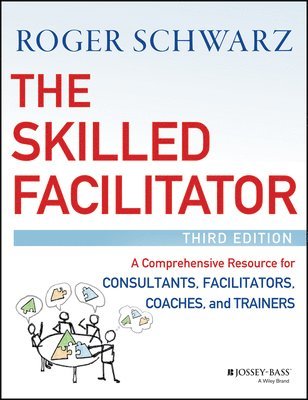
    Skilled Facilitator

    A Comprehensive Resource for Consultants, Facilitators, Coaches, and Trainers

    AvRoger M. Schwarz

    Inbunden, Engelska, 2016

    514 kr

    Beställningsvara. Skickas inom 5-8 vardagar. Fri frakt över 249 kr.

    Fler format och utgåvor

    E-bok

    602 kr

    E-bok

    602 kr

    Beskrivning

    Help groups deliver results with an updated approach to facilitation and consulting The Skilled Facilitator: A Comprehensive Resource for Consultants, Facilitators, Trainers, and Coaches, Third Edition is a fundamental resource for consultants, facilitators, coaches, trainers, and anyone who helps groups realize their creative and problem-solving potential. This new edition includes updated content based on the latest research and revised models of group effectiveness and mutual learning. Roger M. Schwarz shows how to use the Skilled Facilitator approach to: boost improvement processes such as Six Sigma and Lean, create a psychologically safe learning environment for training, and help coaches work with teams and individuals in real-time. This edition features a new chapter that explains how to facilitate virtual teams using conferencing technology. Facilitation skills are essential in many kinds of work, and if you are looking to bring your skills up to date it is critical that you rely on trusted information like the knowledge offered in this go-to reference. Develop the facilitative mentality and skills that enable you to help groups get better results, even in the most challenging situationsHelp groups achieve greater performances, stronger working relationships, and higher levels of individual well-beingQuickly develop productive and trusting work relationships with the groups you helpEstablish the functions of your facilitative roleImplement a research-based, systematic approach to diagnose and intervene in groups and improve their performance and resultsThe Skilled Facilitator is a practical resource for corporate, government, non-profit, and educational practitioners, as well as graduate students in group-focused programs. This edition contains up-to-date material, based on recent studies, to help facilitators move beyond arbitrary tactics to utilize cutting edge, research-based strategies that improve group processes, relationships, mindsets, and outcomes.

    Produktinformation

    • Utgivningsdatum:2016-11-25
    • Mått:178 x 239 x 30 mm
    • Vikt:840 g
    • Format:Inbunden
    • Språk:Engelska
    • Antal sidor:416
    • Upplaga:3
    • Förlag:John Wiley & Sons Inc
    • ISBN:9781119064398

    Ingår i kampanjer

    10% rabatt på allt

    Utforska kategorier

    • Ledarskapsböcker inom Ekonomi och Ledarskap

    Mer om författaren

    ROGER SCHWARZ is an organizational psychologist and president and CEO of Roger Schwarz & Associates, Inc., a consulting firm that helps teams create fundamental change to get better results. He facilitates leadership teams and teaches, consults, coaches, and speaks on facilitation, leadership, and developing effective teams. He is the author of Smart Leaders, Smarter Teams and The Skilled Facilitator Fieldbook, and blogs for Harvard Business Review. Contact him at www.schwarzassociates.com or find him on Twitter @LeadSmarter.

    Innehållsförteckning

    • Preface to the Third Edition xviiWhat The Skilled Facilitator is About xviiWho This Book is For xixHow the Book is Organized xixFeatures of the Book xxiiWhat’s Different in the Third Edition xxiiiPart One The Foundation 11 The Skilled Facilitator Approach 3The Need for Group Facilitation 3Most People Who Need to Facilitate Aren’t Facilitators 3Is This Book for You? 4The Skilled Facilitator Approach 8Experiencing the Skilled Facilitator Approach 10Making the Skilled Facilitator Approach Your Own 11Summary 122 The Facilitator and Other Facilitative Roles 13Choosing a Facilitative Role 13Basic and Developmental Types of Roles 23Serving in Multiple Facilitative Roles 25When It’s Appropriate to Leave the Role of Facilitator 25The Group is Your Client 28What is Your Responsibility for the Group’s Results? 29Summary 333 How You Think is How You Facilitate: How Unilateral Control Undermines Your Ability to Help Groups 35How You Think: Your Mindset as an Operating System 36Two Mindsets: Unilateral Control and Mutual Learning 37How You Think is Not How You Think You Think 37The CIO Team Survey Feedback Case 38The Unilateral Control Approach 41Values of the Unilateral Control Mindset 41Assumptions of the Unilateral Control Mindset 45Unilateral Control Behaviors 46Results of Unilateral Control 50Give-Up-Control Approach 55How Unilateral Control Reinforces Itself 55How Did We Learn Unilateral Control? 56Moving from Unilateral Control to Mutual Learning 57Summary 584 Facilitating with the Mutual Learning Approach 59The Mutual Learning Approach 59Values of the Mutual Learning Mindset 61Assumptions of the Mutual Learning Mindset 75Mutual Learning Behaviors 77Results of Mutual Learning 80The Reinforcing Cycles of Mutual Learning 84Are There Times When Unilateral Control is the Better Approach? 85Summary 865 Eight Behaviors for Mutual Learning 87Using the Eight Behaviors 87Behavior 1: State Views and Ask Genuine Questions 89Behavior 2: Share All Relevant Information 94Behavior 3: Use Specific Examples and Agree on What Important Words Mean 97Behavior 4: Explain Reasoning and Intent 99Behavior 5: Focus on Interests, Not Positions 101Behavior 6: Test Assumptions and Inferences 103Behavior 7: Jointly Design Next Steps 114Behavior 8: Discuss Undiscussable Issues 117Learning to Use the Behaviors 119Summary 1206 Designing and Developing Effective Groups 121How a Team Effectiveness Model Helps You and the Teams and Groups You Work With 122The Difference between Teams and Groups—and Why It Matters 122How Interdependence Affects Your Work with Teams and Groups 127The Team Effectiveness Model 128What’s Your Mindset as You Design? 132Team Structure, Process, and Context 133Team Structure 134Team Process 139Team Context 143Interorganizational Teams and Groups 150Helping Design or Redesign a Team or Group 150Summary 153Part Two Diagnosing and Intervening with Groups 1557 Diagnosing and Intervening with Groups 157What You Need to Diagnose 158What You Need to Intervene 160The Mutual Learning Cycle 160Summary 1638 How to Diagnose Groups 165Step 1: Observe Behavior 165Step 2: Make Meaning 171Step 3: Choose Whether, Why, and How to Intervene 178Challenges in Diagnosing Behavior and How to Manage Them 186Summary 1929 How to Intervene with Groups 193Key Elements of the Intervention Steps 193Using the Mutual Learning Cycle to Intervene: An Example 196Step 4: Test Observations 198Step 5: Test Meaning 200Step 6: Jointly Design Next Steps 203How to Move through the Intervention Steps 205Choosing Your Words Carefully 209Summary 21210 Diagnosing and Intervening on the Mutual Learning Behaviors 213How Mutual Learning Behaviors Differ from Many Ground Rules 213Contracting to Intervene on Mutual Learning Behaviors 214Intervening on the Mutual Learning Behaviors 218Behavior 1: State Views and Ask Genuine Questions 220Behavior 2: Share All Relevant Information 220Behavior 3: Use Specific Examples and Agree on What Important Words Mean 221Behavior 4: Explain Reasoning and Intent 222Behavior 5: Focus on Interests, Not Positions 223Behavior 6: Test Assumptions and Inferences 225Behavior 7: Jointly Design Next Steps 227Behavior 8: Discuss Undiscussable Issues 230Summary 23111 Using Mutual Learning to Improve Other Processes and Techniques 233Using Mutual Learning to Diagnose and Intervene on Other Processes 233Diagnosing and Intervening When Groups are Using a Process Ineffectively 235Diagnosing and Intervening on Processes That are Incongruent with Mutual Learning 237Diagnosing and Intervening on Processes That Espouse Mutual Learning: Lean and Other Continuous Improvement Approaches 244Summary 24612 Diagnosing and Intervening on Emotions—The Group’s and Yours 249The Challenge 249How People Generate Emotions 250How Groups Express Emotions 252Managing Your Own Emotions 254Deciding How to Intervene 256Intervening on Emotions 259Helping People Express Emotions Effectively 259Helping People Reduce Defensive Thinking 259Helping the Group Express Positive Emotions 265When People Get Angry with You 267Learning from Your Experiences 267Summary 268Part Three Agreeing to Work Together 26913 Contracting: Deciding Whether and How to Work with a Group 271Why Contract? 272Five Stages of Contracting 272Stage 1: Making Initial Contact with a Primary Client Group Member 274Stage 2: Planning the Facilitation 283Stage 3: Reaching Agreement with the Entire Group 293Stage 4: Conducting the Facilitation 295Stage 5: Completing and Evaluating the Facilitation 295Summary 29714 Working with a Partner 299Deciding Whether to Partner 299Dividing and Coordinating the Labor 306Allocating Roles within Your Division of Labor 308Developing Healthy Boundaries between You and Your Partner 310Debriefing with Your Partner 314Summary 31415 Serving in a Facilitative Role in Your Own Organization 317Advantages and Disadvantages of the Internal Facilitative Role 317How Your Internal Facilitative Role is Shaped 320Shaping Your Facilitative Role 321Changing Your Facilitative Role from the Outside In 329Summary 330Part Four Working with Technology 33316 Using Virtual Meetings 335Choosing Which Type of Virtual Meeting Technology to Use—If Any 336The Challenges That Virtual Meetings Create 339Designing and Facilitating Virtual Meetings to Meet These Challenges 341Summary 345Notes 347Acknowledgments 361About the Author 363About Roger Schwarz & Associates’ Work with Clients 365The Skilled Facilitator Intensive Workshop 367Index 369