• Fri frakt över 249 kr
  • •
  • Snabba leveranser
  • •
  • Billiga böcker
Kundservice

Du är på sajten för privatpersoner.

Företag, bibliotek eller offentlig verksamhet?

Du handlar på classic.bokus.com, där alla dina funktioner finns intakta.
Till classic.bokus.com
Bokus logotyp. Gå till startsidan.
  • Erbjudanden
  • Student
  • Topplistor
  • Barn & ungdom
  • Bokus Play
  • E-böcker
  • Ljudböcker
  • Pocketböcker
  • Spel och pussel

Skapa nya rutiner – hälsoböcker upp till 50% →

Sidfot

Mina sidor

    Hjälp

    • Kundservice
    • Vanliga frågor och svar
    • Frakt och leverans
    • Retur vid ångerrätt
    • Reklamera vara
    • Betalning
    • Köpvillkor
    • Allmänna villkor
    • Information om webbplatsens tillgänglighet

    Om Bokus

    • Om oss
    • Pressrum
    • För studenter
    • För företag
    • För bibliotek och offentlig verksamhet
    • För leverantörer
    • Hållbarhet

    Populärt

    • Aktuella erbjudanden
    • Presentkort
    • Studentlitteratur
    • Nya böcker
    • Topplistor
    • Signerade böcker
    • Engelska böcker

    Inspiration

    • Boktips
    • BookTok
    • Barnbokskaraktärer
    • Populära författare
    Logotyp för Bokus
    Följ oss på Facebook (extern länk)Följ oss på Instagram (extern länk)Följ oss på YouTube (extern länk)Följ oss på TikTok (extern länk)
    bokus @ CookiesAnpassa cookiesIntegritetspolicyKöpvillkor
    Till Citymail hemsida (extern länk)Till Budbee hemsida (extern länk)Till Postnord hemsida (extern länk)Till Schenker hemsida (extern länk)Till Early Bird hemsida (extern länk)Till Walleys hemsida (extern länk)
    1. Ekonomi och Ledarskap
    2. Företagsekonomi
    3. Redovisning och finansiering
    4. Finansiering

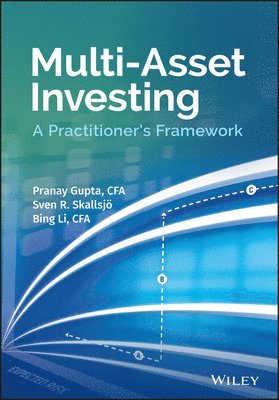
    Multi-Asset Investing

    A Practitioner's Framework

    AvPranay Gupta,Sven R. Skallsjo

    Inbunden, Engelska, 2016

    996 kr

    Beställningsvara. Skickas inom 5-8 vardagar. Fri frakt över 249 kr.

    Beskrivning

    Despite the accepted fact that a substantial part of the risk and return of any portfolio comes from asset allocation, we find today that the majority of investment professionals worldwide are focused on security selection. Multi-Asset Investing: A Practitioner’s Framework questions this basic structure of the investment process and investment industry. Who says we have to separate alpha and beta?Are the traditional definitions for risk and risk premium relevant in a multi-asset class world?Do portfolios cater for the ‘real risks’ in their investment processes?Does the whole Emerging Markets demarcation make sense for investing?Why do active Asian managers perform much poorer compared to developed market managers?Can you distinguish how much of a strategy’s performance comes from skill rather than luck?Does having a performance fee for your manager create alignment or misalignment?Why is the asset management transitioning from multi-asset strategies to multi-asset solutions?These and many other questions are asked, and suggestions provided as potential solutions. Having worked together for fifteen years, the authors’ present implementable solutions which have helped them successfully manage large asset pools.The Academic Perspective“Multi-Asset Investing asks fundamental questions about the asset allocation investment processes in use today, and can have a substantial impact on the future structure of the finance industry. It clarifies and distils the techniques that investment professionals need to master to add value to client portfolios.”—Paul Smith, President & CEO, CFA Institute“Pranay Gupta, Sven Skallsjo, and Bing Li describe the essential concepts and applications of multi-asset investing. Their treatment is far ranging and exceptionally lucid, and always with a nod to practical application. Buy this book and keep it close at hand.”—Mark Kritzman, MIT Sloane School of Management“Innovative solutions to some of the most difficult investment problems we are faced with today. Multi-asset Investing tackles investment issues which don’t have straight forward solutions, but nevertheless are faced by every investment professional. This book sets the standard for investment processes of all asset managers.” —SP Kothari, MIT Sloane School of ManagementThe Asset Owner Perspective“Multi-asset means different things to different people. This is the first text that details a comprehensive framework for managing any kind of multi-asset investment problem. Further, its explanation of the commercial aspects of managing a multi-asset investment business for an asset manager, private bank or asset owner make it an indispensable tool”—Sadayuki Horie, Dy. Chairman - Investment Advisory Comm., Government Pension Investment Fund, Japan“Multi-Asset Investing shows the substantial scope there is to innovate the asset allocation process. With its novel approaches to allocation, portfolio construction and risk management it demonstrates the substantial value that can be added to any portfolio. The solutions proposed by Multi-Asset Investing are creative, thought provoking, and may well be the way all portfolios need to be managed in the future.”—Mario Therrien, Senior Vice President, Caisse de Depot et Placement du Quebec, CanadaThe Asset Manager’s Perspective“Never has astute asset allocation and diversification been more crucial than today. Asset Managers which are able to innovate their investment processes and products in this area, are more likely to be the winners. Multi-Asset Investing provides both simple and sophisticated, tested and implementable techniques for successfully managing multi-asset portfolios.”—Vincent Camerlynck, former CEO BNP Paribas Investment Partners, Asia PacificThe Investment Strategist Perspective“For plan sponsors, portfolio managers, analysts and risk managers, Multi-Asset Investing is an unparalleled guide for portfolio management. Its approach to blending the quantitative and fundamental, top-down and bottom up and the risk and return frameworks makes it a valuable tool for any kind of investment professional. It clarifies a complex subject into a series of practical ideas to help add value to any portfolio.”—Ajay S. Kapur, Chief Strategist, BOA Merrill Lynch Asia

    Produktinformation

    • Utgivningsdatum:2016-05-13
    • Mått:178 x 249 x 23 mm
    • Vikt:612 g
    • Format:Inbunden
    • Språk:Engelska
    • Antal sidor:304
    • Förlag:John Wiley & Sons Inc
    • ISBN:9781119241522

    Utforska kategorier

    • Finansiering inom Ekonomi och Ledarskap

    Mer om författaren

    PRANAY GUPTA has over 25 years of experience in managing multi-asset and multi-strategy portfolios of up to US$85 billion across the world for asset managers, sovereign wealth funds, insurance companies, pension plans, endowments and high-net-worth individuals. He has served as the Chairman of the Investment Committee at the CFA Institute Research Foundation and has been awarded as the Best Discretionary Asset Manager in Asia.SVEN R. SKALLSJÖ has designed and developed risk models at Ignis Asset Management, AGL Structured Finance and Shell Asset Management. BING LI is the president of BC Capital Management Ltd., a Hong Kong-based firm providing investment solutions for high-net-worth individuals in mainland China.

    Innehållsförteckning

    • Preface xiiiAbout the Authors xv1. An Introduction to the Multi-Asset Investment Problem 11.1 What is Multi-Asset Investing? 21.2 The Conventional Structure 41.3 Transitioning from Active Management to Exposure Allocation 41.4 Creating an Improved Allocation Structure 51.5 Constructing a Multi-Asset Portfolio to Manage Tail Risks 61.6 Multi-Asset Investing in Emerging Markets 61.7 From Multi-Asset Strategies to Multi-Asset Solutions 71.8 Structuring a Multi-Asset Business 72. The Traditional Allocation Structure 92.1 The Traditional Investment Process 102.2 The Asset Allocation Process 122.3 The Belief in Diversification 132.4 Harnessing Equity Risk Premium and the Investment Horizon 192.5 Asset Classes as Mutually Exclusive Silos 202.6 Organization Structure and Resource Allocation 202.7 Implications for Skill Required in Asset Allocation 212.8 Requirements for a Revised Allocation Solution 222.9 Parallel Debates Created in the Search for a Revised Allocation Solution 233. Transitioning from Active Management to Exposure Allocation 253.1 A Historic Rationalization of Alpha and Beta 263.2 Progression of Active Management 273.3 Generalizing the Beta Concept 273.4 The Demise of Asset Class Demarcated Allocation 283.5 Implications for the Active Investment Process 293.6 Investment Strategy Categorization 303.6.1 Fundamental, Quantitative and Technical 303.6.2 Top-down, Bottom-up and Relative Value 313.7 Positioning of Alternative Investments 313.8 Obsolescence of Portable Alpha 323.9 Positioning of Fundamental Indexation and Smart Beta 323.10 Risk in an Exposure-Based Framework 333.11 Horizon-Based Organizational Demarcation 343.12 Transition from an Asset-Based to an Exposure-Based Organization 343.13 Conclusion 374. Redefining Risk Premium for Multi-Asset Allocation Decisions 394.1 Incumbent Risk and Risk Premium Frameworks 404.2 Framework for the Concurrent Presence of All Asset Classes 414.3 Incorporating Intra-Horizon Risk 424.4 Risk and Return Premium for Allocation Silos 434.5 Asset Class Premiums – Comparison of Traditional and Proposed Methods 454.6 Asset Class Premiums – Impact of Different Investment Horizons 464.7 Asset Class Risk – Comparison of Traditional and Proposed Methods 474.8 Asset Class Risk – Impact of Different Investment Horizons 484.9 Sovereign Risk and Risk Premium 494.10 Application to Various Multi]Asset Investment Problem Scenarios 514.11 Conclusion 525. A Multi-Strategy Allocation Structure 535.1 Categories of Allocation Approaches 545.2 A Multi-Strategy Framework for the Allocation Problem 585.3 The Benefits of Strategy Diversification 595.4 Individual Allocation Methodology Requirements 615.5 Example of a Multi-Strategy Allocation Approach 635.6 Conclusion 666. A Fundamental Exposure Allocation Approach—Business Cycles 676.1 The Passive Economic Model 676.2 An Active Economic Approach 686.3 A Five Cycle Asset Allocation Approach 696.3.1 Cycle I – The Global Business Cycle 696.3.2 Cycle II – The Local Business Cycle 706.3.3 Cycle III – The Monetary Cycle 716.3.4 Cycle IV – The Credit and Capex Cycles 736.3.5 Cycle V – Market Cycle 736.4 Cycle Limiting Risk Parameters 736.5 Segregating the Core and Cyclical Components 746.6 The Composite Five Cycle Framework 757. A Systematic Exposure Allocation Process — Active Risk Budgeting 777.1 Modeling the Business Cycle 787.2 Modeling the Monetary Cycle 807.3 Risk Adjustment for Equity Valuation 817.4 Creating an Adjusted Risk Budgeting Allocation Methodology 827.5 Simulated Performance Results 857.6 Confirming Robustness of ARB Allocation Methodology 907.6.1 Performance in Different Time Periods 907.6.2 Performance in Different Market Conditions 907.7 Implementation of a Drawdown Management Process 948. Estimation of Asset Allocation 978.1 The Consensus Asset Allocation Dataset 978.2 Using Consensus Data for Allocation Decisions 988.2.1 Basic Allocation Decisions 988.2.2 Creating Tactical Allocation Changes 998.2.3 Conviction Level in Allocation Stances 1028.2.4 Currency Hedge Ratio Decisions 1038.2.5 Separating the Poor Forecasters from the Accurate Ones 1058.2.6 Contrasting the Variety of Allocation Methodologies 1059. Optimization for Multi-Asset Portfolios 1079.1 Evolution of the Mean Variance Framework 1079.2 Portfolio Allocation and Measures of Performance 1099.3 A Utility-Based Approach 1109.4 The Fund Manager’s Objectives 1109.5 The Efficient Frontier 1129.6 Optimal Portfolio Choice 1139.7 Incorporating the Constraints 1149.8 Tail Risk Constraint 1159.9 Event Risk 1159.10 Macro Risk 1169.11 Regime Risk 1169.12 Correlation Risk 1179.13 Formulation of the Optimization Problem 1189.14 The Unconstrained Allocation 1199.15 Applying the Constraints 1219.16 The Preferred Portfolio 1279.17 Conclusions 13010. Managing Tail Risk in Multi-Asset Portfolios 13310.1 Portfolio Management – The Practical Setting 13410.2 Asset Allocation – The Practical Setting 13410.3 Creating a Real Risk Measure: End-of-Horizon vs. Intra-Horizon Risk 13510.4 Model Uncertainty 13910.5 Stop-Losses 14310.6 Implementing Tail Risk Management 15010.7 Notation and Variables 15311. Multi-Asset Investing in Emerging Markets 15511.1 Observation 1: Sub-Optimal Geographic Categorization of Emerging Markets 15511.2 Observation 2: Inappropriate Sector Classification for Emerging Markets 15611.3 Observation 3: Stock Concentration in Equity Indices 15811.4 Observation 4: The Potential for Active Management 15911.5 Observation 5: Performance of Active Managers 15911.6 Observation 6: Over-Dependence on a Single Investment Decision 16211.7 Summary of Observations 16211.8 Pitfalls in Emerging Market Investment Frameworks 16311.9 An Improved Framework for Emerging Market Investments 16412. The Importance of Asset Allocation in Asian Equities 16912.1 Impact of Breadth on Portfolio Excess Return 16912.2 Impact of Varying Cross-Sectional Dispersion on Portfolio Excess Return 17012.3 The Relative Importance of Asset Allocation and Stock Selection 17212.4 Comparing the US and Asian Equity Investment Universe 17312.5 Conclusions 17613. Implementing a Multi-Asset Strategy – Active or Passive 17913.1 Investment Determinants for the Active-Passive Decision 17913.2 Asset Owner Constraints Impacting the Active–Passive Decision 18414. An Exposure-Based Risk Diagnostics Framework 18514.1 Shortcomings of a Traditional Risk Analysis Approach 18514.2 Evaluating Intended and Unintended Risk 18614.3 A Multi-Dimensional Risk Architecture 18714.3.1 Skill Analysis 18814.3.2 Investment Process Component Analysis 18914.3.3 Regime Risk Analysis 18914.3.4 Style and Factor Risk Analysis 19014.3.5 Macro Risk Analysis 19014.3.6 Stress Event Risk Analysis 19114.3.7 Peer Group Comparison Analysis 19215. Impact of Manager Compensation on Allocation Decisions 19515.1 Compensation Structure 19615.2 Managerial Constraints 19715.2.1 Managerial Skill 19815.2.2 Managerial Risk Preferences 19815.3 Optimal Activeness 19915.4 The Distribution of Performance 20215.5 The Importance of Skill 20315.6 Activeness and Age 20515.7 Implications for a Multi-Period Setting 20615.7.1 Compensation Structure 20615.7.2 The Distribution of Performance 20615.8 Examples of Managerial Contracts 20815.9 Conclusions 20916. From Multi-Asset Strategies to Multi-Asset Solutions 21116.1 Current Phase of Industry Transition 21316.2 Multi-Asset Solutions as an Industry Function 21416.3 Characteristics of a Multi-Asset Solution Provider 21516.4 Customization Parameters for an Investment Solution 21516.5 Requirements for a Standardized Implementation 21916.6 The Importance of Attributing Performance 21916.7 Conclusions 22017. Multi-Asset Investing for Private Wealth Assets 22117.1 The Private Wealth Multi-Asset Investment Problem 22117.2 Business Model and Organizational Issues 22417.3 Incumbent Investment Frameworks 22617.4 A Multi-Asset Private Wealth Investment Platform 22717.5 Goals-Based Allocation 22817.6 Implication for the Long-Only Active Manager 23017.7 Conclusions 23018. Structuring a Multi-Asset Investing Business 23318.1 Product Structure and Positioning 23318.2 Product Advantages and Disadvantages 23518.3 Product Investment Skills 23618.4 Target Client Segmentation 23718.5 Where Did Existing Products Fall Short? 23818.6 Client Segment – Expectations and Evaluation 24219. Competing for Better Institutional Investment Outcomes 24519.1 Mission and Beliefs – The First and Most Critical Step 24619.2 Frameworks: Traditional Asset Class Versus Risk Premium 24819.3 Linking Beliefs With Return Drivers and Portfolio Construction Decisions 25019.3.1 A New Perspective 25219.3.2 A Wider Opportunity Set for Exploiting Alpha 25319.3.3 Ensuring That Everything Is Consistent with Beliefs 25519.4 Governance Consideration 25619.4.1 Closing the Governance Gap: Build or Buy 25619.4.2 The Separation of Governing and Executive Functions 25719.5 Choosing an Implementation Route for Delegation 25919.5.1 Bundling Multiple Investment Strategies into Pooled Funds 25919.5.2 Fully Bespoke Implementation 26019.6 Monitoring 26219.7 Conclusions 263Bibliography and References 265Index 269
    Hoppa över listan

    Mer från samma författare

    Bing Li, Sven R. Skallsjo, Pranay Gupta - Multi-Asset Investing, E-bok

    Multi-Asset Investing

    Bing Li, Sven R. Skallsjo, Pranay Gupta

    E-bok
    2016

    878 kr

    Bing Li, Sven R. Skallsjo, Pranay Gupta - Multi-Asset Investing, E-bok

    Multi-Asset Investing

    Bing Li, Sven R. Skallsjo, Pranay Gupta

    E-bok
    2016

    878 kr

    T. Mandy Tham, Pranay Gupta - Fintech, E-bok

    Fintech

    T. Mandy Tham, Pranay Gupta

    E-bok
    2018

    747 kr

    T. Mandy Tham, Pranay Gupta - Fintech, E-bok

    Fintech

    T. Mandy Tham, Pranay Gupta

    E-bok
    2018

    747 kr

    Pranay Gupta, T. Mandy Tham - Fintech, Häftad

    Fintech

    Pranay Gupta, T. Mandy Tham

    Häftad, 2018

    631 kr

    Pranay Gupta - dil ke lafzo ko ab khul ke kehne do Shari bandishe todh kr ab bss likhne do, Häftad

    dil ke lafzo ko ab khul ke kehne do Shari bandishe todh kr ab bss likhne do

    Pranay Gupta

    Häftad, 2021

    223 kr

    Pranay Gupta - It's time to learn something in life, Häftad

    It's time to learn something in life

    Pranay Gupta

    Häftad, 2021

    231 kr

    Pranay Gupta - Digital Transformation of SAP Supply Chain Processes, Häftad

    Digital Transformation of SAP Supply Chain Processes

    Pranay Gupta

    Häftad, 2024

    485 kr

    Pranay Gupta - Digital Transformation of SAP Supply Chain Processes, E-bok

    Digital Transformation of SAP Supply Chain Processes

    Pranay Gupta

    E-bok
    2024

    650 kr

    Pranay Gupta - Make today better than tomorrow, Häftad

    Make today better than tomorrow

    Pranay Gupta

    Häftad, 2022

    231 kr

    Hoppa över listan

    Du kanske också är intresserad av

    Bing Li, Sven R. Skallsjo, Pranay Gupta - Multi-Asset Investing, E-bok

    Multi-Asset Investing

    Bing Li, Sven R. Skallsjo, Pranay Gupta

    E-bok
    2016

    878 kr

    Bing Li, Sven R. Skallsjo, Pranay Gupta - Multi-Asset Investing, E-bok

    Multi-Asset Investing

    Bing Li, Sven R. Skallsjo, Pranay Gupta

    E-bok
    2016

    878 kr

    Pranay Gupta - Digital Transformation of SAP Supply Chain Processes, E-bok

    Digital Transformation of SAP Supply Chain Processes

    Pranay Gupta

    E-bok
    2024

    650 kr

    Pranay Gupta - Digital Transformation of SAP Supply Chain Processes, Häftad

    Digital Transformation of SAP Supply Chain Processes

    Pranay Gupta

    Häftad, 2024

    485 kr

    Pranay Gupta - Make today better than tomorrow, Häftad

    Make today better than tomorrow

    Pranay Gupta

    Häftad, 2022

    231 kr

    Pranay Gupta, T. Mandy Tham - Fintech, Häftad

    Fintech

    Pranay Gupta, T. Mandy Tham

    Häftad, 2018

    631 kr

    T. Mandy Tham, Pranay Gupta - Fintech, E-bok

    Fintech

    T. Mandy Tham, Pranay Gupta

    E-bok
    2018

    747 kr

    Pranay Gupta - It's time to learn something in life, Häftad

    It's time to learn something in life

    Pranay Gupta

    Häftad, 2021

    231 kr

    Pranay Gupta - dil ke lafzo ko ab khul ke kehne do Shari bandishe todh kr ab bss likhne do, Häftad

    dil ke lafzo ko ab khul ke kehne do Shari bandishe todh kr ab bss likhne do

    Pranay Gupta

    Häftad, 2021

    223 kr

    T. Mandy Tham, Pranay Gupta - Fintech, E-bok

    Fintech

    T. Mandy Tham, Pranay Gupta

    E-bok
    2018

    747 kr