• Fri frakt över 249 kr
  • •
  • Snabba leveranser
  • •
  • Billiga böcker
Kundservice

Du är på sajten för privatpersoner.

Företag, bibliotek eller offentlig verksamhet?

Du handlar på classic.bokus.com, där alla dina funktioner finns intakta.
Till classic.bokus.com
Bokus logotyp. Gå till startsidan.
  • Erbjudanden
  • Nyheter
  • Student
  • Topplistor
  • Barn & ungdom
  • Bokus Play
  • E-böcker
  • Pocketböcker
  • Spel & pussel

10% rabatt på allt med kod: NYSTART10 →

Sidfot

Mina sidor

    Hjälp

    • Kundservice
    • Vanliga frågor och svar
    • Frakt och leverans
    • Retur vid ångerrätt
    • Reklamera vara
    • Betalning
    • Köpvillkor
    • Allmänna villkor
    • Information om webbplatsens tillgänglighet

    Om Bokus

    • Om oss
    • Pressrum
    • För studenter
    • För företag
    • För bibliotek och offentlig verksamhet
    • För leverantörer
    • Hållbarhet

    Populärt

    • Aktuella erbjudanden
    • Presentkort
    • Studentlitteratur
    • Nya böcker
    • Topplistor
    • Signerade böcker
    • Engelska böcker

    Inspiration

    • Boktips
    • BookTok
    • Populära bokserier
    • Barnbokskaraktärer
    • Populära författare
    Logotyp för Bokus
    Följ oss på Facebook (extern länk)Följ oss på Instagram (extern länk)Följ oss på YouTube (extern länk)Följ oss på TikTok (extern länk)
    bokus @ CookiesAnpassa cookiesIntegritetspolicyKöpvillkor
    Till Citymail hemsida (extern länk)Till Budbee hemsida (extern länk)Till Postnord hemsida (extern länk)Till Schenker hemsida (extern länk)Till Early Bird hemsida (extern länk)Till Walleys hemsida (extern länk)
    1. Ekonomi och Ledarskap
    2. Företagsekonomi
    3. Redovisning och finansiering
    4. Finansiering

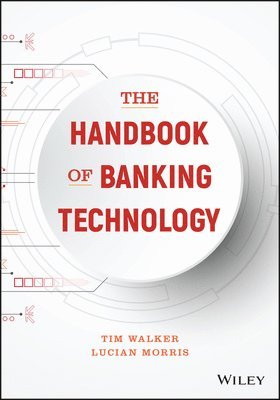
    Handbook of Banking Technology

    AvTim Walker,Lucian Morris

    Inbunden, Engelska, 2021

    754 kr

    Beställningsvara. Skickas inom 5-8 vardagar. Fri frakt över 249 kr.

    Beskrivning

    Competitive advantage in banking comes from effective use of technology The Handbook of Banking Technology provides a blueprint for the future of banking, with deep insight into the technologies at the heart of the industry. The rapid evolution of IT brings continual change and demand for investment — yet keeping pace with these changes has become an essential part of doing business. This book describes how banks can harness the power of current and upcoming technology to add business value and gain a competitive advantage; you'll learn how banks are using technology to drive business today, and which emerging trends are likely to drive the evolution of banking over the next decade. Regulation is playing an ever increasing role in banking and the impact of regulatory change on technology and the management of it are discussed — while mandatory changes put pressure on many of our high street banking brands, their ability to adapt and utilise technology will have a fundamental impact on their success in the rapidly changing marketplace. Technology costs can amount to 15 per cent or more of operational costs and bank leaders need to be able to make informed decisions about technology investments in light of the potential benefits. This book explores the depth and breadth of banking technology to help decision makers stay up to date and drive better business. Assess your current technology against the new banking paradigmsProcure the systems needed to protect the bottom lineImplement newer technology more efficiently and effectivelyEnsure compliance and drive value with appropriate technology managementTechnological change is driven by mass adoption of new channels, innovation from new entrants, and by banks themselves as a means of increasing revenue and reducing costs. The Handbook of Banking Technology offers a comprehensive look at the role of technology in banking, and the impact it will have in the coming years.

    Produktinformation

    • Utgivningsdatum:2021-03-25
    • Mått:178 x 246 x 28 mm
    • Vikt:885 g
    • Format:Inbunden
    • Språk:Engelska
    • Antal sidor:400
    • Förlag:John Wiley & Sons Inc
    • ISBN:9781119328018

    Utforska kategorier

    • Finansiering inom Ekonomi och Ledarskap

    Mer om författaren

    TIM WALKER is a former Partner in Deloitte’s Financial Services Consulting practice. He has over two decades of experience working for banking and payments institutions implementing new front, middle, and back office technology. LUCIAN MORRIS is the CIO of the Mortgage Advice Bureau in the UK. Formerly a Director in Deloitte’s Financial Services Consulting practice, Lucian has worked with many of the UK high street banking and fintech start-up organisations and was CIO of Metro Bank during its launch.

    Innehållsförteckning

    • Preface ixChapter 1 Introduction 11.1 Banking and the Rise of Technology 11.2 The Challenges of Technology in Large Banks 31.3 Navigating This Book 41.4 References 7Chapter 2 The History and Current State of Banking 82.1 A Brief History of Banking 82.2 Cash, Gold and Digital Money 112.3 Branch Centrism 142.4 Banking Consolidation 162.5 The Development of Modern Banking Products and Services 242.6 Developments in Banking Technology 332.7 The Challenges of Technology in Banking 392.8 New Banking Models 412.9 The Impact of the 2008 Banking Crisis 462.10 The Current State of Banking 502.11 Further Reading 552.12 References 56Chapter 3 An Introduction to Banking Technology 673.1 Introduction 673.2 A Model of a Simple Bank 673.3 The Core Banking Platform 683.4 Database Architectures 723.5 Making Platforms Highly Available 803.6 Platform Architectures 853.7 Revisiting Our Simple Model of a Bank 913.8 Single Customer View 923.9 IBM CICS 953.10 Internet Banking 1043.11 Customer Authentication 1083.12 Remote Procedure Calls 1133.13 Distributed Objects and CORBA 1163.14 Services 1173.15 Web Services 1193.16 RESTful Web Services 1233.17 Service-Oriented Architecture 1253.18 An Updated Model of Our Bank 1273.19 Application Processing 1283.20 Microservices 1293.21 Modern Databases 1333.22 Data Analysis and Reporting 1353.23 Further Reading 1463.24 References 147Chapter 4 Channels 1494.1 Introduction 1494.2 Branches 1504.3 Branch Technology 1524.4 Post 1574.5 Automated Teller Machines 1584.6 Telephony 1684.7 Online Chat 1694.8 Video Calling 1694.9 Handling Telephone, Chat and Video Contacts 1704.10 Text Messaging 1944.11 Internet 1954.12 Email 1954.13 Mobile 1964.14 Social Media 1984.15 Marketing 1984.16 Cross-channel Considerations and Implications 2004.17 References 203Chapter 5 Banking Operations 2075.1 Contact Centre 2075.2 Payment Operations 2085.3 Cash Management 2105.4 Credit Operations 2105.5 Collections and Recoveries 2135.6 Fraud Services 2145.7 References 227Chapter 6 Card Payments 2306.1 Types of Card 2306.2 Information on a Payment Card 2326.3 How a Card Payment Works 2336.4 Card Payment Networks 2386.5 Other Types of Card Transactions 2436.6 Managing Payment Cards 2456.7 References 257Chapter 7 Payments 2597.1 Introduction 2597.2 Cash 2607.3 Cheques 2627.4 Direct Credits 2677.5 Clearing and Settlement 2677.6 Interbank Payments 2687.7 Payment Fraud and Sanctions 2847.8 Payment Reconciliation 2847.9 Payment Technology 2867.10 References 294Chapter 8 Regulation, Finance and Compliance 2978.1 Introduction 2978.2 Regulation 2978.3 Global Standards 3038.4 Working with (and within) Regulation 3038.5 Finance Functions – Introduction 3048.6 Finance 3058.7 Treasury 3078.8 Compliance 3138.9 Human Resources 3158.10 Procurement 3178.11 Other Corporate Functions 3178.12 References 318Chapter 9 The Technology Function 3219.1 Organisation and Governance 3219.2 Conway’s Law 3259.3 Cost of Technology 3269.4 Working with the Business – It’s about the Service, Not the Technology 3279.5 Service Management 3299.6 Mapping Services to Applications 3319.7 Governing the Application Estate 3329.8 Insourcing and Outsourcing 3349.9 Managing the Estate 3379.10 Following the Rules – Regulation, Law and Technology 3439.11 References 346Chapter 10 The Future of Banking 34810.1 Broad Trends 34810.2 Changing Products, Features and Functions 35210.3 The Future of Payments 35210.4 Technology in Operations 35410.5 Regulation 35510.6 Finance 35510.7 The Technology Function 35610.8 A Short Digression on Data 35610.9 Banking Products and Services 35710.10 Distributed Ledger Technologies and Cryptocurrencies 35910.11 The Future of the Branch 36010.12 Headcount, Skills and Career Progression in the Bank of the Future 36110.13 References 362About the Authors 365Index 367