• Fri frakt över 249 kr
  • •
  • Snabba leveranser
  • •
  • Billiga böcker
Kundservice

Du är på sajten för privatpersoner.

Företag, bibliotek eller offentlig verksamhet?

Du handlar på classic.bokus.com, där alla dina funktioner finns intakta.
Till classic.bokus.com
Bokus logotyp. Gå till startsidan.
  • Erbjudanden
  • Nyheter
  • Student
  • Topplistor
  • Barn & ungdom
  • Bokus Play
  • E-böcker
  • Pocketböcker
  • Spel & pussel

10% rabatt på allt med kod: NYSTART10 →

Sidfot

Mina sidor

    Hjälp

    • Kundservice
    • Vanliga frågor och svar
    • Frakt och leverans
    • Retur vid ångerrätt
    • Reklamera vara
    • Betalning
    • Köpvillkor
    • Allmänna villkor
    • Information om webbplatsens tillgänglighet

    Om Bokus

    • Om oss
    • Pressrum
    • För studenter
    • För företag
    • För bibliotek och offentlig verksamhet
    • För leverantörer
    • Hållbarhet

    Populärt

    • Aktuella erbjudanden
    • Presentkort
    • Studentlitteratur
    • Nya böcker
    • Topplistor
    • Signerade böcker
    • Engelska böcker

    Inspiration

    • Boktips
    • BookTok
    • Populära bokserier
    • Barnbokskaraktärer
    • Populära författare
    Logotyp för Bokus
    Följ oss på Facebook (extern länk)Följ oss på Instagram (extern länk)Följ oss på YouTube (extern länk)Följ oss på TikTok (extern länk)
    bokus @ CookiesAnpassa cookiesIntegritetspolicyKöpvillkor
    Till Citymail hemsida (extern länk)Till Budbee hemsida (extern länk)Till Postnord hemsida (extern länk)Till Schenker hemsida (extern länk)Till Early Bird hemsida (extern länk)Till Walleys hemsida (extern länk)
    1. Naturvetenskap och teknik
    2. Teknik och industri
    3. Elektronik och kommunikationer

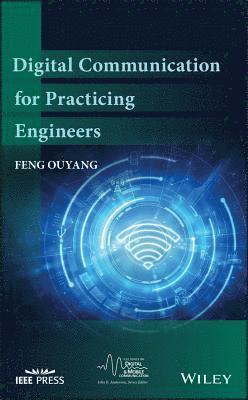
    Digital Communication for Practicing Engineers

    AvFeng Ouyang

    Inbunden, Engelska, 2019

    Del i serien IEEE Series on Digital & Mobile Communication

    1 594 kr

    Beställningsvara. Skickas inom 11-20 vardagar. Fri frakt över 249 kr.

    Fler format och utgåvor

    E-bok

    1 830 kr

    E-bok

    1 830 kr

    Beskrivning

    Offers concise, practical knowledge on modern communication systems to help students transition smoothly into the workplace and beyond This book presents the most relevant concepts and technologies of today's communication systems and presents them in a concise and intuitive manner. It covers advanced topics such as Orthogonal Frequency-Division Multiplexing (OFDM) and Multiple-Input Multiple-Output (MIMO) Technology, which are enabling technologies for modern communication systems such as WiFi (including the latest enhancements) and LTE-Advanced.Following a brief introduction to the field, Digital Communication for Practicing Engineers immerses readers in the theories and technologies that engineers deal with. It starts off with Shannon Theorem and Information Theory, before moving on to basic modules of a communication system, including modulation, statistical detection, channel coding, synchronization, and equalization. The next part of the book discusses advanced topics such as OFDM and MIMO, and introduces several emerging technologies in the context of 5G cellular system radio interface. The book closes by outlining several current research areas in digital communications. In addition, this text: Breaks down the subject into self-contained lectures, which can be read individually or as a wholeFocuses on the pros and cons of widely used techniques, while providing references for detailed mathematical analysisFollows the current technology trends, including advanced topics such as OFDM and MIMOTouches on content this is not usually contained in textbooks such as cyclo-stationary symbol timing recovery, adaptive self-interference canceler, and Tomlinson-Harashima precoderIncludes many illustrations, homework problems, and examplesDigital Communication for Practicing Engineers is an ideal guide for graduate students and professionals in digital communication looking to understand, work with, and adapt to the current and future technology.

    Produktinformation

    • Utgivningsdatum:2019-11-01
    • Mått:155 x 231 x 28 mm
    • Vikt:885 g
    • Format:Inbunden
    • Språk:Engelska
    • Serie:IEEE Series on Digital & Mobile Communication
    • Antal sidor:656
    • Förlag:John Wiley & Sons Inc
    • ISBN:9781119418009

    Utforska kategorier

    • Elektronik och kommunikationer inom Naturvetenskap och teknik

    Mer om författaren

    FENG OUYANG, PHD, is a senior member of professional staff for Wireless Technology Analysis at the Johns Hopkins University Applied Physics Laboratory and an adjunct faculty member at the John Hopkins University Whiting School of Engineering. He was previously a technical manager at Conexant Systems and a staff member at Bell Labs. He has served as TPC member and session chair for IEEE MILCOM and IEEE Globecom. He earned his Ph.D. in Applied and Engineering Physics from Cornell University.

    Innehållsförteckning

    • Chapter 1 Introduction 11.1 Why this Book? 11.2 How to Use this Book 21.3 Scope 21.4 Roadmap 41.5 Other Notes 5Acknowledgments 7References 8Chapter 2 Shannon Theorem and Information Theory 92.1 Introduction 92.2 Reliable Transmission with Noisy Channel 102.3 Entropy and Uncertainty 102.4 Entropy and Bit Length 142.5 Information Measured as Reduction of Uncertainty 182.6 Shannon Theorem 212.7 Additive White Gaussian Noise (AWGN) Channel 252.8 Frequency-Selective Channel and Water Filling 322.9 Summary 342.10 Appendix: Derivation of Entropy as a Measure of Uncertainty 342.11 Appendix: Compression Coding 38References 43Homework 43Chapter 3 Single Carrier Modulation and Nyquist Sampling Theory 453.1 Introduction 453.2 Symbol Mapping 473.3 Nyquist–Shannon Sampling Theory 583.4 Pulse Shaping and Nyquist Criterion 693.5 Implementation of Pulse Shaping Filter: Up-Sampling 743.6 Baseband and Passband 763.7 Summary 853.8 Appendix: Fourier Transform 873.9 Appendix: Function Localization in Frequency and Time Domains 913.10 Appendix: Proof of the Nyquist Criterion 96References 98Homework 99Chapter 4 Statistical Detection and Error Probability 1014.1 Introduction 1014.2 Wide-Sense Stationary (WSS) Process 1024.3 AWGN Channel 1084.4 Detection Problem and Maximum Likelihood Detection 1154.5 Map and ML Detection with AWGN Channel 1194.6 Matched Filter (MF) 1224.7 Error Probability of Uncoded Modulations Under AWGN Model 1374.8 Summary 1464.9 Appendix: PSD of Modulated Signals 1484.10 Appendix: Baseband Noise 1514.11 Appendix: Representing Signals and Noises with Vectors 154References 159Homework 160Chapter 5 Channel Coding 1635.1 Introduction 1635.2 Channel Coding or Forward Error Correction (FEC) 1645.3 Block Code 1695.4 Convolutional Code 1825.5 Coding for Bandwidth-Limited Channels and Trellis-Coded Modulation (TCM) 2035.6 Combined Codes 2115.7 Turbo Code 2135.8 Low-Density Parity-Check (LDPC) Code 2255.9 Summary 2315.10 Appendix: Upper Bound of Shaping Gain 2335.11 Appendix: Probability Update at Parity Node 234References 235Homework 238Chapter 6 Channel Characteristics 2416.1 Introduction 2416.2 Channel Gain and Channel Classification 2436.3 Constant Flat Channels 2466.4 Flat Fading Channel 2526.5 Time Dispersion and Frequency-Selective Fading 2626.6 Channel Formulation in Frequency and Time Domains 2656.7 Channel Modeling Methods 2706.8 Link Budget Computation 2736.9 Summary 2826.10 Appendix: Channel Gain in Passband and Baseband 284References 286Homework 288Chapter 7 Synchronization 2917.1 Introduction 2917.2 Synchronization Overview 2937.3 Timing Control and Correction 2997.4 Timing Error Estimate 3117.5 Initial Acquisition 3257.6 Summary 328References 329Homework 330Chapter 8 Adaptive Filter 3338.1 Introduction 3338.2 Adaptive Filter Overview 3358.3 Optimal Solution 3378.4 Iterative Solution: Speediest Descent (SD) 3398.5 Sample-by-Sample Adaptation: Least Mean Squares (LMS) Algorithm 3438.6 Block-Based Adaptation: Least Squares (LS) Algorithm 3478.7 Block-Based Iteration: Recursive Least Squares (RLS) Algorithm 3508.8 Case Study: Full-Duplex Radio and Self-Interference Cancellation 3558.9 Summary 359References 360Homework 360Chapter 9 Channel Equalization 3639.1 Introduction 3639.2 Channel Dispersion Formulation 3659.3 Maximum Likelihood Sequence Estimation (MLSE) 3709.4 Linear Equalizer (LE) 3719.5 Decision Feedback Equalizer (DFE) 3879.6 Tomlinson–Harashima Precoding (THP) 4119.7 Fractionally Spaced Equalizers 4199.8 Summary 4209.9 Appendix: Z-Transform and Related Results 4229.10 Appendix: Optimization of Functions with Complex Variables 4319.11 Appendix: Optimal Solution of Zero Forcing Linear Equalizer 4349.12 Appendix: Gain of an MMSE Equalizer 4399.13 Appendix: Detailed Derivation of Finite-Length DFE 440References 449Homework 451Chapter 10 Orthogonal Frequency Division Multiplexing (OFDM) 45310.1 Introduction 45310.2 OFDM Formulation 45510.3 Time Domain Equalization 47510.4 OFDM Advantages and Enhancements 47710.5 Receiver Training and Adaptation 48010.6 Implementation Issues 49110.7 Orthogonal Frequency Division Multiple Access (OFDMA) 49510.8 Filter Bank Multicarrier (FBMC) Modulation 49710.9 Summary 499References 500Homework 504Chapter 11 Multiple-Input Multiple-Output (MIMO) Technology 50511.1 Introduction 50511.2 MIMO Overview 50611.3 A Simple Case of Mimo: Multibeam Transmission 50711.4 Spatial Multiplexing: Bell Laboratories Layered Space-Time (BLAST) 51811.5 Spatial Diversity: Space-Time Coding 52511.6 Theoretical Treatments of MIMO Techniques 53011.7 Other Forms of MIMO 54311.8 Areas of Further Exploration 54511.9 MIMO Applications 54911.10 Summary 55511.11 Appendix: Successive Cancellation (SC) Formulation 55611.12 Appendix: Derivation of MIMO Channel Capacity for Fixed Channel 564References 567Homework 571Chapter 12 5G Cellular System Radio Interface Technology 57312.1 Introduction 57312.2 Cellular Systems 57312.3 The 5G System 57812.4 Highlights of 3GPP Proposal 57912.5 5G Physical Layer Technologies 58312.6 Summary 606References 607Homework 614Chapter 13 Closing Remarks and Further Exploration 61513.1 Introduction 61513.2 Analog Circuitry 61513.3 Software-Defined Radio (SDR) 61613.4 Cognitive Radio (CR) and Dynamic Spectrum Access (DSA) 61713.5 Ultrawide Band (UWB) 62013.6 Relaying and Cooperative Communications 62013.7 Code Division Multiple Access (CDMA) 62113.8 Interference Management 62213.9 Other Modulation Schemes 62313.10 Optical Communications 62313.11 Green Communications 62413.12 Applications of Artificial Intelligence (AI) 62513.13 Application of Game Theory 62513.14 Security 62513.15 Network Coding 62613.16 Summary 628References 628Index 637