• Fri frakt över 249 kr
  • •
  • Snabba leveranser
  • •
  • Billiga böcker
Kundservice

Du är på sajten för privatpersoner.

Företag, bibliotek eller offentlig verksamhet?

Du handlar på classic.bokus.com, där alla dina funktioner finns intakta.
Till classic.bokus.com
Bokus logotyp. Gå till startsidan.
  • Erbjudanden
  • Nyheter
  • Student
  • Topplistor
  • Barn & ungdom
  • Bokus Play
  • E-böcker
  • Pocketböcker
  • Spel & pussel

10% rabatt på allt med kod: NYSTART10 →

Sidfot

Mina sidor

    Hjälp

    • Kundservice
    • Vanliga frågor och svar
    • Frakt och leverans
    • Retur vid ångerrätt
    • Reklamera vara
    • Betalning
    • Köpvillkor
    • Allmänna villkor
    • Information om webbplatsens tillgänglighet

    Om Bokus

    • Om oss
    • Pressrum
    • För studenter
    • För företag
    • För bibliotek och offentlig verksamhet
    • För leverantörer
    • Hållbarhet

    Populärt

    • Aktuella erbjudanden
    • Presentkort
    • Studentlitteratur
    • Nya böcker
    • Topplistor
    • Signerade böcker
    • Engelska böcker

    Inspiration

    • Boktips
    • BookTok
    • Populära bokserier
    • Barnbokskaraktärer
    • Populära författare
    Logotyp för Bokus
    Följ oss på Facebook (extern länk)Följ oss på Instagram (extern länk)Följ oss på YouTube (extern länk)Följ oss på TikTok (extern länk)
    bokus @ CookiesAnpassa cookiesIntegritetspolicyKöpvillkor
    Till Citymail hemsida (extern länk)Till Budbee hemsida (extern länk)Till Postnord hemsida (extern länk)Till Schenker hemsida (extern länk)Till Early Bird hemsida (extern länk)Till Walleys hemsida (extern länk)
    1. Naturvetenskap och teknik
    2. Matematik och naturvetenskap
    3. Kemi
    4. Oorganisk kemi

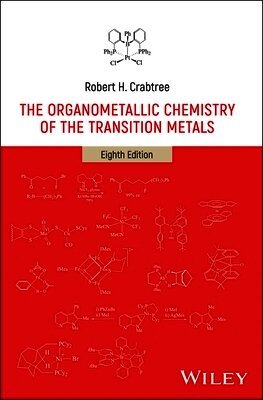
    Organometallic Chemistry of the Transition Metals

    AvRobert H. Crabtree

    Inbunden, Engelska, 2026

    1 381 kr

    Beställningsvara. Skickas inom 5-8 vardagar. Fri frakt över 249 kr.

    Fler format och utgåvor

    E-bok

    1 593 kr

    E-bok

    1 239 kr

    E-bok

    1 239 kr

    E-bok

    1 503 kr

    E-bok

    1 467 kr

    E-bok

    1 609 kr

    E-bok

    1 613 kr

    Inbunden

    Tillf. slut

    Beskrivning

    Continuing a bestselling text’s legacy of presenting our current understanding of d block organometallic compounds, their reactivity, and use in synthesis Fully updated to reflect recent advances, the 8th edition of The Organometallic Chemistry of the Transition Metals provides readers with a comprehensive introduction to the principles and general properties of organometallic compounds as well as practical information on reaction mechanisms and detailed descriptions of contemporary applications. Maintaining the style from prior editions, the author replaces older or dated citations with current ones and changes coverage of the subject to keep the material up to date. The new edition emphasizes such growing topics as organic applications, nanoclusters, electro- and photo-catalysis, computational studies, radical pathways, spin state effects, molecular electronics, proton coupled electron transfer, and alternative energy applications. It also adds new X-ray techniques and computational aspects that can help students design more detailed experiments. Sample topics covered in The Organometallic Chemistry of the Transition Metals include: Werner complexes, the trans effect, soft versus hard ligands and metals, the crystal and ligand fields, and choice of metalsThe 18 Electron Rule, bridging ligands, electron counting in reactions, Z ligands and the oxidation state concept and its limitationsStructure, bonding, synthesis, and reactivity of metal carbenesDissociative, associative, and photochemical substitutionMechanisms of oxidative addition and reductive eliminationA long-time bestseller, this new edition of The Organometallic Chemistry of the Transition Metals continues to be the leading textbook on the subject for advanced undergraduate and graduate students in organic chemistry, organometallic chemistry, inorganic chemistry, and bioinorganic chemistry and practicing chemists in related fields.

    Produktinformation

    • Utgivningsdatum:2026-03-05
    • Mått:173 x 252 x 33 mm
    • Vikt:975 g
    • Format:Inbunden
    • Språk:Engelska
    • Antal sidor:576
    • Upplaga:8
    • Förlag:John Wiley & Sons Inc
    • ISBN:9781119878513

    Utforska kategorier

    • Oorganisk kemi inom Naturvetenskap och teknik
    • Organisk kemi inom Naturvetenskap och teknik
    • Fysikalisk kemi inom Naturvetenskap och teknik

    Mer om författaren

    Robert H. Crabtree, F.R.S., is a Research professor in the Department of Chemistry at Yale University. He has served on the editorial boards of Chemical Reviews and Organometallics and has received numerous awards for his research accomplishments including the Centenary Prize of the Royal Society of Chemistry (2014) and election to the National Academy of Sciences (2017).

    Innehållsförteckning

    • Preface xiList of Abbreviations xiiiPeriodic Table of the Elements xvii1 Introduction 11.1 Why Study Organometallic Chemistry? 21.2 Coordination Chemistry 31.3 Werner Complexes 51.4 The Trans Effect 91.5 Soft Versus Hard Ligands and Metals 111.6 The Crystal Field 131.7 The Ligand Field 241.8 Two-Electron Three-Center Bonding 261.9 Back Bonding 261.10 Choice of Metals 301.11 The sd n Model and Hypervalent Bonding 32References 37Problems 392 Making Sense of Organometallics 412.1 Valence Electron Counting 412.2 The 18-Electron “Rule” 442.3 Electron Counting for Common Ligands 452.4 Bridging Ligands 492.5 Zero-Electron Ligands 512.6 Limitations of the 18-Electron Rule 542.7 Electron Counting in Reactions 572.8 The Oxidation State Concept and its Limitations 592.9 Coordination Number and Geometry 652.10 Effects of Complexation on Ligands 672.11 Differences between Metals 712.12 Ligand Types 762.13 Noninnocent Ligands and Ambiguous Oxidation States 83References 85Problems 873 Alkyls Aryls and Hydrides 893.1 Stability of Alkyls and Aryls 893.2 Making Alkyls and Aryls 983.3 Other σ-Bonded Ligands 1063.4 Metal Hydrides 1083.5 Sigma Complexes 1113.6 Metal-Ligand Bond Strengths 115References 118Problems 1214 Ligands and Substitution 1234.1 Metal Carbonyls: Structure and Bonding 1234.2 Metal Carbonyls: Synthesis and Reactivity 1274.3 Bridging Carbonyls and CO Analogues 1304.4 Nitrosyls 1324.5 Phosphines and Related P-Donor Ligands 1354.6 N-Heterocyclic Carbenes (NHC) 1394.7 Dissociative Substitution 1404.8 Associative Substitution 1454.9 Redox Effects and Interchange Substitution 1474.10 Photochemical Substitution 1494.11 Other Factors in Substitution 1524.12 Metal-Ligand Cooperativity 154References 155Problems 1575 Pi-Complexes 1595.1 Alkene and Alkyne Complexes 1595.2 Allyl Complexes 1665.3 Diene Complexes 1705.4 Cyclopentadienyl Complexes 1725.5 Arenes and Related Ligands 1805.6 Metallacycles 1835.7 Polyene Versus Polyenyl Complexes 1845.8 Perfluorocarbon Ligands 184References 185Problems 1866 Oxidative Addition and Reductive Elimination 1896.1 General Principles 1896.2 Concerted Additions 1926.3 SN2 Pathways 1956.4 Radical Mechanisms 1976.5 Ionic Mechanisms 2006.6 Reductive Elimination 2026.7 Some Catalytic Applications of OA/RE Sequences 2086.8 Sigma Bond Metathesis 2126.9 Oxidative Coupling 2136.10 Ligand-Assisted 12-Additions and Eliminations 214References 215Problems 2167 Insertion and Elimination 2197.1 Introduction 2197.2 11-Insertion 2217.3 12-Insertion 2267.4 Outer Sphere Insertions 2297.5 Beta Elimination and Related Processes 2317.6 Alkene Isomerization Catalysis 2337.7 Dehydrogenative Oxidation and Hydrogen Borrowing Catalysis 236References 239Problems 2408 Addition and Abstraction 2438.1 Types of Reaction 2438.2 Nucleophilic Addition to CO 2468.3 Nucleophilic Addition to Polyenes and Polyenyls 2488.4 The Wacker Process 2528.5 Nucleophilic Abstraction and Deprotonation 2548.6 Electrophilic Addition and Abstraction 2568.7 Electron Transfer and Radical Pathways 2598.8 Proton-coupled Electron Transfer 260References 263Problems 2649 Homogeneous Catalysis 2679.1 Catalytic Cycles 2689.2 Catalytic Hydrogenation 2759.3 Alkene Hydroformylation 2849.4 Alkene Hydrocyanation 2869.5 Alkene Hydrosilylation 2879.6 Cross-Coupling Reactions 2889.7 Oxidation Catalysis 2929.8 Electrocatalysis 2949.9 Photoredox Catalysis 2959.10 Catalyst Decomposition and Deactivation 298References 299Problems 30310 Physical Methods 30710.1 Mechanism 30710.2 1Hand 2H NMR Spectroscopy 30910.3 13C NMR Spectroscopy 31510.4 31P NMR Spectroscopy 31510.5 Dynamic NMR 31810.6 Electron Paramagnetic Resonance Spectroscopy 32010.7 IR Spectroscopy 32310.8 Structure Determination 32710.9 Electrochemistry 32910.10 Computation 33010.11 Big Data Artificial Intelligence and Machine Learning 33110.12 Other Methods 332References 334Problems 33711 Carbenes Carbynes and M–L Multiple Bonding 33911.1 Carbenes 33911.2 Carbynes 35011.3 Bridging Carbenes and Carbynes 35211.4 N-Heterocyclic Carbenes 35311.5 Carbide and Carbone Complexes 35711.6 Multiple Bonds to Heteroatoms 358References 361Problems 36212 Metathesis Polymerization and Bond Activation 36512.1 Alkene Metathesis 36512.2 Alkene Dimerization Oligomerization and Polymerization 37212.3 Activation of CO and CO2 38012.4 C–H Activation and Functionalization 384References 390Problems 39113 Green Energy & Materials Applications 39513.1 Green Chemistry 39513.2 Organometallics for an Alternative Energy Future 40113.3 Metal–Metal Bonds and Clusters 40413.4 Nanoparticles 40713.5 Organometallic Materials 40913.6 Supported Organometallics 415References 417Problems 42014 Organic Applications 42314.1 Carbon–Carbon and Carbon-heteroatom Coupling 42414.2 C–H Activation and Late-stage Functionalization 43114.3 Metathesis of C=C Bonds 43614.4 Carbenes in Cyclopropanation and C–H Insertion 43814.5 Hydrogenation 44014.6 Oxidation 44214.7 Carbonylation 44414.8 Photoredox Catalysis 44514.9 Alkyne and Aryne Chemistry 44814.10 Radical Chemistry 45014.11 Hydroboration 45014.12 Electrosynthesis 45114.13 Isotope Exchange 452References 453Problems 45715 High Oxidation States Magnetism and the f-Block 46115.1 High Oxidation States 46115.2 Magnetism and Spin States 46315.3 Cyclopentadienyl Complexes 47215.4 The f-block 475References 484Problems 48516 Bioorganometallic Chemistry 48716.1 Introduction 48816.2 Coenzyme B12 49516.3 Iron-sulfur Clusters 50116.4 Nitrogen Fixation 50416.5 Nickel Enzymes 51116.6 Applications to Chemical Biology 51616.7 Biomedical and Biocatalytic Applications 517References 521Problems 524Appendix A: Useful Texts on Allied Topics 527Appendix B: Major Reaction Types 529Answers 531Index 549