• Fri frakt över 249 kr
  • •
  • Snabba leveranser
  • •
  • Billiga böcker
Kundservice

Du är på sajten för privatpersoner.

Företag, bibliotek eller offentlig verksamhet?

Du handlar på classic.bokus.com, där alla dina funktioner finns intakta.
Till classic.bokus.com
Bokus logotyp. Gå till startsidan.
  • Erbjudanden
  • Nyheter
  • Student
  • Topplistor
  • Barn & ungdom
  • Bokus Play
  • E-böcker
  • Pocketböcker
  • Spel & pussel

10% rabatt på allt med kod NYSTART10 →

Sidfot

Mina sidor

    Hjälp

    • Kundservice
    • Vanliga frågor och svar
    • Frakt och leverans
    • Retur vid ångerrätt
    • Reklamera vara
    • Betalning
    • Köpvillkor
    • Allmänna villkor
    • Information om webbplatsens tillgänglighet

    Om Bokus

    • Om oss
    • Pressrum
    • För studenter
    • För företag
    • För bibliotek och offentlig verksamhet
    • För leverantörer
    • Hållbarhet

    Populärt

    • Aktuella erbjudanden
    • Presentkort
    • Studentlitteratur
    • Nya böcker
    • Topplistor
    • Signerade böcker
    • Engelska böcker

    Inspiration

    • Boktips
    • BookTok
    • Populära bokserier
    • Barnbokskaraktärer
    • Populära författare
    Logotyp för Bokus
    Följ oss på Facebook (extern länk)Följ oss på Instagram (extern länk)Följ oss på YouTube (extern länk)Följ oss på TikTok (extern länk)
    bokus @ CookiesAnpassa cookiesIntegritetspolicyKöpvillkor
    Till Citymail hemsida (extern länk)Till Budbee hemsida (extern länk)Till Postnord hemsida (extern länk)Till Schenker hemsida (extern länk)Till Early Bird hemsida (extern länk)Till Walleys hemsida (extern länk)
    1. Ekonomi och Ledarskap
    2. Företagsekonomi
    3. Redovisning och finansiering
    4. Finansiering

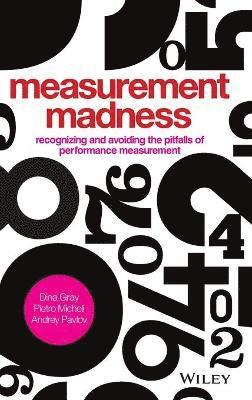
    Measurement Madness

    Recognizing and Avoiding the Pitfalls of Performance Measurement

    AvDina Gray,Pietro Micheli

    Inbunden, Engelska, 2014

    434 kr

    Skickas . Fri frakt över 249 kr.

    Beskrivning

    A clearer, more accurate performance management strategyOver the past two decades, performance measurement has profoundly changed societies, organizations and the way we live and work. We can now access incredible quantities of data, display, review and report complex information in real time, and monitor employees and processes in detail. But have all these investments in collecting, analysing and reporting data helped companies, governments and people perform better?Measurement Madness is an engaging read, full of anecdotes so peculiar you'll hardly believe them. Each one highlights a performance measurement initiative that went wrong, explains why and – most importantly – shows you how to avoid making the same mistake yourself.The dangers of poorly designed performance measurement are numerous, and even the best how-to guides don't explain how to avoid them. Measurement Madness fills in the gap, showing how to ensure you’re measuring the right things, rewarding the behaviours that deserve rewarding, and interpreting results in a way that will improve things rather than complicate them. This book will help you to recognize, correct and even avoid common performance measurement problems, including: Measuring for the sake of measuringAssuming that measurement is an instant fix for performance issuesComparing sets of data that have nothing in common and hoping to learn somethingUsing targets and rewards to promote certain behaviours, and achieving exactly the opposite ones.Reading Measurement Madness will enable you to design a simple, effective performance measurement system, which will have the intended result of creating value in your organization.

    Produktinformation

    • Utgivningsdatum:2014-12-05
    • Mått:160 x 236 x 19 mm
    • Vikt:485 g
    • Format:Inbunden
    • Språk:Engelska
    • Antal sidor:240
    • Förlag:John Wiley & Sons Inc
    • ISBN:9781119970705

    Utforska kategorier

    • Finansiering inom Ekonomi och Ledarskap
    • Projektledning inom Ekonomi och Ledarskap

    Mer om författaren

    DINA GRAY, PhD is a Strategic Business Consultant lecturing on Cranfield University's Executive Education programmes, and she is also Chair of the Regional Advisory Boards for the Innovation Group plc. advising on strategic performance implementation. PIETRO MICHELI, PhD is Associate Professor of Organizational Performance at Warwick Business School. As a management consultant, he has worked with over 30 organizations, private and public. As a researcher, he has published widely on the subjects of performance measurement and innovation. ANDREY PAVLOV, PhD is a Lecturer in Business Performance Management at Cranfield School of Management and Director of the Executive MSc in Managing Organisational Performance at Cranfield. He is a regular speaker at conferences around the world, and his work has been published in numerous industry and academic journals.

    Innehållsförteckning

    • From the Authors xiPART I INTRODUCTION 11 The Road to Insanity 32 Performance and Measurement 13What is performance measurement? 14What is performance? 15What is measurement? 17Getting the number or changing the behaviour? 20PART II PERFORMANCE MEASUREMENT 213 Measurement for Measurement’s Sake 23Making things measurable 25Measures and more measures 27Competitive measuring 27Sticky measures 27Conflicting measures 28Losing the link to performance 29Excessive reliance on measures 30Fixating on measures 31Getting desensitized to numbers 33Getting lost in performance data 34Paying the price 35Preventing learning and change 37Learning points 37Deciding what to measure 38Designing a robust indicator 40Managing with measures 41And finally… 414 All I Need is the Right Measure! 43How difficult can this be? 46What’s in a name? 46Knowing the purpose 47Poor relations 48It’s in the formula 49Frequency 50Where does the data come from? 51What will you do with the results? 53How strong are your indicators? 54Is the indicator measuringwhat it is meant to measure? 55Is the indicator only measuringwhat it is meant to measure? 56Is the indicator definitely the right indicator? 57Is the indicator consistent regardless ofwho measures and when? 58Can the data be readily communicatedand easily understood? 59Is any ambiguity possible in theinterpretation of the results? 60Can and will the data be acted upon? 61Can the data be analyzed soon enoughfor action to be taken? 62Is the cost of collecting and analyzing data justified? 63Will the measure encourage any undesirable behaviours? 64Learning points 66It’s not just a KPI 66Pass or fail 67And finally… 675 Comparing Performance 69Apples and pears 73Differences in data collection 73Different datasets 75Different methodologies 76Interpretation and presentation 78Timeliness 80Special variation 81Choice and relevance 82Using data unintended for comparative purposes 83Yes, but… 84Moving up the rankings 85Unintended consequences 89Learning points 92Which data to collect? 93Collection mechanisms 93Consistency 94Handling ambiguity 94And finally… 95PART III PERFORMANCE MANAGEMENT 976 Target Turmoil 99What are performance targets? 102When targets go bad 104Are targets so bad? 106The main pitfalls 107When targets do good 114Clarity and commitment 116Unexpected benefits 118Learning points 119Types of targets 121Setting targets 122Feedback 123Targets and incentives 124In summary 124And finally… 1267 Gaming and Cheating 127Gaming: what is it? 129Gaming and cheating 133What drives gaming and cheating? 137The pressure to perform 139Targets – the wrong kind and in the wrong way 141The climate of competitiveness 142Types of gaming 144The number and predictability of gaming behaviours 145Learning points 149Relieving the pressure 150Setting the right kind of target 150Foreseeing the future 151Improving data management systems 151Changing the culture 152And finally... 1548 Hoping for A Whilst Rewarding B 157Common management reward follies 160Hoping for teamwork whilst rewarding individual effort 160Hoping for the long term whilst rewardingshort-term gain 162Hoping for truth whilst rewarding lies 163Hoping for contribution whilst rewarding outcomes 166Hoping for budget control whilst rewarding overspend 167Learning points 169Targets, rewards and measures 169Reward people later 171Avoid negative spillover 171Systems thinking 172And finally… 1739 Failing Rewards and Rewarding Failure 175Top rewards for top performers 178Rewarding failure 179Failing rewards 180Measurement, rewards and motivation 182When financial rewards backfire 185What motivates us? 188Learning points 192Motivation and long-term goals 192Different strokes for different folks 193The right measures 194The time to reward 195Team vs. individual rewards 195And finally… 196PART IV CONCLUSIONS 19710 Will Measurement Madness Ever Be Cured? 199And finally… 203References 205Index 217