• Fri frakt över 249 kr
  • •
  • Snabba leveranser
  • •
  • Billiga böcker
Kundservice

Du är på sajten för privatpersoner.

Företag, bibliotek eller offentlig verksamhet?

Du handlar på classic.bokus.com, där alla dina funktioner finns intakta.
Till classic.bokus.com
Bokus logotyp. Gå till startsidan.
  • Erbjudanden
  • Nyheter
  • Student
  • Topplistor
  • Barn & ungdom
  • Bokus Play
  • E-böcker
  • Pocketböcker
  • Spel & pussel

10% rabatt på allt med kod NYSTART10 →

Sidfot

Mina sidor

    Hjälp

    • Kundservice
    • Vanliga frågor och svar
    • Frakt och leverans
    • Retur vid ångerrätt
    • Reklamera vara
    • Betalning
    • Köpvillkor
    • Allmänna villkor
    • Information om webbplatsens tillgänglighet

    Om Bokus

    • Om oss
    • Pressrum
    • För studenter
    • För företag
    • För bibliotek och offentlig verksamhet
    • För leverantörer
    • Hållbarhet

    Populärt

    • Aktuella erbjudanden
    • Presentkort
    • Studentlitteratur
    • Nya böcker
    • Topplistor
    • Signerade böcker
    • Engelska böcker

    Inspiration

    • Boktips
    • BookTok
    • Populära bokserier
    • Barnbokskaraktärer
    • Populära författare
    Logotyp för Bokus
    Följ oss på Facebook (extern länk)Följ oss på Instagram (extern länk)Följ oss på YouTube (extern länk)Följ oss på TikTok (extern länk)
    bokus @ CookiesAnpassa cookiesIntegritetspolicyKöpvillkor
    Till Citymail hemsida (extern länk)Till Budbee hemsida (extern länk)Till Postnord hemsida (extern länk)Till Schenker hemsida (extern länk)Till Early Bird hemsida (extern länk)Till Walleys hemsida (extern länk)
    1. Naturvetenskap och teknik
    2. Teknik och industri
    3. Miljöteknik

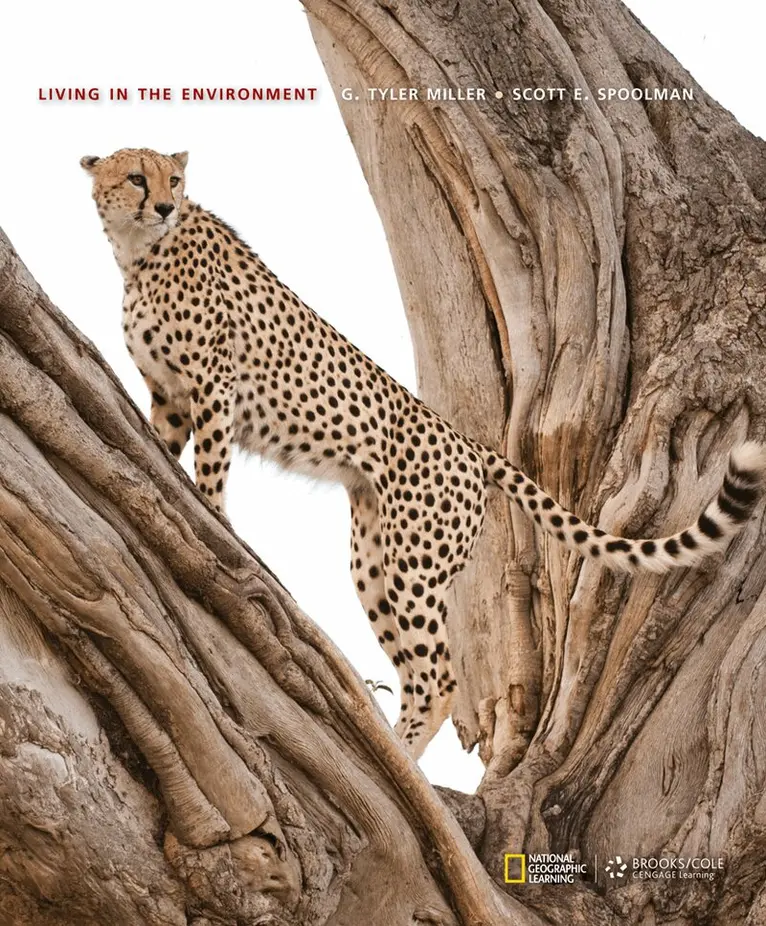
    Living in the Environment

    AvG. Miller,Scott Spoolman

    Inbunden, Engelska, 2014

    946 kr

    Tillfälligt slut

    Fler format och utgåvor

    Inbunden

    1 125 kr

    Inbunden

    Tillf. slut

    Beskrivning

    "Inspiring people to care about the planet." In the new edition of LIVING IN THE ENVIRONMENT, authors Tyler Miller and Scott Spoolman have partnered with the National Geographic Society to develop a text designed to equip students with the inspiration and knowledge they need to make a difference solving today's environmental issues. Exclusive content highlights important work of National Geographic Explorers, and features over 200 new photos, maps, and illustrations that bring course concepts to life. Using sustainability as the integrating theme, LIVING IN THE ENVIRONMENT 18e, provides clear introductions to the multiple environmental problems that we face and balanced discussions to evaluate potential solutions. In addition to the integration of new and engaging National Geographic content, every chapter has been thoroughly updated and 18 new Core Case Studies offer current examples of present environmental problems and scenarios for potential solutions. The concept-centered approach used in the text transforms complex environmental topics and issues into key concepts that students will understand and remember. Overall, by framing the concepts with goals for more sustainable lifestyles and human communities, students see how promising the future can be and their important role in shaping it.offers additional exclusive National Geographic content, including high-quality videos on important environmental problems and efforts being made to address them. Team up with Mller/Spoolman's, LIVING IN THE ENVIRONMENT and the National Geographic Society to offer your students the most inspiring introduction to environmental science available!

    Produktinformation

    • Utgivningsdatum:2014-01-01
    • Mått:231 x 35 x 276 mm
    • Vikt:2 000 g
    • Format:Inbunden
    • Språk:Engelska
    • Antal sidor:816
    • Upplaga:18
    • Förlag:Cengage Learning
    • ISBN:9781133940135

    Utforska kategorier

    • Miljöteknik inom Naturvetenskap och teknik

    Mer om författaren

    G. Tyler Miller has written 65 editions of textbooks for introductory courses in environmental science, basic ecology, energy and environmental chemistry. Since 1975, his books have been among the most widely used textbooks for environmental science in the United States and throughout the world. Translated into eight languages, they have been used by more than 3 million students. Dr. Miller has a professional background in chemistry, physics and ecology. He taught college for 20 years, developed one of the nation's first environmental studies programs and created an innovative interdisciplinary undergraduate science program before deciding to write environmental science textbooks full time in 1975. Now retired, Dr. Miller created Earth Education and Research, an enterprise that was devoted to improving environmental education. He has a Ph.D. from the University of Virginia and has received honorary doctoral degrees in recognition of his significant contributions to environmental education. G. Tyler Miller has written 65 editions of textbooks for introductory courses in environmental science, basic ecology, energy and environmental chemistry. Since 1975, his books have been among the most widely used textbooks for environmental science in the United States and throughout the world. Translated into eight languages, they have been used by more than 3 million students. Dr. Miller has a professional background in chemistry, physics and ecology. He taught college for 20 years, developed one of the nation's first environmental studies programs and created an innovative interdisciplinary undergraduate science program before deciding to write environmental science textbooks full time in 1975. Now retired, Dr. Miller created Earth Education and Research, an enterprise that was devoted to improving environmental education. He has a Ph.D. from the University of Virginia and has received honorary doctoral degrees in recognition of his significant contributions to environmental education. Scott Spoolman is an experienced writer in the field of educational publishing, with more than 30 years of expertise. Between 2003 and 2018, he worked with Tyler Miller as a co-author on editions of LIVING IN THE ENVIRONMENT, ENVIRONMENTAL SCIENCE and SUSTAINING THE EARTH. With Norman Myers, he co-authored ENVIRONMENTAL ISSUES AND SOLUTIONS: A MODULAR APPROACH. Spoolman has authored numerous books and articles in the fields of environmental science, geology and natural history, politics and business. Additionally, he has served as a consulting editor, contributing to the development of over 70 college and high school textbooks in the natural and social sciences. He earned a master's degree in science journalism from the University of Minnesota. In his free time, Spoolman enjoys exploring the forests and waters of his native Wisconsin along with his family -- his wife, environmental educator Gail Martinelli, son Will and daughter Katie. Scott Spoolman is an experienced writer in the field of educational publishing, with more than 30 years of expertise. Between 2003 and 2018, he worked with Tyler Miller as a co-author on editions of LIVING IN THE ENVIRONMENT, ENVIRONMENTAL SCIENCE and SUSTAINING THE EARTH. With Norman Myers, he co-authored ENVIRONMENTAL ISSUES AND SOLUTIONS: A MODULAR APPROACH. Spoolman has authored numerous books and articles in the fields of environmental science, geology and natural history, politics and business. Additionally, he has served as a consulting editor, contributing to the development of over 70 college and high school textbooks in the natural and social sciences. He earned a master's degree in science journalism from the University of Minnesota. In his free time, Spoolman enjoys exploring the forests and waters of his native Wisconsin along with his family -- his wife, environmental educator Gail Martinelli, son Will and daughter Katie.

    Recensioner i media

    PART I: HUMANS AND SUSTAINABILITY: AN OVERVIEW. 1. Environmental Problems, Their Causes, and Sustainability. PART II: SCIENCE, ECOLOGICAL PRINCIPLES, AND SUSTAINABILITY. 2. Science, Matter, Energy, and Systems. 3. Ecosystems: What Are They and How Do They Work? 4. Biodiversity and Evolution. 5. Biodiversity, Species Interactions, and Population Control. 6. The Human Population and Its Impact. 7. Climate and Biodiversity. 8. Aquatic Biodiversity. PART III: SUSTAINING BIODIVERSITY. 9. Sustaining Biodiversity: The Species Approach. 10. Sustaining Terrestrial Biodiversity: The Ecosystem Approach. 11. Sustaining Aquatic Biodiversity. PART IV: SUSTAINING NATURAL RESOURCES. 12. Food, Soil, and Pest Management. 13. Water Resources. 14. Geology and Nonrenewable Minerals. 15. Nonrenewable Energy. 16. Energy Efficiency and Renewable Energy. PART V: SUSTAINING ENVIRONMENTAL QUALITY. 17. Environmental Hazards and Human Health. 18. Air Pollution. 19. Climate Disruption and Ozone Depletion. 20. Water Pollution. 21. Solid and Hazardous Waste. 22. Sustainable Cities. PART VI: SUSTAINING HUMAN SOCIETIES. 23. Economics, Environment, and Sustainability. 24. Politics, Environment, and Sustainability. 25. Environmental Worldviews, Ethics, and Sustainability. SUPPLEMENTS. 1. Measurement Units. 2. Reading Graphs and Maps. 3. Environmental History of the United States. 4. Some Basic Chemistry. 5. Weather Basics. 6. Maps and Map Analysis. 7. Environmental Data and Data Analysis.

    Innehållsförteckning

    • PART I: HUMANS AND SUSTAINABILITY: AN OVERVIEW.1. Environmental Problems, Their Causes, and Sustainability.PART II: SCIENCE, ECOLOGICAL PRINCIPLES, AND SUSTAINABILITY.2. Science, Matter, Energy, and Systems.3. Ecosystems: What Are They and How Do They Work?4. Biodiversity and Evolution.5. Biodiversity, Species Interactions, and Population Control.6. The Human Population and Its Impact.7. Climate and Biodiversity.8. Aquatic Biodiversity.PART III: SUSTAINING BIODIVERSITY.9. Sustaining Biodiversity: The Species Approach.10. Sustaining Terrestrial Biodiversity: The Ecosystem Approach.11. Sustaining Aquatic Biodiversity.PART IV: SUSTAINING NATURAL RESOURCES.12. Food, Soil, and Pest Management.13. Water Resources.14. Geology and Nonrenewable Minerals.15. Nonrenewable Energy.16. Energy Efficiency and Renewable Energy.PART V: SUSTAINING ENVIRONMENTAL QUALITY.17. Environmental Hazards and Human Health.18. Air Pollution.19. Climate Disruption and Ozone Depletion.20. Water Pollution.21. Solid and Hazardous Waste.22. Sustainable Cities.PART VI: SUSTAINING HUMAN SOCIETIES.23. Economics, Environment, and Sustainability.24. Politics, Environment, and Sustainability.25. Environmental Worldviews, Ethics, and Sustainability.SUPPLEMENTS.1. Measurement Units.2. Reading Graphs and Maps.3. Environmental History of the United States.4. Some Basic Chemistry.5. Weather Basics. 6. Maps and Map Analysis.7. Environmental Data and Data Analysis.