• Fri frakt över 249 kr
  • •
  • Snabba leveranser
  • •
  • Billiga böcker
Kundservice

Du är på sajten för privatpersoner.

Företag, bibliotek eller offentlig verksamhet?

Du handlar på classic.bokus.com, där alla dina funktioner finns intakta.
Till classic.bokus.com
Bokus logotyp. Gå till startsidan.
  • Erbjudanden
  • Nyheter
  • Student
  • Topplistor
  • Barn & ungdom
  • Bokus Play
  • E-böcker
  • Pocketböcker
  • Spel & pussel

10% studentrabatt med kod TERM26

Sidfot

Mina sidor

    Hjälp

    • Kundservice
    • Vanliga frågor och svar
    • Frakt och leverans
    • Retur vid ångerrätt
    • Reklamera vara
    • Betalning
    • Köpvillkor
    • Allmänna villkor
    • Information om webbplatsens tillgänglighet

    Om Bokus

    • Om oss
    • Pressrum
    • För studenter
    • För företag
    • För bibliotek och offentlig verksamhet
    • För leverantörer
    • Hållbarhet

    Populärt

    • Aktuella erbjudanden
    • Presentkort
    • Studentlitteratur
    • Nya böcker
    • Topplistor
    • Signerade böcker
    • Engelska böcker

    Inspiration

    • Boktips
    • BookTok
    • Populära bokserier
    • Barnbokskaraktärer
    • Populära författare
    Logotyp för Bokus
    Följ oss på Facebook (extern länk)Följ oss på Instagram (extern länk)Följ oss på YouTube (extern länk)Följ oss på TikTok (extern länk)
    bokus @ CookiesAnpassa cookiesIntegritetspolicyKöpvillkor
    Till Citymail hemsida (extern länk)Till Budbee hemsida (extern länk)Till Postnord hemsida (extern länk)Till Schenker hemsida (extern länk)Till Early Bird hemsida (extern länk)Till Walleys hemsida (extern länk)
    1. Skönlitteratur
    2. Dramatik

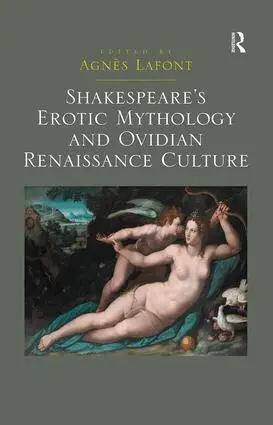
    Shakespeare's Erotic Mythology and Ovidian Renaissance Culture

    AvAgnès Lafont

    Häftad, Engelska, 2017

    965 kr

    Beställningsvara. Skickas inom 10-15 vardagar. Fri frakt över 249 kr.

    Beskrivning

    Taking cross-disciplinary and comparative approaches to the volume’s subject, this exciting collection of essays offers a reassessment of Shakespeare’s erotic and Ovidian mythology within classical and continental aesthetic contexts. Through extensive examination of mythological visual and textual material, scholars explore the transmission and reinvention of Ovidian eroticism in Shakespeare’s plays to show how early modern artists and audiences collectively engaged in redefining ways of thinking pleasure. Within the collection’s broad-ranging investigation of erotic mythology in Renaissance culture, each chapter analyses specific instances of textual and pictorial transmission, reception, and adaptation. Through various critical strategies, contributors trace Shakespeare’s use of erotic material to map out the politics and aesthetics of pleasure, unravelling the ways in which mythology informs artistic creation. Received acceptions of neo-platonic love and the Petrarchan tensions of unattainable love are revisited, with a focus on parodic and darker strains of erotic desire, such as Priapic and Dionysian energies, lustful fantasy and violent eros. The dynamics of interacting tales is explored through their structural ability to adapt to the stage. Myth in Renaissance culture ultimately emerges not merely as near-inexhaustible source material for the Elizabethan and Jacobean arts, but as a creative process in and of itself.

    Produktinformation

    • Utgivningsdatum:2017-03-31
    • Mått:156 x 234 x undefined mm
    • Vikt:400 g
    • Format:Häftad
    • Språk:Engelska
    • Antal sidor:224
    • Förlag:Taylor & Francis Ltd
    • ISBN:9781138254633

    Utforska kategorier

    • Dramatik inom Skönlitteratur
    • Forntidens historia inom Historia och arkeologi
    • Litteraturvetenskap inom Skönlitteratur

    Mer om författaren

    Agnès Lafont is Senior Lecturer in Early Modern Studies in the English Department at Université Paul Valery Montpellier III, France.

    Recensioner i media

    ’This collection of essays adds much to our knowledge of the many ways in which Ovid, the sexiest poet of late Antiquity, influenced Shakespeare, the sexiest poet of the late sixteenth century. [...]One would like to think that this timely and important volume consisting of essays that are all of equal strength could encourage further research in the creative appropriation of Ovid in England through continental routes of influence, especially with a critical eye on how Ovid shaped fictions and languages of sexuality, and how crucial the impact of his writing was on the expanding notions of the body in early modernity.’ CATHIERS '... this is an inspiring and often-fascinating volume.' Renaissance Quarterly '... the collection will be of interest to scholars of literature, as well as scholars of the visual and plastic arts, whose geographic focus includes England and larger Western Europe. ... scholars will find that this collection contains many new insights and also points to new directions in the study of Ovid in the Renaissance.' Sixteenth Century Journal

    Innehållsförteckning

    • Introduction Interacting with Eros: Ovid and Shakespeare, Agnès Lafont; Part I Erotic Aesthetics and Printing Politics; Chapter 1 Ovid’s ‘Meta-metamorphosis’: Book Illustration and the Circulation of Erotic Iconographical Patterns, Ilaria Andreoli; Chapter 2 Political Uses of Erotic Power in an Elizabethan Mythological Programme: Dangerous Interactions with Diana in Hardwick Hall, Agnès Lafont; Part II Shakespeare’s Erotic Power of Imagination; Chapter 3 Erotic Fancy/Fantasy in Venus and Adonis, A Midsummer Night’s Dream and Antony and Cleopatra, François Laroque; Chapter 4 Erotic Perspectives: When Pyramus and Thisbe Meet Hero and Leander in Romeo and Juliet, Janice Valls-Russell; Part III Shakespeare’s Erotic Power of Recreation (and Miscreation); Chapter 5 Priapus in Shakespeare: From Luxuriant Gardens to Luxurious Brothels, Frédéric Delord; Chapter 6 Parody and the Erotic Beast: Relocating Titania and Bottom, Stuart Sillars; Chapter 7 Cupid, Infantilism and Maternal Desire on the Early Modern Stage, Jane Kingsley-Smith; Chapter 8 Queering Pygmalion: Ovid, Euripides and The Winter’s Tale, Sarah Annes Brown; Chapter 9 The ‘new Gorgon’: Eros, Terror and Violence in Macbeth, Marguerite A. Tassi; Part IV Coda; Chapter 10 Femmina masculo e masculo femmina: Ovidian Mythical Structures, Leonardo Da Vinci, Michelangelo and As You Like It, Yves Peyré;