• Fri frakt över 249 kr
  • •
  • Snabba leveranser
  • •
  • Billiga böcker
Kundservice

Du är på sajten för privatpersoner.

Företag, bibliotek eller offentlig verksamhet?

Du handlar på classic.bokus.com, där alla dina funktioner finns intakta.
Till classic.bokus.com
Bokus logotyp. Gå till startsidan.
  • Erbjudanden
  • Nyheter
  • Student
  • Topplistor
  • Barn & ungdom
  • Bokus Play
  • E-böcker
  • Pocketböcker
  • Spel & pussel

10% studentrabatt med kod TERM26

Sidfot

Mina sidor

    Hjälp

    • Kundservice
    • Vanliga frågor och svar
    • Frakt och leverans
    • Retur vid ångerrätt
    • Reklamera vara
    • Betalning
    • Köpvillkor
    • Allmänna villkor
    • Information om webbplatsens tillgänglighet

    Om Bokus

    • Om oss
    • Pressrum
    • För studenter
    • För företag
    • För bibliotek och offentlig verksamhet
    • För leverantörer
    • Hållbarhet

    Populärt

    • Aktuella erbjudanden
    • Presentkort
    • Studentlitteratur
    • Nya böcker
    • Topplistor
    • Signerade böcker
    • Engelska böcker

    Inspiration

    • Boktips
    • BookTok
    • Populära bokserier
    • Barnbokskaraktärer
    • Populära författare
    Logotyp för Bokus
    Följ oss på Facebook (extern länk)Följ oss på Instagram (extern länk)Följ oss på YouTube (extern länk)Följ oss på TikTok (extern länk)
    bokus @ CookiesAnpassa cookiesIntegritetspolicyKöpvillkor
    Till Citymail hemsida (extern länk)Till Budbee hemsida (extern länk)Till Postnord hemsida (extern länk)Till Schenker hemsida (extern länk)Till Early Bird hemsida (extern länk)Till Walleys hemsida (extern länk)
    1. Samhälle och politik
    2. Politik och statsskick
    3. Internationella relationer

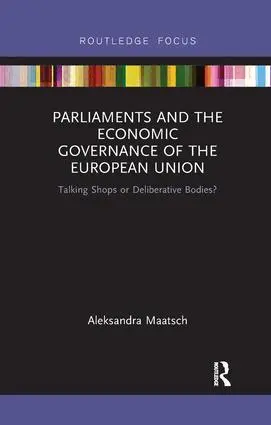
    Parliaments and the Economic Governance of the European Union

    Talking Shops or Deliberative Bodies?

    AvAleksandra Maatsch

    Häftad, Engelska, 2018

    Del i serien Routledge Studies on Government and the European Union

    360 kr

    Beställningsvara. Skickas inom 10-15 vardagar. Fri frakt över 249 kr.

    Fler format och utgåvor

    Inbunden

    889 kr

    E-bok

    419 kr

    E-bok

    419 kr

    Beskrivning

    This book analyses how national parliaments and parliamentary parties performed their legislative, representative and control functions during the reform of European economic governance. Focusing on domestic approvals of anti-crisis measures (EFSF, ESM and the Fiscal Compact) in all member states of the Eurozone, the book aims at establishing to what extent national parliaments and parliamentary parties secured their competences in EU policy-making during that process.Taking an interdisciplinary approach, In order to address that question the book employs an interdisciplinary approach and analyses (i) in which states parliaments’ formal powers in approval of anti-crisis measures were constrained, (ii) how parliamentary parties voted on the analysed measures, (iii) what were the dominant discourses of their proponents and opponents and (iv) which parties advocated neoliberal and which Keynesian measures.This text will be of key interest to scholars, students and practitioners in European Union politics and studies, political parties and parliaments, European Economic governance and more broadly to European politics.

    Produktinformation

    • Utgivningsdatum:2018-07-25
    • Mått:138 x 216 x 16 mm
    • Vikt:270 g
    • Format:Häftad
    • Språk:Engelska
    • Serie:Routledge Studies on Government and the European Union
    • Antal sidor:142
    • Förlag:Taylor & Francis Ltd
    • ISBN:9781138326446

    Utforska kategorier

    • Internationella relationer inom Samhälle och politik

    Mer om författaren

    Aleksandra Maatsch is Chair of European and Multilevel Politics (Interim), University of Cologne, Germany.

    Innehållsförteckning

    • 1. Introduction i.. National Parliaments in the Reform of European Economic Governance: Talking Shops or Deliberative Bodies? ii. National Parliaments in the European Union: From De-Parliamentarisation to Re-Parliamentarisation.iii. The Role of Parliaments in the European Union after the Lisbon Treaty iv. How Do Parliaments Contribute to Closing the Legitimacy Gap? v. Contents of the book 2. European Financial Crisis: Dominant Narratives and the Legal Status of Anti-Crisis Measuresi. The European Financial Crisisii. The Legal Status of Anti-Crisis Measures 3. Empowered or Disempowered? The Role of National Parliaments during the Reform of European Economic Governance 4. Drivers of Political Parties’ Voting Behaviour in European Economic Governance: The Ultimate Decline of the Economic Cleavage? i. Introductionii. What Factors Explain Political Parties’ Voting Patterns on European Anti-crisis Measures? Literature Review and Hypotheses iii. Research Design, Methodological Approach and the Database Used in This Study iv. Empirical Findings v. Discussion and Conclusions 5. Parliamentary Parties’ Discourses on Anti-Crisis Measures: Between Solidarity and Particularistic Interesti. Introduction ii. Analytical Framework iii. Methodological Approach – Frame Analysis iv. Discursive Support and Opposition: Dominant Patternsv. Pragmatic and Idealistic Supportersvi. Opponents: Nationalists and Anti-Austerians vii. Conclusions 6. Macroeconomic Preferences of National Parliamentary Parties i. Introductionii. Keynesianism and Neoliberalism iii. Which Factors Account for Political Parties’ Positioning on Macroeconomic Policies? Hypotheses of This Study. iv. Methodological Approach of this Study v. Empirical Evidence vi. Conclusions 7. Conclusions