• Fri frakt över 249 kr
  • •
  • Snabba leveranser
  • •
  • Billiga böcker
Kundservice

Du är på sajten för privatpersoner.

Företag, bibliotek eller offentlig verksamhet?

Du handlar på classic.bokus.com, där alla dina funktioner finns intakta.
Till classic.bokus.com
Bokus logotyp. Gå till startsidan.
  • Erbjudanden
  • Nyheter
  • Student
  • Topplistor
  • Barn & ungdom
  • Bokus Play
  • E-böcker
  • Pocketböcker
  • Spel & pussel

10% rabatt på allt med kod NYSTART10 →

Sidfot

Mina sidor

    Hjälp

    • Kundservice
    • Vanliga frågor och svar
    • Frakt och leverans
    • Retur vid ångerrätt
    • Reklamera vara
    • Betalning
    • Köpvillkor
    • Allmänna villkor
    • Information om webbplatsens tillgänglighet

    Om Bokus

    • Om oss
    • Pressrum
    • För studenter
    • För företag
    • För bibliotek och offentlig verksamhet
    • För leverantörer
    • Hållbarhet

    Populärt

    • Aktuella erbjudanden
    • Presentkort
    • Studentlitteratur
    • Nya böcker
    • Topplistor
    • Signerade böcker
    • Engelska böcker

    Inspiration

    • Boktips
    • BookTok
    • Populära bokserier
    • Barnbokskaraktärer
    • Populära författare
    Logotyp för Bokus
    Följ oss på Facebook (extern länk)Följ oss på Instagram (extern länk)Följ oss på YouTube (extern länk)Följ oss på TikTok (extern länk)
    bokus @ CookiesAnpassa cookiesIntegritetspolicyKöpvillkor
    Till Citymail hemsida (extern länk)Till Budbee hemsida (extern länk)Till Postnord hemsida (extern länk)Till Schenker hemsida (extern länk)Till Early Bird hemsida (extern länk)Till Walleys hemsida (extern länk)
    1. Naturvetenskap och teknik
    2. Teknik och industri
    3. Byggnadsteknik

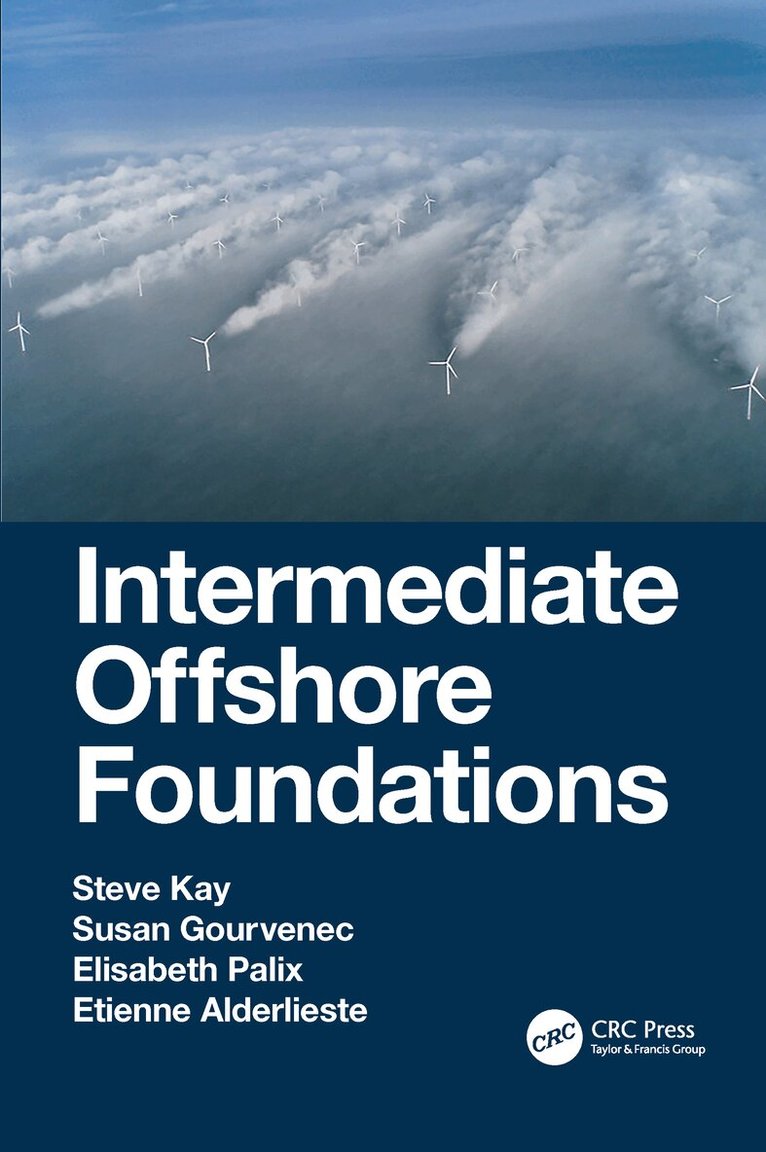
    Intermediate Offshore Foundations

    AvSteve Kay,Susan Gourvenec

    Inbunden, Engelska, 2021

    2 058 kr

    Beställningsvara. Skickas inom 10-15 vardagar. Fri frakt över 249 kr.

    Fler format och utgåvor

    Häftad

    723 kr

    Beskrivning

    Intermediate foundations are used as anchors for floating platforms and ancillary structures, foundations for steel jackets, and to support seafloor equipment and offshore wind turbines. When installed by suction, they are an economical alternative to piling, and also may be completely removed. They are usually circular in plan and are essentially rigid when laterally loaded. Length to diameter embedment ratios, L/D, generally vary between 0.5 and 10, spanning the gap between shallow and deep foundations, although these are indicative boundaries and the response, rather than the embedment ratio, defines an intermediate foundation.The first chapters introduce foundation types; compare shallow, intermediate and deep foundation models and design; define unique design issues that make intermediate foundations distinct from shallow and deep foundations, as well as list their hazards that mainly occur during installation. Later chapters cover installation, in-place resistance and in-place response, and miscellaneous design considerations.There is no general agreement as to which design methods/models are appropriate, so models should only be as accurate as the data. Therefore, several reasonably accurate models are provided together with comprehensive discussion and advice. Example calculations and over 200 references are also included.This is the first book dedicated to the geotechnical design of intermediate foundations, and it will appeal to professional engineers specialising in the offshore industry.

    Produktinformation

    • Utgivningsdatum:2021-06-21
    • Mått:156 x 234 x 24 mm
    • Vikt:660 g
    • Format:Inbunden
    • Språk:Engelska
    • Antal sidor:316
    • Förlag:Taylor & Francis Ltd
    • ISBN:9781138353534

    Utforska kategorier

    • Byggnadsteknik inom Naturvetenskap och teknik

    Mer om författaren

    The late Steve Kay was an independent Geotechnical Consultant with thirty-three years’ experience as a Principal Engineer with Fugro, and over forty-five years as a geotechnical specialist, mainly in the oil and gas industry, both with contractors and consultants. His expertise was in shallow and intermediate (caisson, bucket, can) foundation design, with extensive worldwide experience in offshore, nearshore and land engineering. He gave suction foundation courses, master classes and wrote the commercially available software package CAISSON_VHM. Susan Gourvenec is Royal Academy of Engineering Chair in Emerging Technologies in Intelligent & Resilient Ocean Engineering, and Professor of Offshore Geotechnical Engineering at the University of Southampton, UK. Susan is currently Convenor of the International Standardisation Organisation (ISO) committee responsible for developing industry standards for marine soil investigation and offshore geotechnical design. Susan co-authored Offshore Geotechnical Engineering (CRC Press, 2011) and co-edited the proceedings of the inaugural and second International Symposia on Frontiers in Offshore Geotechnics (ISFOG). Elisabeth Palix has eighteen years’ experience in offshore geotechnics. She spent twelve years working for Fugro Geoconsulting before joining EDF Renouvelables, where she is working on design and installation aspects of offshore projects. Elisabeth is also a member of the TC 209 (ISSMGE) and has been involved in several geotechnical R&D projects (e.g. SOLCYP, SOLCYP+, PISA, Unified CPT-based methods). Etienne Alderlieste is a Senior Geotechnical Researcher/Consultant for Deltares, where he is working on installation and in-place capacity of intermediate and shallow offshore foundations. Before joining Deltares, Etienne worked as Senior Geotechnical Engineer at SPT Offshore, where he designed suction foundations for the oil, gas and offshore wind industry. He also installed and reinstalled numerous single-suction anchors and several jacket structures with suction foundations worldwide.

    Innehållsförteckning

    • 1. Introduction.  2. Offshore Foundation Types and Mode of Operation.  3. Loads.  4. Marine Geology.  5. Loading Conditions and Soil Drainage.  6. Hazards, Uncertainties and Risk Minimisation.  7. Investigation Programs.  8. Design Basis.  9. Installation, Retrieval and Removal.  10. In-Place Resistance.  11. In-Place Response.  12. Miscellaneous Design Considerations